Table of Contents
Recovery After Pancreatic Cancer Surgery (Whipple): A Home Care Guide

By Dr. Gajendra Kumar Himanshu


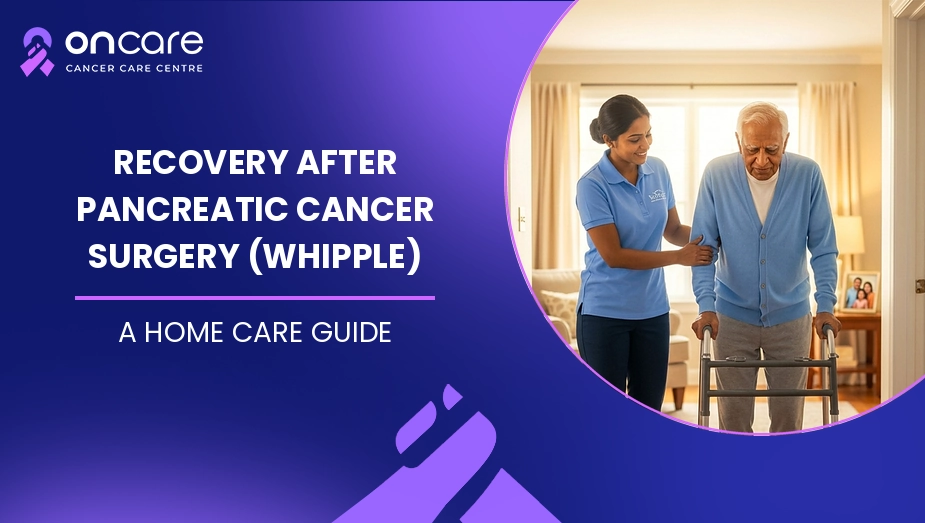
Recovery from pancreatic cancer surgery, more often known as the Whipple procedure, is a slow process that extends even beyond a patient’s discharge from the hospital. The Whipple procedure is a large operation to treat certain pancreatic tumours that involves removing and reconnecting portions of the digestive system. The procedure is complex; therefore, it is typical to feel weary, have changes in appetite, weight loss, digestive problems, and temporary loss of physical strength during recuperation.
Good nutrition, modest activity, excellent home care, and regular medical follow-up mean most individuals slowly regain energy and confidence. Knowing what to expect at home can help patients and families feel more prepared and ease the course of recovery.
This blog will describe what recovery following Whipple surgery may look like, common physical and mental changes, home care instructions, nutrition advice, and when to call your healthcare team.
The First Few Weeks After Whipple Surgery
The first few weeks at home are typically a time for recovering and building back strength. Many patients have:
- Tiredness or poor energy
- Slight pain at the surgical site
- Loss of appetite
- Weight loss
- Digestive changes
- Emotional ups and downs
Recovery is usually a slow process. Some days will be better than others, and it may take time to see progress.
Why Recovery Is a Process
The Whipple surgery involves many areas of the digestive system. As their bodies adjust, patients may find they eat, digest, and function differently.
Normal Physical Changes in Recovery
Many people go through:
- Feeling full quickly
- Loss of appetite
- Temporary upset stomach
- Changed bowel habits
- Overall weakness
The symptoms often improve as the body recovers, although everyone recovers differently.
Managing Fatigue in Recovery
Fatigue is among the most prevalent problems of recovery following major cancer surgery. Potential promising approaches are:
- Taking short rest breaks during the day
- Sleeping well at night
- Avoiding overexertion
- Increasing activity gradually
Allowing your body some time to recuperate is a crucial aspect of the process.
Nutrition Is an Important Contributor
Nutrition is generally one of the major changes after Whipple surgery. Digestion may vary following surgery, and patients may need to adapt dietary habits.
Useful Nutrition Tips
Many health-care teams recommend:
- Eating smaller meals more frequently
- Choosing protein-rich foods
- Drinking enough water
- Eating slowly
- Following the nutrition guidance your health care team gives you
Some patients may also need pancreatic enzyme supplements if recommended by their doctor.
Foods and Eating Habits That May Help You Achieve Your Recovery Goal
Recovery Goal | Good Habit |
|---|---|
Keep your energy up | Have modest, frequent meals |
Support healing | Add protein-rich foods |
Stay hydrated | Drink plenty of fluids frequently |
Improved digestion | Eat slowly and chew your food well |
Stay on your care plan | Follow the nutritional advice you are given |
Return to Your Daily Routine Safely
Rest is necessary, but modest activity is also beneficial in recuperation.
Take it Slow and Get Stronger
Mild activity may be helpful to:
- Enhance circulation
- Decrease stiffness
- Support digestion
- Boost energy over time
Walking is one of the safest and most recommended activities following surgery. Patients should always follow the surgeon’s advice about lifting, exercise and activity limits.
Things That Might Have to Wait
Depending on the level of recuperation, doctors may recommend avoiding:
- Heavy lifting
- Vigorous exercise
- Hard work around the house
- Activities that cause pain or discomfort
The timeline depends on the individual’s rehabilitation and overall health.
Caring for Your Surgical Incision
Good wound care is a vital element of rehabilitation at home. Follow the directions of your doctor for:
- Cleaning the incision
- Watching for signs of infection
- Bathing and showering advice
- Changing dressings as needed
If you observe growing redness, unusual discharge, worsening discomfort or other changes that seem troubling, contact your doctor.
Emotional Healing Is Important Too
Recovery is not just physical healing. Many patients have feelings such as:
- Post-surgery relief
- Concern about future treatment
- Frustration over short-term restrictions
- Worry about the progress of recovery
These feelings are very normal and understandable. Support may be provided by:
- Relatives
- Friends
- Cancer support organizations
- Therapists
- Doctors
Open interactions can reduce the feeling of being overwhelmed in recovery.
When to Call Your Healthcare Team
Most healing symptoms improve slowly, but some changes should be reported immediately. Call your doctor if you have:
- Fever
- Increasing pain
- Constant vomiting
- Difficulty with eating or drinking
- Signs of infection around the wound
- Significant weight loss
- Serious digestive symptoms
Early communication enables healthcare teams to address concerns before they become major issues.
Why Follow-Up Care Is Important
After surgery, regular follow-up meetings with doctors are held to assess recovery and overall health. During these visits, doctors can:
- Assess recovery status
- Review pathology results and the management plan
- Monitor nutritional status
- Address symptoms and concerns
- Talk about future treatments if needed
Your risk, family history, genetic testing findings if applicable, your overall health, and your doctor’s recommendations will be used to develop a long-term care plan.
Getting More From Trusted Sources
Good information helps patients and families understand how to treat and recover from pancreatic cancer.
Visit the National Cancer Institute for more evidence-based information about treatment and survivorship for pancreatic cancer. It offers trusted educational materials for patients and caregivers.
Looking Ahead One Step At A Time
Recovery from Whipple surgery is frequently a lengthy process, not a speedy return to normal. Small gains in strength, hunger, and function in daily living might pile up over time.
Being patient with yourself, following medical advice, and accepting help from loved ones can help make the healing path easier. Everyone’s healing journey is unique and takes time.
Consult Today
Pancreatic cancer surgery (Whipple operation) rehabilitation includes recuperating physically, eating differently, and recovering emotionally. Fatigue, changes in digestion, and temporary restrictions are typical, but with adequate home care, well-balanced nutrition, light activity, and regular medical follow-up, many patients will slowly regain strength.
Treatment and recovery decisions should always be based on a person’s risk, family history, genetic test findings, overall health and specialist recommendations. Oncare Cancer Hospital is a name you can trust for expert guidance, comprehensive cancer care, and compassionate support during diagnosis, treatment, and recovery.





Frequently Asked Questions
Each person’s recovery is unique, but it usually takes patients many weeks or months to restore their strength and become accustomed to everyday activities again.
Yes. It’s normal to have transient changes in appetite and weight loss during rehabilitation.
Yes. You may be told to take gentle walks as part of your recovery, but you should follow your doctor’s advice regarding activities.
Call your health care practitioner if you have a fever, increasing pain, constant vomiting, evidence of infection, or other symptoms that concern you.
Written and Verified by:
Dr. Gajendra Kumar Himanshu Exp: 10 Yr
Medical Officer
Book an Appointment
Related Blogs
Recovery After Lung Cancer Surgery: Breathing, Activity and Home Care
What to expect in the first weeks after lung cancer surgery, why breathing feels different, how to return to activity safely, incision and nutrition care at home, and when to call your doctor.
Risk-Reducing Surgery: When Preventive Mastectomy or Oophorectomy Is Considered
Learn about preventive mastectomy, preventive oophorectomy, cancer risk reduction, benefits, limitations, and expert guidance at Oncare Cancer Hospital.

Living With a Stoma After Cancer Surgery: Daily Care and Confidence
Learn how to care for a stoma after cancer surgery, manage daily life, build confidence, support recovery, and improve comfort with Oncare Cancer Hospital.
Sentinel Lymph Node Biopsy: Why It Matters in Cancer Surgery
Learn what a sentinel lymph node biopsy is, why it is performed, what results mean, and how it guides cancer treatment at Oncare Cancer Hospital.