Table of Contents
Proton Beam Therapy in India: How It Differs from Conventional Radiation

By Dr. Gajendra Kumar Himanshu


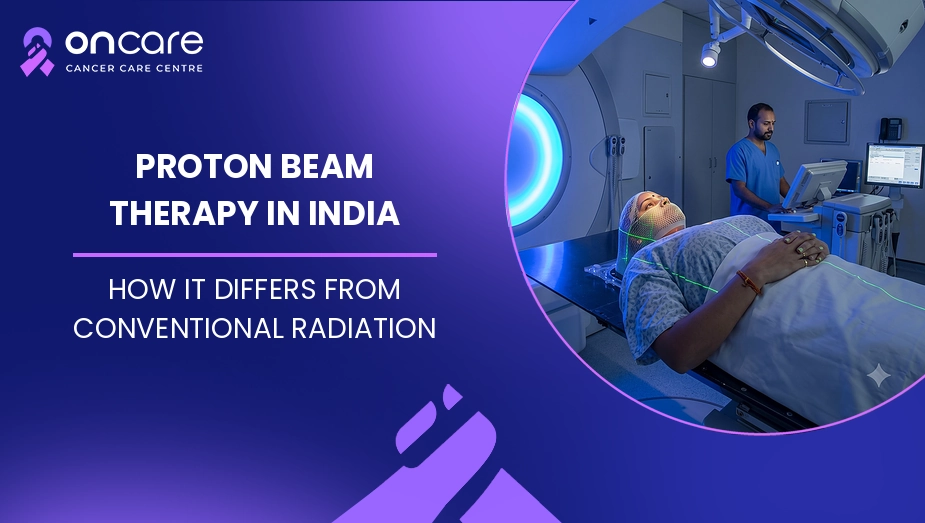
Proton beam therapy is a modern radiation therapy that uses proton particles to target cancer cells in India. Proton treatment is different from traditional radiation, which uses high-energy X-rays, in that it can deliver most of the radiation to the cancer and decrease exposure to surrounding healthy tissue. It could be effective in certain children's malignancies and in tumours placed near sensitive organs.
In this blog, we discuss proton beam therapy in India, how it works, its difference from traditional radiation therapy, its probable benefits and restrictions, and which patients may be considered for treatment. You'll also learn how doctors decide if proton therapy is right for patients and what patients can expect throughout treatment.
Why is Proton Beam Therapy so Important?
Radiation therapy has a significant role in cancer treatment. It kills cancer cells by damaging their DNA with high-energy radiation and stopping them from growing and dividing. But radiation can also harm normal tissues surrounding the cancer.
Today's radiation techniques are designed to be more precise and minimise unnecessary exposure. Proton beam therapy is an alternative method of delivering radiation, as protons deposit their energy differently from traditional X-rays.
This characteristic can prove useful when a malignancy is located near sensitive organs such as the brain, spinal cord, eyes, heart or lungs. It may also be crucial to reduce radiation to healthy tissues in youngsters since their bodies are still growing.
But proton therapy doesn't necessarily mean a better outcome for every malignancy. Its usefulness relies on the tumour type, size, location, disease stage, prior treatment and anticipated clinical benefit.
What Is Proton Beam Therapy?
Proton beam therapy is a form of external beam radiation therapy. It employs positively charged particles, called protons, to attack cancer cells.
During treatment, protons are sent at the cancer at high speeds using a machine. Radiation oncologists meticulously arrange the direction, depth and dose of the proton beam with the use of imaging scans and specialised treatment-planning software.
Protons deposit a substantial amount of their energy at a certain depth in the body. This is referred to as the Bragg peak. The radiation dose drops quickly after the planned depth is reached.
This characteristic could allow doctors to apply radiation to the tumour while limiting the quantity of radiation that leaks beyond it. The treatment itself is pain-free, and people don't get radioactive after a session.
What is Traditional Radiation Therapy?
In radiation therapy, high-energy X-rays (also called photons) are normally used to kill cancer cells. As X-rays enter the body and pass through the tumour and into the tissues beyond it, they release radiation.
Older forms of radiation therapy were far less precise than modern photon-based approaches. Techniques such as three-dimensional conformal radiation therapy (3D-CRT), intensity-modulated radiation therapy (IMRT), image-guided radiation therapy (IGRT) and stereotactic radiation therapy can bend radiation beams around the tumour and restrict exposure to neighbouring healthy tissues.
For many malignancies, standard radiation is still effective and suitable. It is readily available, supported by extensive experience in clinical practice, and may provide equivalent results to proton treatment in many situations.
Proton Beam Therapy versus Conventional Radiation
Feature | Proton Beam Therapy | Conventional Radiotherapy |
|---|---|---|
Radiation type | Employs positively charged proton particles | Typically employs high-energy X-rays or photons |
Radiation delivery | Provides most of its energy at the desired depth | Provides radiation during entry, passage and exit of the treatment volume |
Radiation outside the tumour | May offer little or no exit dose in some treatment regimens | The standard approach involves some exit dose after the tumour |
Exposure of healthy tissue | May decrease radiation dose to adjacent normal tissues | Modern treatments also restrict exposure, but in some situations, they can affect additional tissue around it |
Availability | Available only at a few specific centres | Offered by most cancer hospitals |
Price | Specialised technology, generally more expensive | Generally more affordable and within reach |
Appropriateness | May have benefits for specific malignancies and patients | Effective and safe against a wide range of common malignancies |
The primary distinction is how the radiation energy is deposited in the body by protons and X-rays. The potential advantage of proton therapy is not necessarily that it delivers a higher dose to the malignancy. It may instead reduce needless radiation exposure of healthy tissues in carefully selected circumstances.
What types of cancer may proton therapy treat?
Proton treatment might be an option if limiting radiation to surrounding organs is likely to make a real difference.
It can be used for selected cases such as:
- Tumours of the brain and spinal cord
- Cancers of childhood
- Tumours in or about the eye or the base of the skull
- Head-and-neck cancers
- Some prostate tumours
- Liver tumours
- Malignancies of the lung
- Sarcoma
- Tumours near vital nerves or organs
- Recurrent tumours previously treated with radiation
It may provide children with less radiation to developing tissues, which may reduce the chance of some long-term negative effects. However, therapy decisions are based on the child's diagnosis, age, tumour location and overall treatment plan.
Patients who have undergone radiation in the same area in the past may potentially be candidates for proton treatment. Reirradiation should be carefully planned since healthy tissues may have been irradiated previously. Proton treatment is an option, but not the right option in all cases.
What are the potential benefits?
The main potential advantages of proton beam therapy are linked to a reduction in radiation exposure outside the tumour.
Possible benefits include:
- A lower radiation dose to selected neighbouring healthy tissues
- In some circumstances, improved protection of vulnerable organs
- Lower chance of some short-term adverse effects
- Reduced risk of some long-term radiation consequences
- More protection for growing tissue in children
- Treatment options for selected previously irradiated areas
The expected benefit varies among patients. The possible clinical relevance of the reduction in radiation exposure of a proton treatment plan compared with a photon plan can be assessed before treatment.
A lower exposure to radiation does not guarantee that there will be no negative effects. Proton therapy can still impact healthy tissue in or near the treatment region.
If you want to learn more about proton therapy, you can visit the official website of the National Cancer Institute.
Consult Today
The choice of proton beam therapy against standard radiation is made on a case-by-case basis. The most advanced technology is not necessarily the best choice for every malignancy.
At Oncare Cancer Hospital, patients can discuss their diagnosis, the possibility of radiation treatment, the expected benefits of therapy, side effects, and the need for referral to a specialised proton therapy centre. Talk to us today to find out which radiation option might be right for your treatment.
Disclaimer
This material is solely for educational purposes. It is not a substitute for professional medical advice, diagnosis or treatment. Depending on the kind and stage of cancer, the location of the tumour, previous treatment and individual health variables, proton beam therapy can be used. Always visit a qualified radiation oncologist for specific treatment advice.





Frequently Asked Questions
Not for all patients. Proton treatment may limit radiation exposure to adjacent healthy tissues in selected circumstances, but contemporary conventional radiation is effective and acceptable for many malignancies.
No. Patients do not feel the proton beam during their treatment. However, some individuals may experience some transient discomfort while remaining in the treatment position.
Yes. Proton treatment is given at a few specialised cancer centres in India. Cost, availability and eligibility may vary.
Proton therapy side effects may include fatigue, skin changes, and adverse effects related to the treated area. It can minimise the amount of radiation delivered to some healthy tissues, but it doesn't remove all the hazards of treatment.
Written and Verified by:
Dr. Gajendra Kumar Himanshu Exp: 10 Yr
Medical Officer
Book an Appointment
Related Blogs
Palliative Care vs Hospice: Understanding the Difference
Both palliative care and hospice care emphasise comfort, symptom management, and quality of life, but they are not the same. Palliative care can start at any point in a serious disease, and can be given together with therapies like chemotherapy or radiation therapy. Hospice care is primarily for persons who are nearing the end of life and whose primary objective has changed from treating the disease to giving comfort and support.
Cancer in Young Adults (15-39): Why It's Different from Childhood or Adult Cancer
Learn about cancer in young adults, common cancer types, fertility concerns, treatment options, survivorship, and support at Oncare Cancer Hospital.
Chemotherapy vs Immunotherapy vs Radiation Therapy: Understanding the Differences
Compare chemotherapy, immunotherapy, and radiation therapy, including benefits, side effects, and treatment options at Oncare Hospital with expert cancer care.
Triple Negative Breast Cancer: Why It Behaves Differently and Modern Treatment Options
Learn about Triple Negative Breast Cancer, its symptoms, modern treatment options, advanced therapies, and recovery support at Oncare Cancer Hospital in India.