Table of Contents
Ocular (Uveal) Melanoma: Eye Cancer in Adults and Its Warning Signs

By Dr. Gajendra Kumar Himanshu


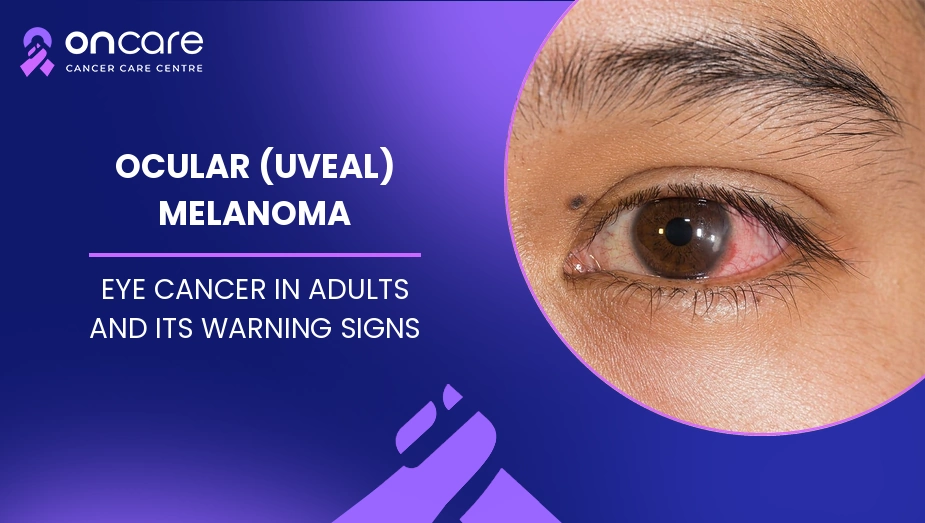
Ocular melanoma, also called uveal melanoma, is a rare type of eye cancer that develops from pigment-producing cells in the eye. It usually begins in the uvea, which includes the iris, ciliary body, and choroid. In many adults, uveal melanoma may not cause clear symptoms in the early stages, but blurred vision, flashes of light, floaters, a dark spot on the iris, or changes in the pupil can be warning signs that need an eye examination.
In this blog, we will explain what ocular (uveal) melanoma is, where it starts, its possible risk factors, warning signs, how doctors diagnose it, and the treatment options available. Knowing these signs can help people seek medical attention when an unusual change in vision or the eye does not go away.
What Is Ocular (Uveal) Melanoma?
Uveal melanoma is a cancer that starts in the uvea, the middle layer of the eye. The uvea has three main parts: the iris, ciliary body, and choroid. Most uveal melanomas start in the choroid, while others begin in the ciliary body or iris. It is the most common primary eye cancer in adults, although it is still considered rare.
Unlike some cancers that can be easily seen on the surface of the body, uveal melanoma can grow inside the eye without causing obvious changes. This is one reason regular eye examinations can be useful, especially when there are new or unexplained vision changes.
For more information about cancer and its different types, you can also read our Cancer Types guide.
What Are the Warning Signs of Uveal Melanoma?
Uveal melanoma may not cause symptoms at first. When symptoms do appear, they can vary depending on where the tumour develops and how large it becomes.
Common warning signs include:
- Blurred or distorted vision
- New floaters or flashes of light
- A dark spot on the iris that grows or changes
- Changes in the size or shape of the pupil
- Loss of part of the field of vision
- A change in the position or appearance of the eyeball
- Bulging of the eye in some cases
Eye pain is not usually a common early symptom of ocular melanoma. Pain may occur when a tumour becomes more extensive.
These symptoms can also happen because of conditions that are not cancer. However, if a vision change or the appearance of the eye persists, it is important to have it checked by an eye specialist.
Who May Have a Higher Risk?
The exact cause of uveal melanoma is not always known. Certain factors may increase the risk, although having a risk factor does not mean a person will definitely develop the disease.
Some recognised risk factors include:
- Older age
- Fair skin that burns or freckles easily
- Light-coloured eyes, such as blue or green eyes
- Certain inherited or genetic factors
Uveal melanoma can also occur in people without known risk factors.
How Is Uveal Melanoma Diagnosed?
Diagnosis usually begins with a detailed eye examination by an ophthalmologist. The doctor may check vision, examine the eye after dilating the pupil, and look closely at the retina and other internal structures. Depending on what is found, additional tests may be recommended.
Diagnostic test | What it helps doctors check |
|---|---|
Dilated eye examination | Looks at the inside of the eye |
Eye ultrasound | Helps assess the tumour’s size and location |
Fundus photography | Records images of the inside of the eye |
Fluorescein angiography | Examines blood flow and changes around the tumour |
MRI or other scans | May help assess the tumour and check for spread |
Biopsy | May be used in selected cases when more information is needed |
What the Diagnosis Means
A biopsy is not always necessary for uveal melanoma because an experienced eye specialist can often make the diagnosis using the examination and imaging findings.
If you want to understand more about cancer diagnosis, our cancer diagnostics page can help explain common tests in simple language.
How Is Ocular Melanoma Treated?
Treatment depends on several factors, including the size and location of the tumour, whether the eye’s vision can be preserved, and whether the cancer has spread outside the eye.
Radiation Therapy
Radiation therapy is commonly used for uveal melanoma that has not spread outside the eye. One approach is plaque brachytherapy, in which a small radiation source is placed close to the tumour. Other radiation techniques, including proton beam therapy, may be considered in selected cases.
Surgery
Surgery may be considered depending on the tumour’s size, location, and effect on the eye. In some situations, only the tumour or part of the affected eye tissue may be removed. For very large tumours or severely damaged eyes, removal of the eye, called enucleation, may be necessary.
Treatment for Advanced Disease
Uveal melanoma can spread to other parts of the body, with the liver being the most common site of spread. When this happens, treatment may involve medicines that work throughout the body or treatments directed at areas where the cancer has spread. The treatment plan depends on the individual situation.
Why Regular Eye Check-ups Matter
There is no widely recommended routine screening test specifically for eye cancer in people at average risk. However, eye examinations can sometimes identify an eye melanoma before a person notices symptoms.
This is particularly important because early uveal melanoma may be silent. A new change in vision, a dark spot on the iris, or repeated flashes and floaters should not automatically be assumed to be cancer, but persistent or unusual symptoms deserve professional evaluation.
Consult Today
If you notice unexplained changes in your vision, a new dark spot in the eye, flashes of light, persistent floaters, or any other unusual eye change, speak with a qualified eye specialist. Early evaluation can help identify the cause and guide appropriate treatment when needed.
At Oncare Cancer Hospital, patients can receive expert evaluation and cancer care based on their individual diagnosis and treatment needs. Consult today to discuss persistent or concerning symptoms with the appropriate specialist.
Disclaimer
This information is for educational purposes only and does not constitute medical advice, diagnosis, or treatment. Always discuss decisions about an eye examination, biopsy or any ocular melanoma treatment with a certified cancer healthcare provider.





Frequently Asked Questions
Uveal melanoma is rare, but it is the most common primary cancer that starts inside the eye in adults.
There is no single first warning sign. Some people have no symptoms initially. Possible signs include blurred vision, flashes, floaters, a dark spot on the iris, or changes in the pupil.
In some cases, yes. Radiation treatments and other eye-preserving approaches may be possible depending on the tumour’s size, location, and other factors.
When uveal melanoma spreads outside the eye, the liver is the most common site, although other organs can also be affected.
Written and Verified by:
Dr. Gajendra Kumar Himanshu Exp: 10 Yr
Medical Officer
Book an Appointment
Related Blogs

Thymoma and Thymic Carcinoma: Tumours of the Thymus Gland Explained
Learn the difference between thymoma and thymic carcinoma, their symptoms, diagnosis, stages and treatment options with Oncare Cancer Hospital.

Merkel Cell Carcinoma: A Rare but Aggressive Skin Cancer
Learn about Merkel Cell Carcinoma, its symptoms, risk factors, diagnosis, stages and treatment options, including immunotherapy, with Oncare Cancer Hospital.

MGUS: When an Abnormal Blood Protein Is Not Yet Cancer
Learn what MGUS is, its symptoms, M protein tests, the risk of multiple myeloma and why regular monitoring matters with Oncare Cancer Hospital.