Table of Contents
Mindfulness and Meditation for Cancer Patients: Evidence and How to Start

By Dr. Gajendra Kumar Himanshu


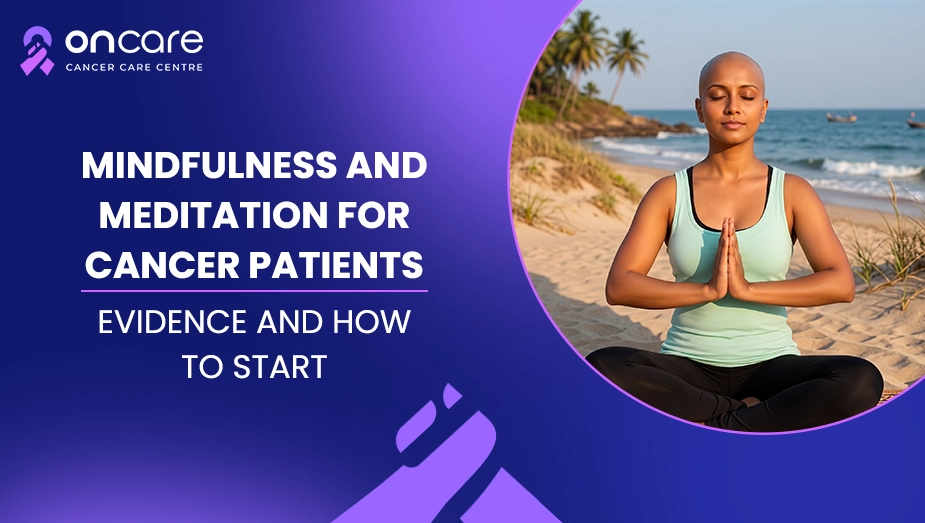
Mindfulness and meditation for Cancer patients are supportive activities that can assist to reduce stress, anxiety, sleep issues, and emotional suffering during Cancer therapy. Although they cannot treat or cure Cancer, there is data that suggests that they can enhance overall quality of life when used in conjunction with normal medical care such as Chemotherapy, Radiation Therapy, or surgery. The good news is that even 10–15 minutes a day can have a favorable influence over time.
What are Meditation and Mindfulness?
Dealing with a diagnosis of Cancer can be emotionally and physically challenging beyond the medical therapy. Common feelings throughout the voyage are fear, uncertainty, weariness, and stress.
Meditation and mindfulness are basic strategies that help people become more aware of the present moment without judging their thoughts or feelings. They teach the mind to concentrate on breath, body sensations, or guided relaxation, rather than to dwell on the past or the future.
Mindfulness for Cancer sufferers is not about avoiding painful feelings. Instead, it encourages people to recognize these thoughts calmly and respond more healthily.
If you want to read more about How to Relax Your Mind and Body, you can visit the official website of the National Cancer Institute.
What does the research say about mindfulness helping cancer patients?
Several clinical studies have examined the role of mindfulness in Cancer care during the last two decades. Mindfulness is not a medical treatment for Cancer itself, but there is evidence it can enhance emotional well-being and help patients manage better with treatment.
Mindfulness-based practices have been demonstrated to help:
- Reduce stress and anxiety
- Improve your sleep quality
- Decreased emotional anguish
- Reduce depressive symptoms
- Increase Your Focus and Mental Clarity
- Improve the overall quality of life
- Help patients cope with weariness from treatment
Mindfulness is now included in many Cancer centers’ supportive or integrative Cancer care along with traditional treatment.
How Does Mindfulness Help During Cancer Treatment?
Mindfulness can help patients in many ways, but it will differ for each patient.
Coping with Anxiety and Fear
The wait for scan findings, MRI results, or news on treatments can be an emotional roller coaster. Mindfulness helps patients stay in the present instead of worrying about uncertainty.
Dealing With Treatment Stress
Frequent hospital visits, Chemotherapy, Radiation Therapy, or surgery may produce continuous emotional pressure.
Regular meditation can help you find moments of calm in these challenging times.
Sleep Better
Cancer patients often have trouble sleeping because of pain, medication or emotional stress. Relaxation exercises and guided meditation before bedtime can assist enhance sleep quality.
Supporting Emotional Wellbeing
Mindfulness teaches us to accept our feelings rather than suppress them. This method may lessen frustration, anger, and helplessness.
Does Mindfulness Ease Physical Symptoms?
Mindfulness is no substitute for medical treatment, but it might help some patients better manage specific symptoms.
Possible advantages include:
- Improved management of chronic pain
- Decreased sensation of weariness
- Better relaxation
- Reduced muscular tension
- Enhanced breath awareness
Patients should continue taking all recommended drugs and discuss symptom management with their oncology team.
Various Forms of Meditation for Cancer Patients
Not all meditation techniques work for everyone. Patients can choose the method that they are most comfortable with.
Awareness of Breath
This is one of the easiest things to do. Patients relax and gently focus on each breath without trying to control it.
Meditation
A qualified instructor or recorded audio takes the person through relaxation and visualization techniques.
Body Scan Meditation
Gradually, attention is paid to different sections of the body. Patients learn to recognize stress areas and to relax them gradually.
Reflections on Loving-Kindness
This exercise may assist in cultivating compassion for self and others, which may help to lessen emotional suffering.
Walking Meditation
If you are physically able, you can turn leisurely walking with attention to each step into a sort of meditation.
How to Begin Mindfulness Meditation
You don’t need any specific equipment or previous experience to begin a mindfulness routine.
Step 1: Find a quiet place
Find a comfortable place where you won’t be interrupted for a few minutes.
Step 2: Sit Comfortably
Sit on a chair or cushion in a relaxed posture. If it’s not comfortable, you don’t have to sit in a certain way.
Step 3: Focus on Your Breathing
Start to notice your natural breath. Notice each breath in and out without trying to change the way you are breathing.
Step 4: Let thoughts come and go
It is common for the mind to drift. When this happens, softly return your attention to your breathing, without judging yourself.
Step 5: Practice Often
Begin with 5 to 10 minutes a day. As you get more comfortable, slowly increase the time you do this for.
Consistency outweighs the length of sessions.
How to Make Meditation a Daily Habit: Practical Tips
- Daily practice at the same time.
- Start with short sessions.
- Use guided meditation apps if it helps.
- Wear comfortable clothes.
- Don't measure your progress.
- Have patience with yourself.
- Keep going even on the tough days.
Small regular efforts are more effective than lengthier, less frequent sessions in the long run.
Can you practice mindfulness as a family?
Yeah. Caregivers and family members might also benefit from mindfulness.
You could try practicing together:
- Reduce stress for caregivers
- Enhance communication
- Enhance emotional support
- Create calm periods in treatment
- Encourage positive coping mechanisms
A few minutes of breathing exercises might help families feel more connected.
Mindfulness: Is It Right for Everyone?
For most people, mindfulness is typically deemed safe. Individuals with severe depression, trauma-related conditions, or acute psychological distress should visit a psychologist or psychiatrist before intense meditation programs.
If meditation brings up uncomfortable emotions, it is necessary to explore such experiences with a skilled mental health expert.
Meditation Myths in Cancer Treatment
Myth | Fact |
|---|---|
Meditation will heal cancer. | Meditation can help with emotional health, but does not treat or cure Cancer. |
You must meditate for one hour a day. | Even a frequent practice of 10-15 minutes can be beneficial. |
Meditation is about clearing your mind totally. | The aim is to watch the thoughts without getting involved in them. |
Instead of medical treatment, it’s meditation. | Mindfulness is an addition to normal Cancer treatment, not a replacement. |
When Should You Talk To Your Healthcare Team?
- Suffer from chronic anxiety
- Difficulties falling asleep
- Feelings of emotional strain continue
- Interested in adding meditation to your supportive care plan
- Unsure if a particular relaxation method is suitable during treatment
Consider talking with your oncologist about mindfulness.
Your health care team can provide evidence-based supportive care choices tailored to your treatment plan.
Consult Today
The care of cancer patients involves not just treating the disease but also caring for their emotional and mental health throughout the journey. Mindfulness and meditation can be helpful strategies in dealing with stress and enhancing the quality of life, combined with medical care.
At Oncare Cancer Hospital, our multidisciplinary staff believes in a holistic approach to Cancer care by supporting patients with evidence-based medical therapy, emotional counseling, and supportive care services, customized according to the individual needs. Talk to your oncology team about whether mindfulness activities would be a good fit for your treatment plan.





Frequently Asked Questions
No. Mindfulness will not cure Cancer. It is a supportive practice that can help you reduce stress, increase emotional well-being, and boost quality of life during treatment.
Beginners can start with 5 to 10 minutes every day. Most people find that they gradually build up to 15–20 minutes as they feel more comfortable.
Meditation is safe for most patients undergoing chemotherapy and other cancer therapies. But it should not replace medical care, rather enhance it. If you are concerned at all, speak to your oncologist.
Yes. Research suggests mindfulness may be helpful for anxiety, sleep, and emotional coping and may be a useful aspect of supportive Cancer care for many patients.
Written and Verified by:
Dr. Gajendra Kumar Himanshu Exp: 10 Yr
Medical Officer
Book an Appointment
Related Blogs

Sexuality and Intimacy During Cancer Treatment: Honest Conversations for Couples
Learn how cancer treatment affects intimacy, emotional connection, and relationships with support, guidance, and care from Oncare Cancer Hospital experts.

Cancer Treatment in India for International Patients: What to Expect
Explore cancer treatment in India for international patients. Oncare Cancer Hospital helps with advanced care, costs, travel support, and the treatment process.
Blood Cancer Treatment in India: BMT and Costs
Learn about blood cancer treatment in India, Bone Marrow Transplant (BMT), recovery, and treatment costs with expert care from Oncare Cancer Hospital.

Bone Density Loss After Cancer Treatment: Prevention and Monitoring
Learn about bone density loss after cancer treatment, common symptoms, prevention tips, and monitoring methods to support stronger bones and recovery.