Table of Contents
Liquid Biopsy Explained: Detecting Cancer Through a Simple Blood Draw

By Dr. Gajendra Kumar Himanshu


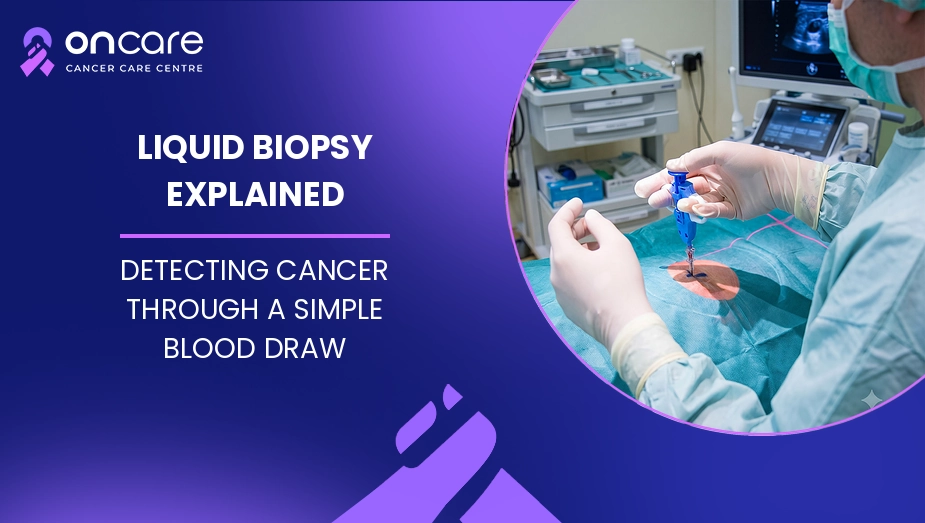
Liquid biopsy is an advanced diagnostic tool that identifies cancer-related genetic material or tumour cells from a simple blood draw. Unlike a tissue biopsy, which involves a procedure to remove part of the tumour, a liquid biopsy needs only a blood sample. It is a minimally invasive technique that can be used in some malignancies for diagnosis, genotyping, monitoring treatment and recurrence detection, but it does not replace tissue biopsy in all cases.
In this blog, we explain how liquid biopsy works, when doctors propose it, its benefits and limitations, and how it is helping make cancer diagnosis and therapy more exact.
The Significance of Liquid Biopsy
Traditionally, cancer diagnoses have depended on tissue biopsies, where a small sample of the tumour is taken for laboratory tests. This is still the gold standard in many circumstances, but getting a sample of tissue is not always straightforward. Some cancers are located deep within the body and may not be safe or practical to biopsy repeatedly.
Liquid biopsy provides a less intrusive alternative for acquiring critical information about certain tumours. Doctors can test a blood sample to see if tumour DNA or cancer cells are circulating in the blood. The information is useful for making treatment choices, assessing treatment effectiveness, and identifying genetic alterations that might influence future treatment choices.
With the advent of precision medicine, liquid biopsy is useful in current oncology for selected patients.
What Is Liquid Biopsy?
A liquid biopsy is a lab test performed on a sample of your blood to look for cancer-related substances that tumours shed into the bloodstream.
Instead of surgically extracting tissue or using a needle biopsy, a healthcare worker takes a tiny blood sample from a vein. The laboratory then tests the sample for circulating tumour DNA (ctDNA), circulating tumour cells (CTCs) or other cancer-related indicators.
The test involves a blood draw, so it's often faster and less intrusive than many traditional biopsy tests.
How Does a Liquid Biopsy Work?
Cancer cells shed little bits of DNA into the bloodstream when they die or divide. This is known as circulating tumour DNA.
The blood sample is then analysed with sophisticated laboratory technologies to find genetic abnormalities or molecular alterations that could be connected with cancer. These findings could assist physicians in understanding the biology of the tumour and identify if targeted therapies or other treatments would be appropriate.
The accuracy of the test depends on things including the type of cancer, the size of the tumour, the stage of the disease, and the amount of tumour DNA in the blood.
When Is Liquid Biopsy Suggested?
Liquid biopsy is not suitable for all patients or all cancers. It's used in a few instances where it can give useful clinical information.
Common Uses of Liquid Biopsy
- Finding genetic mutations that may help guide targeted therapy
- Monitoring response to cancer therapy
- Detecting signs of cancer recurrence after therapy
- Evaluation of tumour alterations when tissue sampling is difficult or dangerous
- Assessment of treatment resistance in advanced malignancies
Whether or not liquid biopsy is right for you depends on your diagnosis and treatment plan. Your oncologist will decide.
Liquid Biopsy versus Tissue Biopsy
Feature | Liquid Biopsy | Tissue Biopsy |
|---|---|---|
Sample needed | Blood sample | Tumour tissue sample |
Method | Less intrusive | May need surgery or needle biopsy |
Recovery | Usually immediate | May need recovery time |
Repeat tests | Simpler to perform several times | May not always be feasible |
Principal aim | Monitor illness, detect genetic modifications | Confirm diagnosis and analyse tumour tissue |
There are many advantages to liquid biopsy, but tissue biopsy is still required to confirm many cancer diagnoses.
Advantages of Liquid Biopsy
Liquid biopsy has several potential advantages for appropriate patients. It may:
- Minimise the requirement for several invasive procedures.
- Speed up access to critical genetic information.
- Help monitor how treatment is working over time.
- Identify gene mutations to inform precision medicine.
- Identify tumour alterations that take place during treatment.
These features make liquid biopsy an increasingly important technique in individualised cancer care.
What Are the Limitations?
Liquid biopsy is a huge breakthrough, but not a flawless one.
Some early-stage malignancies may shed very little tumour DNA into the bloodstream and may be more difficult to detect. In other circumstances, the test may miss some genetic mutations that are present in the tumour.
For many individuals, tissue biopsy is still needed to make the first diagnosis, identify the kind of malignancy, and do further laboratory tests.
Liquid biopsy is frequently used in conjunction with standard diagnostic tools, rather than as a replacement.
What to Expect During the Test
The process is similar to a standard blood test.
A healthcare worker draws a small amount of blood from a vein, generally in the arm. The sample is subsequently transferred to a specialist laboratory for further molecular analysis.
Most patients can return to their normal daily activities immediately following the blood draw.
Once the laboratory work-up is completed, your doctor will review the results with you and discuss how they may impact your treatment plan.
If you want to read more about liquid biopsy, you may visit the official website of the National Cancer Institute.
Consult Today
Liquid biopsy is transforming how doctors check for and follow some malignancies. It detects cancer-related genetic material from a simple blood draw to identify mutations, track therapy response, and predict recurrence in selected individuals. It doesn't replace tissue biopsy in all scenarios, but has become an important feature of precision oncology and personalised cancer care.
If you or a loved one has been diagnosed with cancer and is wondering if a liquid biopsy would be right for you, an experienced team of oncologists can help. The physicians at Oncare Cancer Hospital will review each patient's diagnosis, treatment history and clinical status to see if modern diagnostic tests such as liquid biopsy can aid in personalised therapy planning.
Disclaimer
This material is for informational purposes only and should not be considered medical advice. A liquid biopsy may not be the right test for every patient or every type of cancer. Diagnostic and therapeutic decisions should be made by a skilled oncologist based on clinical findings, test results, and a patient's medical state. Always see your doctor for medical advice tailored to your specific situation.





Frequently Asked Questions
Liquid biopsy is used to discover cancer-related genetic material in blood, detect mutations, evaluate response to therapy, identify recurrence, and aid in the selection of targeted therapy in selected individuals.
Not necessarily. A tissue biopsy is still the gold standard for confirming many cancer diagnoses. In some clinical settings, liquid biopsy is used as an additional test alongside it.
The process comprises a routine blood draw from a vein and usually involves minimal discomfort.
No. Liquid biopsy is not appropriate for every type or stage of cancer. Some early tumours shed very little tumour DNA into the bloodstream, potentially limiting detection.
Written and Verified by:
Dr. Gajendra Kumar Himanshu Exp: 10 Yr
Medical Officer
Book an Appointment
Related Blogs
CAR-T Cell Therapy in India: Eligibility, Process and Cost in 2026
CAR-T Cell Therapy in India is a highly advanced immunotherapy that involves the collection of a patient's own T cells, genetically modifying them to recognise cancer cells and infusion back into the body. In 2026, it is used largely for selected relapsed or refractory blood malignancies, including certain B-cell lymphomas and acute lymphoblastic leukaemias.
Cancer Staging Explained: What the TNM System Really Means
Stage refers to how much cancer has grown or spread in the body. The TNM system is the most extensively used staging system and lets doctors assess the size of the original tumour (T), if the lymph nodes are involved (N), and if the cancer has spread to distant organs (M).

Neoadjuvant Therapy: Why Some Patients Get Chemo Before Surgery
Neoadjuvant therapy is a type of cancer treatment that is given before surgery to shrink a tumour, make surgery more successful, and lower the possibility that cancer may spread. It can involve chemotherapy, targeted therapy, immunotherapy, hormone therapy or radiation, all of which assist doctors in developing a more effective treatment strategy.