
Laparotomy refers to an open surgery of the abdomen where the doctor makes a cut through the wall of the abdomen (belly) to examine inner organs, detect any health issue, take samples, or conduct needed treatment. In oncology, the operation may be useful to investigate some suspicious growths, estimate the spreading of a tumor, and check whether surgery can be conducted.
According to the health state of a patient, the doctors may suggest conducting an exploratory or staging laparotomy. These operations have different aims despite having similar nature. Some patients may even have their tumor removed or undergo another surgery at the same time.
Knowing what laparotomy is, what it involves, and the processes involved can be helpful to patients and their families in getting ready for the procedure. This blog discusses the Laparotomy procedure, various types of laparotomy, potential risks, and issues related to recovery in cancer treatment.
What Is Laparotomy?
Laparotomy is a medical operation that enables healthcare practitioners to reach the abdomen by making an opening in the abdominal wall. Unlike laparoscopy, which uses a few small cuts and a camera, laparotomy uses one larger cut so the surgeon can see and feel the organs directly. Through laparotomy, surgeons can examine the following organs:
Liver: To detect any suspicious lesions or the presence of cancer in it.
Stomach: To investigate any abnormal tissue or tumors in it.
Intestines: To detect any abnormal areas in the intestines.
Ovaries and uterus: To evaluate gynecological cancers.
Peritoneum: To investigate any abnormal lesions or metastasis of the cancer in the peritoneal cavity.
Lymph nodes: To investigate any affected lymph nodes or take biopsies from the lymph nodes.
Laparotomy may be done through a vertical or horizontal incision, based on the reason for which it is performed and the site that requires examination. Laparotomy may be used in oncology for staging cancer, diagnostic purposes, and certain operations. It is not required in all patients having abdominal cancer. The decision depends on scan results, the type of cancer and the patient's general health.
Why Is Laparotomy Performed in Cancer Care?
Laparotomy may be considered necessary when there is a need for direct visualization of the internal organs of the abdomen either to diagnose a particular condition or to treat it. There are several indications for laparotomy, which include:
Diagnosing a particular abnormality in the abdomen: In cases where imaging modalities fail to give adequate information, direct visualization of the abdomen is performed.
Evaluation of metastasis of cancer: Through this surgery, it becomes easy for doctors to visualize whether there are any affected organs or tissues in the abdomen.
Taking biopsy from suspicious areas: Tissues taken from suspicious areas may be analyzed in the laboratory for presence of cancer.
Determining tumour removal: The surgeon might assess the possibility of safe removal and presence of any complications in surrounding tissue.
Solving abdominal complications: In some instances, surgical intervention is required to treat issues like intestinal obstruction, internal bleeding or other issues linked to cancer.
All laparotomies do not necessarily result in removal of tumour. At times, it becomes necessary just to gain information for planning further treatment.
What Are the Different Types of Laparotomy?
Laparotomy can be categorized based on its clinical application. Laparotomies that involve exploration and staging play a crucial role in cancer management because they help in the diagnosis and assessment of the stage of malignancies. Other types can be done for the treatment of a known disease or in cases of emergencies.
1. Exploratory Laparotomy
Exploratory laparotomy is carried out when there is a need to conduct an internal examination of the abdomen in order to determine the cause of an illness. It can be done when other methods of investigation have failed to give a definite diagnosis.
In the procedure, the surgeon will inspect the abdominal organs and the surrounding areas for any abnormality. In case a suspicious lesion is found, a tissue sample will be taken. Exploratory laparotomy may be of use in oncological cases to:
- Determine the cause of an abdominal mass whose nature is unknown.
- Check unusual growths seen on scans.
- Find out if there is any evidence of cancer affecting adjacent areas.
- Obtain samples of tissue for examination.
- Decide if more surgery is needed.
This information can help doctors in making diagnosis and treatment decisions.
2. Staging Laparotomy
Staging laparotomy is required to determine the extent of spread of the cancer in the abdomen. The main aim of doing this procedure is to understand the spread of the disease and provide information to determine the treatment strategy. The surgeon can perform a biopsy during this procedure on the tissues from the abdominal organs, peritoneum, and lymph nodes.
In ovarian cancer, surgical staging may also include collecting fluid washings from the abdomen, removing the omentum (a fatty apron of tissue that covers the abdominal organs), and sampling lymph nodes to check for cancer cells.
Laparotomy as a method of staging may be performed in a selected group of cases of ovarian, uterine, and other abdominal and pelvic malignancies. Its results can help physicians determine:
- If the cancer is localized in its primary site only.
- If there is any involvement of neighboring organs or tissues.
- If the peritoneum is infiltrated by cancer.
- If the lymph nodes have any malignant cells.
- The proper modality of treatment according to the results.
The key point here is to note that not all patients with cancer have to undergo laparotomy for staging. Many modern methods of investigation give staging information without surgery.
3. Therapeutic Laparotomy
Therapeutic laparotomy is conducted when the aim of the surgical intervention is to address an existing issue in the abdominal region.
During the cancer treatment process, therapeutic laparotomy can be employed in situations where the surgeon intends to conduct surgery to cut out a tumour, remove the affected tissues, or deal with the complications brought about by the cancer itself.
This would entirely depend on the position of the tumour, its size, whether it involves other tissues around it, and whether the patient is able to tolerate the operation.
4. Emergency Laparotomy
An emergency laparotomy is a procedure done in response to a situation where the abdomen needs an urgent surgical procedure. When a cancer patient presents with some emergencies, these might include the following:
- Internal hemorrhage.
- Perforated intestine.
- Surgical bowel obstruction.
- Abdominal sepsis or peritonitis.
The first thing to do is to deal with the problem and ensure the safety of the patient. The oncology treatment plan can wait until the patient stabilizes.
How Is a Laparotomy Procedure Performed?
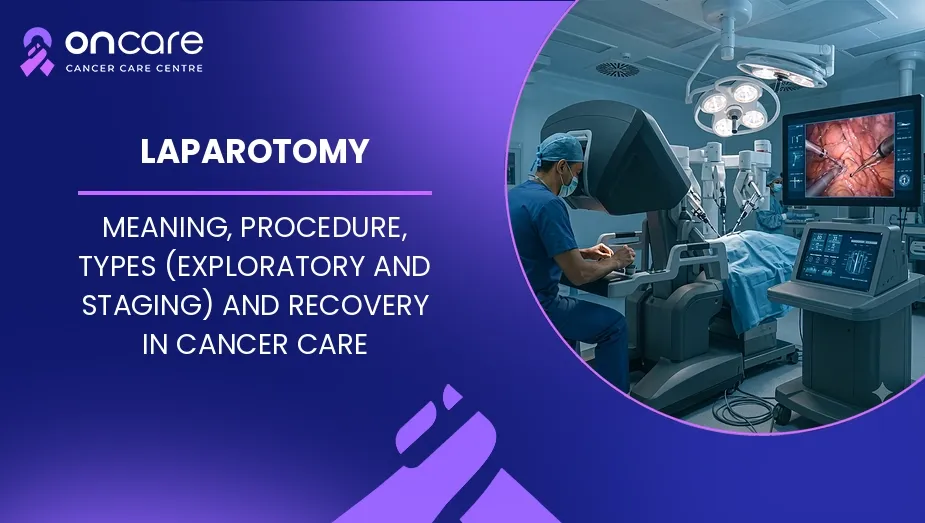
Laparotomy is performed in the hospital operating room under general anesthesia. The time it takes varies according to the reason for performing the surgery, the severity of the problem, and whether there are any other operations needed. The procedure is normally done as follows:
1. General Anesthesia
Before the surgery, the anesthesiologist gives general anesthesia to make the patient lose consciousness and numb the pain experienced throughout the surgery.
2. Making an Abdominal Incision
When the patient has been adequately prepared for surgery, the surgeon creates an incision in the abdominal wall. A vertical (midline) cut gives the widest access. A horizontal (transverse) cut is used for some pelvic surgeries. The surgery usually takes 1 to 4 hours, and longer for major cancer operations.
3. Examination of the Abdominal Organs
The surgeon takes a close look at the abdominal organs and tissues to detect any abnormalities. During cancer operations, special emphasis can be placed on the examination of suspicious tissue growth, lymph nodes, and the peritoneum.
4. Performing the Required Surgical Work
Depending on the reason for the surgery, the surgeon will either:
- Perform biopsies of tissues.
- Investigate the presence of cancerous lesions.
- Excise tumors or diseased tissues.
- Inspect adjacent organs or lymph nodes.
- Deal with an abdominal problem.
It is not always necessary to do all of the above in each surgery. The surgical intervention is guided by the needs of the patient and the course of the surgery itself.
5. Closing the Incision
Having finished all the necessary procedures, the surgeon will close the abdominal wound either by suturing or any other appropriate technique. A dressing will be applied to the surgical wound for its protection. Then the patient is moved to the recovery room where the patient’s health state will be controlled while the anaesthetic wears off.
How Should You Prepare for a Laparotomy?
Laparotomy preparation is associated with medical preparations and arrangements that lower surgical risks and promote patient recovery.
Blood testing: This helps assess the blood cell count, the state of kidneys and liver, and other factors.
Imaging studies: Ultrasound, CT scan, and MRI can be performed to assess the location and nature of the problem in the abdomen.
Medication intake: Tell your doctor what medications, vitamins, and herbs you are taking. Some medications, especially blood-thinning drugs, should be adjusted.
Fasting instructions: You may be instructed not to consume any food or liquid for a specific time before anaesthesia.
Medical history: Give details regarding your allergies, history of any surgery, current diseases, and any experience of anaesthesia previously.
Use of tobacco products and alcohol: You may be instructed by your doctor not to use tobacco products and alcohol before surgery.
Home preparation: You should make living arrangements as you might need help after being discharged from the hospital.
Do not stop or change any medicine on your own; follow your surgical team's instructions.
What Happens After Laparotomy?
The patients are taken to the recovery room or the surgical ward for monitoring after surgery. The medical professionals monitor the breathing, blood pressure, heart rate, wound status, and pain levels. The immediate post-operative care is all about dealing with pain, preventing complications, and helping restore normal physiological functions. Here are some of the aspects of post-operative care:
Pain control: Pain in the abdomen is normal after an open surgery procedure. Physicians can provide pain relievers based on the patient’s requirements.
Wound inspection: Redness, swelling, drainage, or infection at the wound site is observed.
Oral intake: Intake of fluids is done gradually, with introduction of foods depending on when bowel function is recovered.
Movement: Patients are encouraged to sit up and walk, with help, from the first day after surgery. Movement assists patients in preventing blood clots and regaining normal bowel function.
Urine measurement: For monitoring the volume of urine released by the body, a catheter can be inserted temporarily in the body.
Bowel activity: Doctors check that you are passing gas and opening your bowels, a sign that the gut is working again.
Based on the surgical procedure and the condition of the patient, Most people stay in hospital for about 5 to 10 days, and longer after major cancer surgery.
How Long Does It Take to Recover from Laparotomy?
The time for recovery from laparotomy differs from individual to individual. This is because the incision made in the abdomen is bigger compared to laparoscopic procedures.
Usually, it takes about 6-8 weeks for patients to recover after an uneventful open abdominal procedure. In some cases, full recovery can take more time due to extensive procedures and further treatment of cancer. In the process of recuperation, there are some guidelines that should be observed before resuming normal activities:
Lifting: Refrain from lifting items weighing more than 5 kg for a period of six weeks following surgery.
Driving: Start driving again only once you are able to make an emergency stop without experiencing any pain or discomfort, which usually occurs 4–6 weeks post-operation.
Back to work: Those with desk jobs can go back to work after approximately 4-6 weeks from the time of the surgery, based on how well they have recovered.
Chemotherapy: Chemotherapy can be given once it has been decided that it is required and the wound created by surgery has had enough time to heal, usually about 4-6 weeks after surgery. This depends upon the schedule for treatment and recommendations from the oncologist.
These are the phases that patients are likely to experience:
Recovery stage | What to expect |
|---|---|
First 1–3 days | Pain management, wound monitoring, gradual movement, and monitoring of bowel function |
First 1–2 weeks | Rest at home, short walks, wound care, and follow-up instructions |
Weeks 3–4 | Gradual improvement in movement and daily activities, depending on healing |
Weeks 5–8 | Increasing activity levels and gradual return to routine activities with medical approval |
After 8 weeks | Further improvement in strength and stamina; some patients may need additional recovery time |
These are estimates, not specific checkpoints. The recovery will depend on the age of the patient, overall health, findings during surgery, and any complications that may arise. Patients who are undergoing treatment for their cancer will also need more time to recover before beginning their treatments.
Life After Laparotomy: Care and Precautions
Patients must adhere to the surgeon's guidelines after a laparotomy in order to ensure proper wound healing.
Scar care: Maintain cleanliness and dryness of the incision site as instructed by your surgical team. Do not rub the scar and do not apply any ointments or other substances on it before your doctor approves it.
To prevent incisional hernia: Do not perform any activity that puts undue pressure on the abdomen. In case you have to sneeze or cough, keep a pillow close to your abdomen.
Diet after laparotomy: The food intake is slowly increased depending upon the recovery from the operation. Patients may begin eating clear liquids followed by soft foods and eventually the normal diet. Follow your physician’s diet chart.
What Are the Possible Risks and Complications of Laparotomy?
Like all other major surgeries, there are some risks associated with a laparotomy. Some risks are possible immediately after surgery while others can occur during the healing process. Some risks are:
Complication | What it means |
|---|---|
Infection | Bacteria may infect the surgical wound or internal abdominal tissues. |
Bleeding | Blood loss may occur during or after the operation. |
Blood clots | Reduced movement can increase the risk of clots in the legs, which may sometimes travel to the lungs. |
Bowel obstruction | Scar tissue may develop and interfere with the normal movement of intestinal contents. |
Wound separation | The edges of the surgical incision may partially or completely reopen. |
Incisional hernia | Abdominal tissue may push through a weakened area around the surgical incision. |
Ileus | The bowel is slow to start working again, causing bloating and vomiting for a few days. |
Adhesions | Internal scar tissue may cause organs or tissues to stick together. |
Anaesthesia-related complications | Some patients may experience reactions or other problems associated with general anaesthesia. |
The chances of these occurring are dependent upon the surgical procedure, current health condition, and general well-being of the patient.
What Is the Difference Between Laparotomy and Laparoscopy?
Laparotomy and laparoscopy are two types of surgery that are performed to diagnose and treat problems in the abdomen. The only major distinction between the two methods is in how the abdominal area is accessed.
Feature | Laparotomy | Laparoscopy |
|---|---|---|
Surgical approach | Open surgery | Minimally invasive surgery |
Incision | Usually one larger incision | Usually several small incisions |
Visualisation | Direct examination of abdominal organs | Camera-assisted examination |
Recovery | Generally longer | Generally shorter |
Hospital stay | Often longer | Often shorter |
Post-operative discomfort | May be more significant | Usually less significant |
Suitability | Selected complex conditions and procedures | Suitable for many diagnostic and surgical procedures |
Which Procedure Is Better for Cancer Patients?
No one approach suits every cancer patient. The decision will depend on the type of cancer, tumor location, extent of the disease, history of abdominal surgeries, and the discretion of the attending surgeon.
A Laparoscopic approach may be more suitable if minimally invasive technique is sufficient to gain information and treat the condition. On the other hand, laparotomy may be more desirable if extensive exposure, complicated surgery, and emergencies are involved.
The treating surgeon considers the advantages and disadvantages of each before making the decision.
When Should You Contact a Doctor?
Some signs need immediate medical examination as they may show an infection or other complications after surgery. Inform your surgical team if you have:
- Fever or chills.
- Increasing pain in the abdomen.
- Pain, swelling, or redness in one calf, which may indicate a blood clot (DVT).
- Redness, heat, swelling, or pus in the incision site.
- Constant vomiting or being unable to keep down fluids.
- Abdominal swelling.
- Problems urinating or having a bowel movement.
Emergency care is required if you get chest pain, difficulty breathing, fainting, or heavy bleeding.
Consult Today
Laparotomy plays an important role in diagnosis, stage determination, and treatment of certain types of abdominal cancers. Knowledge regarding laparotomy and all the related issues could be vital in making decisions regarding treatment procedures.
If your doctor has recommended a laparotomy, or you want a second opinion on cancer staging or surgery, consult a cancer surgeon at Oncare Cancer Hospital. The team will analyze your tests and explain the necessity of surgery and further stages of your cancer treatment.
Disclaimer
This blog was written for educational purposes only and must not be regarded as an alternative to professional medical advice, diagnosis, or treatment. The need for laparotomy, the surgery itself and recovery time differ from person to person.
Frequently Asked Questions
What is the primary goal of a laparotomy?
The primary goal of laparotomy is to enter the abdominal cavity via a cut to examine organs, diagnose conditions, obtain tissue specimens, or conduct surgery.
Is a laparotomy major surgery?
Yes. Laparotomy can be classified as major surgery due to the incision made in the abdominal wall under general anesthesia. It requires more time for hospital stay and recovery compared to minimal surgery.
How long does a laparotomy procedure take?
Usually 1 to 4 hours, depending on what is done. Major cancer surgery can take longer. A relatively simple surgery may take less time than a surgery where there is tumor excision or detailed examination of the organs in the abdomen.
How long is the hospital stay after laparotomy?
Most patients will require at least a few days of hospitalization after the procedure known as laparotomy. This period is dependent on factors such as the nature of the procedure, the general health of the patient and the rate of their recovery.
How big is the scar after a laparotomy?
The presence of scar tissue after laparotomy is expected since there is a larger cut made to gain entry into the abdominal cavity. This can either be vertical, running from top to bottom through the middle of the abdomen, or horizontal. The size of the scar tissue formed varies depending on the nature of the operation performed.
When can I eat after a laparotomy?
In most cases, patients are allowed to take some water or clear liquids once they have fully regained consciousness and been permitted by the surgical team. Patients are progressively introduced to food according to their tolerance, based on the condition of their bowel functions and the kind of surgery conducted. In some instances, patients will have to wait longer due to complications such as ileus.
Is laparotomy painful?
Laparotomy is done under general anesthesia; therefore, there is no sensation of pain during the operation. Some pain and discomfort from the abdomen are anticipated post-operatively. Physicians employ a number of pain management techniques such as intravenous pain medication, oral pain medications, and epidural anesthesia. Epidural anesthesia entails inserting a small catheter in the patient’s back in order to give pain-relieving medicines in the area close to the spinal nerves.
What is the difference between exploratory and staging laparotomy?
Both exploratory and staging laparotomies involve open surgery on the abdomen; however, the two surgeries are conducted for entirely different reasons. Exploratory laparotomy is carried out to assist surgeons to inspect the abdominal organs in order to pinpoint the causes of undiagnosed symptoms. In staging laparotomy, an organ biopsy may be included among other measures in cancer patients to establish the stage of cancer progression in the abdominal organs.