Table of Contents
Feeding Tubes During Cancer Treatment: NG Tube and PEG Explained

By Dr. Gajendra Kumar Himanshu


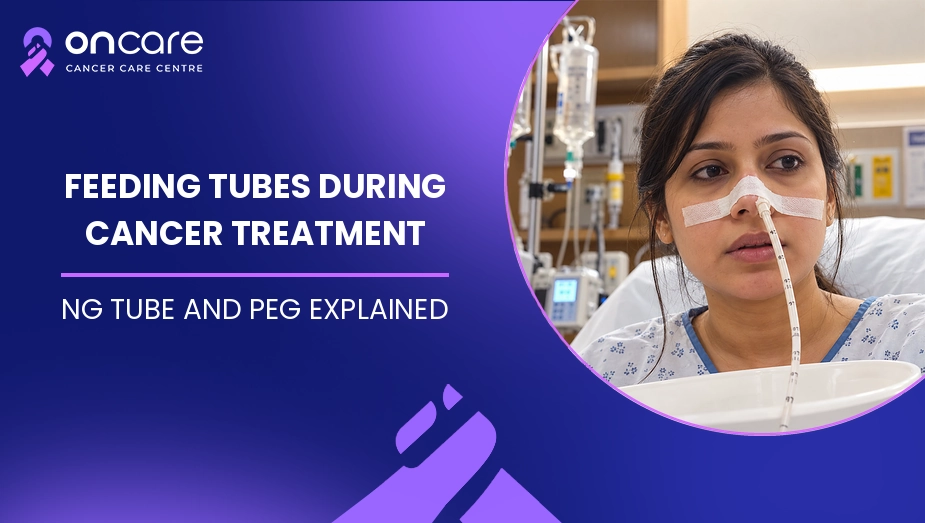
Feeding tubes are used during cancer treatment when a patient cannot eat or drink enough by mouth to get the nutrition and fluids the body needs. Two common types are the nasogastric (NG) tube, which goes through the nose into the stomach, and the PEG tube, which is placed through the skin of the abdomen directly into the stomach. Both can provide food, fluids, and medicines when swallowing is difficult or unsafe.
Cancer and its treatment can sometimes make eating difficult because of problems such as difficulty swallowing, mouth sores, pain, nausea, or changes in the throat and digestive system. A feeding tube can help provide nutrition while the patient receives treatment or recovers.
In this blog, we will explain why feeding tubes may be needed, how NG and PEG tubes are different, how they are used, their possible benefits and risks, and what patients and caregivers should know about tube care.
Why Are Feeding Tubes Needed During Cancer Treatment?
Good nutrition is important during cancer treatment because the body needs energy and protein to support daily activities, healing, and recovery. However, some patients may not be able to eat enough food by mouth.
Head and neck cancers can make chewing or swallowing difficult. Surgery and radiation therapy may also affect the mouth, throat, or swallowing muscles. Some patients with other cancers may have severe nausea, weakness, or digestive problems that make eating difficult.
A feeding tube may be recommended when a patient is unable to meet their nutritional needs safely or adequately by mouth. The decision depends on the person's cancer, treatment plan, swallowing ability, nutritional condition, and expected recovery.
You can also read this helpful guide on nutrition during cancer treatment to understand why food and nutrition are important during treatment.
What Is an NG Feeding Tube?
An NG tube, or nasogastric tube, is a thin, flexible tube that passes through the nose, down the throat, and into the stomach. It can be used to give liquid food, fluids, and some medicines directly into the stomach.
Because the tube enters through the nose, an NG tube does not require an opening to be made in the abdomen. It is often useful when tube feeding is expected to be needed for a shorter period.
Before feeding begins, the healthcare team confirms that the tube is correctly positioned. The tube may be secured to the nose or face to help prevent it from moving.
Some patients may find an NG tube uncomfortable, particularly when it is first inserted. It can also cause irritation in the nose or throat.
What Is a PEG Feeding Tube?
PEG stands for percutaneous endoscopic gastrostomy. A PEG tube is placed directly into the stomach through a small opening made in the abdomen. Doctors usually use an endoscope, a thin, flexible camera, to help position the tube correctly.
A PEG tube may be considered when a patient is expected to need tube feeding for a longer period. It avoids having a tube pass through the nose and throat every day.
PEG feeding does not necessarily mean that a person can never eat normally again. Some patients continue to eat or drink by mouth if their swallowing is safe, while the PEG provides additional nutrition and fluids.
For patients undergoing treatment for cancers of the mouth, throat, or neck, you can learn more about head and neck cancer treatment and the supportive care that may be needed.
NG Tube vs PEG Tube: What Is the Difference?
Both tubes can deliver nutrition directly to the stomach, but they are placed differently and are generally used for different situations.
Feature | NG Tube | PEG Tube |
|---|---|---|
Full name | Nasogastric tube | Percutaneous endoscopic gastrostomy |
Entry point | Through the nose | Through the abdomen |
Ends in | Stomach | Stomach |
Placement | Passed through the nose | Placed through a small abdominal opening |
Common use | Often suitable for shorter-term feeding | Often used when longer-term feeding is expected |
Surgery/procedure | Does not require an abdominal opening | Requires a medical procedure |
Visibility | Tube is visible around the nose | Tube is visible on the abdomen |
Main care | Nose, throat and tube care | Skin around the abdominal opening and tube care |
Neither tube is automatically better than the other. The appropriate choice depends on the patient's medical condition and how long nutritional support is expected to be needed.
When Is an NG Tube Usually Used?
An NG tube may be useful when the need for tube feeding is expected to be temporary. For example, a patient may need nutritional support after surgery or during a period when swallowing is difficult.
It can also be used when doctors need to provide nutrition without placing a more permanent feeding tube.
However, an NG tube may be uncomfortable for some people and can sometimes move out of position. The healthcare team should check the tube before feeding according to their safety protocol.
When Is a PEG Tube Usually Used?
A PEG tube may be considered when swallowing problems are expected to continue for a longer period.
It can be particularly useful for some patients with head and neck cancer who may have difficulty eating during or after treatment. The tube can remain in place while the patient works on swallowing and nutrition with the healthcare team.
A PEG tube can also make it easier to provide regular nutrition, fluids, and some medicines without repeatedly inserting a tube through the nose.
You can also read about cancer treatment side effects because problems such as mouth sores, nausea, and swallowing difficulties can affect a patient's ability to eat.
How Is Feeding Given Through These Tubes?
Tube feeding usually involves specially prepared liquid nutrition. The healthcare team or dietitian decides which formula is appropriate and how much the patient needs.
Feeding may be given in different ways depending on the patient's condition and the type of tube. It may be given slowly using a feeding pump or in separate measured amounts called bolus feeds.
Patients and caregivers are taught how to:
- Prepare and give the prescribed feed safely.
- Keep the tube clean and follow flushing instructions.
- Give medicines through the tube only when advised.
- Recognise signs of blockage, infection or other problems.
The exact feeding schedule should always follow the instructions provided by the healthcare team.
What Are the Possible Problems With Feeding Tubes?
Feeding tubes are generally useful, but they can have complications. The risks depend on the type of tube and the patient's health.
With an NG tube, possible problems include nose or throat irritation, discomfort, tube blockage, or accidental movement of the tube.
With a PEG tube, problems can include infection or irritation around the opening, leakage, bleeding, or blockage. More serious complications can occur but are less common.
Patients and caregivers should contact their healthcare team if there is increasing redness, swelling, pain, pus-like discharge, persistent bleeding, repeated vomiting, or difficulty using the tube.
How Can Patients Care for a Feeding Tube at Home?
Good tube care helps reduce problems and keeps feeding safe. Patients should follow the instructions given by their hospital because care can differ depending on the tube and individual condition.
NG Tube Care
The nose and surrounding skin should be kept clean, and the tube should remain securely positioned. Do not push the tube further in or pull it out unless your healthcare team has specifically instructed you to do so.
PEG Tube Care
The skin around the PEG opening should be checked regularly. Keep the area clean and follow the instructions for cleaning, flushing, and dressing.
Caregivers should also make sure the tube is not pulled accidentally during movement, dressing, or daily activities.
Can Patients Eat Normally With a Feeding Tube?
This depends on the reason the feeding tube was needed and whether swallowing is safe.
Some patients can continue eating and drinking by mouth while also receiving tube feeding. Others may need to rely mainly or completely on the tube for a period of time.
A doctor or speech and swallowing specialist may assess swallowing before recommending normal food and drinks. Patients should not start eating or drinking foods that have been restricted without medical advice.
If you want to read more about cancer treatment, you can visit the National Cancer Institute.
Consult Today
Feeding tubes can provide important nutrition and fluids when cancer or its treatment makes eating difficult or unsafe. An NG tube is passed through the nose into the stomach, while a PEG tube is placed directly into the stomach through the abdomen. The right choice depends on the patient's condition and how long feeding support is expected to be needed.
At Oncare Cancer Hospital, patients and families can discuss swallowing problems, nutrition, feeding tubes, and supportive care with their cancer care team. If you or your loved one is struggling to eat or drink during cancer treatment, speak with your doctor before weight loss or poor nutrition becomes a bigger concern.
Disclaimer
This information is for educational purposes only and does not constitute medical advice, diagnosis, or treatment. The need for a feeding tube and the type of tube used depend on each patient's condition. Always discuss feeding, nutrition, and treatment decisions with a certified cancer healthcare provider.





Frequently Asked Questions
Not necessarily. An NG tube is often useful for shorter-term feeding, while a PEG may be considered when longer-term feeding is expected. The choice depends on the patient.
The procedure is performed with medicines to control pain and discomfort. Some soreness around the abdominal opening can occur afterwards.
Some patients can eat and drink by mouth while using a feeding tube, but this depends on whether swallowing is safe and how well the patient can meet nutritional needs.
The duration varies. Some patients need tube feeding for a short time, while others may need it for months or longer depending on their cancer and recovery.
Written and Verified by:
Dr. Gajendra Kumar Himanshu Exp: 10 Yr
Medical Officer
Book an Appointment
Related Blogs

Autologous vs Allogeneic Stem Cell Transplant: Key Differences Explained
Understand autologous and allogeneic stem cell transplants, including differences, benefits, risks, donor matching, and recovery at Oncare Cancer Hospital.
Bone Marrow Biopsy: Why It Is Done and What to Expect
Learn why a bone marrow biopsy is done, how the procedure works, pain, preparation, recovery and test results with expert guidance at Oncare Cancer Hospital.

Aromatase Inhibitors vs Tamoxifen: Hormone Therapy Choices in Breast Cancer
Compare tamoxifen and aromatase inhibitors for breast cancer, including how they work, menopause status, and treatment choices at Oncare Cancer Hospital.