Table of Contents
When the Caregiver Falls Sick: A Backup Plan for Indian Families

By Dr. Gajendra Kumar Himanshu


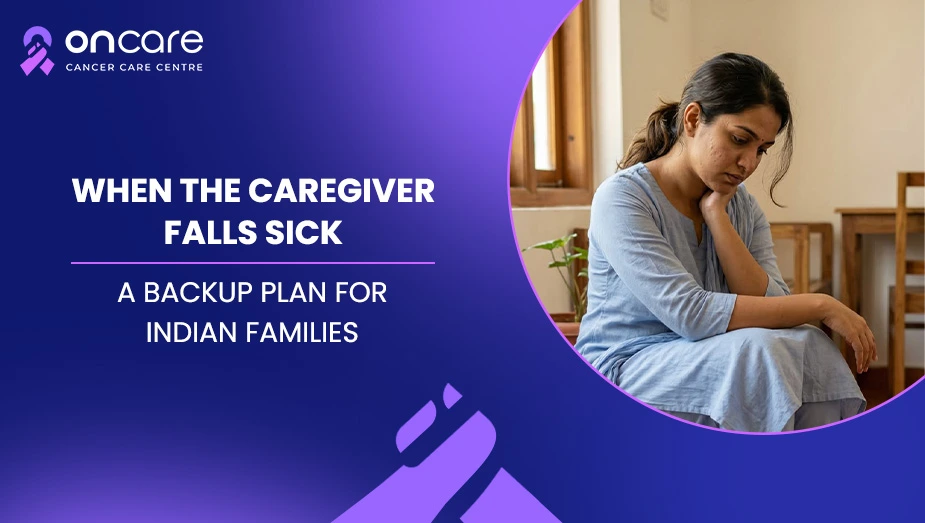
Caregivers play an important role in supporting loved ones during cancer treatment and long-term illness care, especially in many Indian families where one person often manages most caregiving responsibilities. However, while handling hospital visits, medicines, finances and household work, caregivers frequently neglect their own physical and emotional health. If the primary caregiver suddenly becomes ill, families may struggle to continue daily patient care, emotional support and treatment management effectively.
Creating a backup caregiving plan before an emergency occurs may help families reduce stress and avoid interruptions in patient care. A practical caregiving backup plan may include dividing responsibilities among family members, organizing medical information, arranging financial support and preparing temporary caregiving assistance if needed.
In this blog, we will discuss why backup caregiving plans are important, how families can prepare for emergencies, ways to share responsibilities and practical steps to maintain continuous patient care if the primary caregiver becomes unavailable.
Why Caregivers Often Ignore Their Own Health and Emotional Well-Being
Many caregivers prioritize the patient’s needs over their own health, sleep, nutrition and emotional balance. In Indian households, one family member often becomes responsible for managing medicines, hospital appointments, emotional support and household duties simultaneously.
Over time, this emotional and physical pressure may increase the risk of fatigue, stress-related health problems and caregiver burnout. Some caregivers continue working despite exhaustion because they fear leaving the patient unsupported. However, neglecting personal health may eventually create serious difficulties for both the caregiver and the patient.
Families should understand that maintaining caregiver health is also important for ensuring stable and uninterrupted patient care.
Recognizing Early Warning Signs of Caregiver Burnout and Fatigue
Caregiver burnout may develop gradually and often feels like normal tiredness in the beginning. Identifying warning signs early may help families take preventive action before emotional or physical health conditions become severe.
Common Signs of Caregiver Burnout and Their Impact
Warning Sign | Possible Impact on Caregiving |
|---|---|
Constant exhaustion | Reduced energy and difficulty concentrating |
Sleep problems | Increased emotional stress and fatigue |
Frequent illness | Weak immunity and slower recovery |
Irritability or nervousness | Communication difficulties within the family |
Emotional withdrawal | Reduced emotional support for the patient |
Preparing a Family Backup Care Plan Before Emergencies Happen
A backup caregiving plan may help families respond quickly if the primary caregiver becomes sick or temporarily unavailable. Responsibilities like coordinating with hospitals, arranging medicines, managing transport and handling finances should not depend completely on one person.
Families should maintain organized records containing emergency contacts, treatment schedules, prescription details, hospital information and insurance papers that other family members can access easily during emergencies.
According to the National Library of Medicine's , organized health information and timely medical support are important for effective patient care management.
Sharing Caregiving Responsibilities Among Family Members
In many households, one family member unintentionally handles most caregiving responsibilities alone. Dividing smaller tasks among siblings, spouses or relatives may reduce physical and emotional pressure on the primary caregiver.
One person may manage doctor appointments, another may supervise medicines and another may assist with meals or transportation. Even temporary help with daily responsibilities may provide significant relief during emotionally stressful periods.
Maintaining Continuity of Medical Care During Unexpected Situations
If the caregiver suddenly becomes ill, treatment schedules and patient support may become disorganized. Families should prepare medical records, prescriptions, insurance details and emergency contact information in advance to avoid confusion during urgent situations.
Maintaining clear records of medicine timings, dietary instructions, treatment plans and doctor recommendations may allow another family member to temporarily continue caregiving responsibilities without interrupting patient care.
When Professional Caregiving Support May Be Helpful
Some families may occasionally require professional caregiving support, especially when patients need regular medical supervision or when family caregivers experience burnout.
Professional caregivers or hospital support services may help reduce pressure during emergencies and allow family caregivers time to recover physically and emotionally before resuming responsibilities.
Seeking outside support should not be viewed as weakness, but as a practical step toward ensuring proper patient care.
Supporting the Emotional Well-Being of Patients and Caregivers
When caregivers become ill or emotionally exhausted, patients may feel anxious, guilty or emotionally insecure. Open communication within the family may help reassure patients that support systems remain available during difficult times.
Caregivers also need emotional support during recovery from illness or burnout. Encouraging proper rest, regular health check-ups, balanced meals and emotional conversations may help caregivers recover more effectively and avoid long-term exhaustion.
Planning Ahead for Future Family and Medical Emergencies
A well-prepared family support system may help families handle unexpected situations with greater confidence and emotional stability. Open discussions about caregiving duties, financial planning, emergency contacts and medical arrangements may reduce panic during emergencies.
Families who plan ahead are often better prepared to manage emotional stress while ensuring that patients continue receiving proper care, treatment support and emotional reassurance.
Consult Today
Caregivers are often the emotional and physical support system for families dealing with serious illness, yet their own health is frequently overlooked. Creating a backup caregiving plan may help families maintain stability, reduce emotional stress and ensure uninterrupted patient care if the primary caregiver becomes unavailable.
By sharing responsibilities, organizing medical information and seeking timely support when needed, families may make long-term caregiving more sustainable and emotionally manageable.
For families seeking compassionate cancer care and patient-focused medical support, Oncare Cancer Hospital is known for providing advanced cancer treatment and supportive healthcare services throughout the treatment journey.





Frequently Asked Questions
A backup caregiving plan may help families continue patient care smoothly during emergencies or caregiver illness.
Common warning signs may include constant fatigue, emotional stress, sleep problems and frequent illness.
Yes, sharing caregiving responsibilities may reduce pressure on one person and improve overall support for the patient.
Professional caregiving support may be helpful during emergencies, caregiver burnout or when patients require regular medical supervision.
Written and Verified by:
Dr. Gajendra Kumar Himanshu Exp: 10 Yr
Medical Officer
Book an Appointment
Related Blogs
Self-Care Tips for Cancer Caregivers: Protecting Your Own Health
Learn self-care tips for cancer caregivers with Oncare Cancer Hospital. Protect your health, manage stress, and avoid burnout while caring for a loved one.

A Caregiver's Handbook: How to Support a Loved One Through Chemotherapy
Support a loved one through chemotherapy with Oncare Cancer Hospital. Learn caregiving tips, emotional support, and daily care strategies for patients.
Caregiver Burnout: Warning Signs and How to Prevent It
Learn caregiver burnout warning signs and prevention tips. Protect your health and get expert support at Oncare Cancer Hospital for a stronger caregiving journey.
How Caregivers Can Stay Healthy While Caring for Cancer Patients
Learn essential caregiver tips to stay physically and mentally healthy while supporting cancer patients. Get guidance and support from Oncare Cancer Hospital.