Table of Contents
Do Ovarian Cysts Turn Into Cancer? Doctor-Approved Answers

By Prashant Baghel


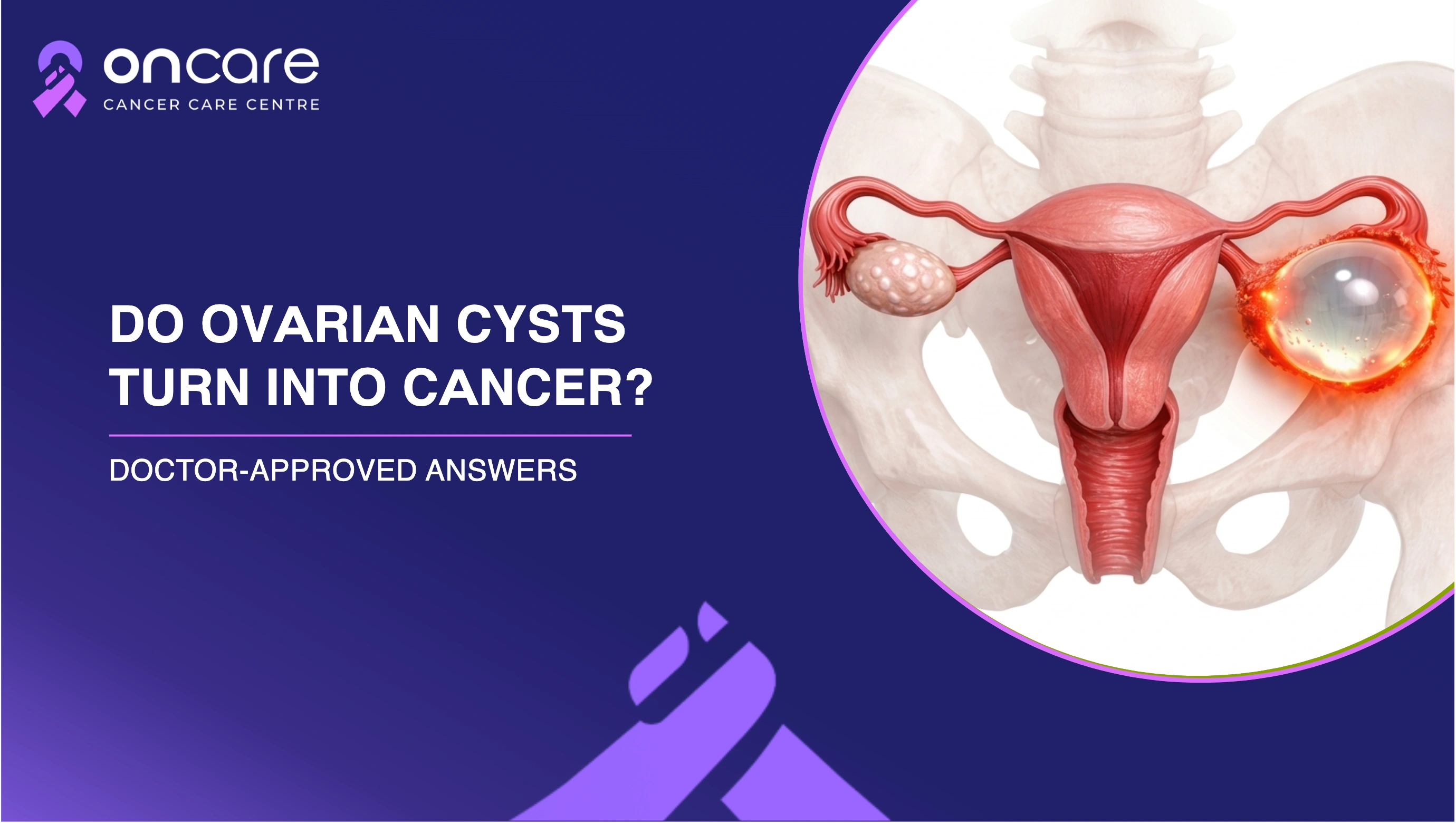
It can be scary to hear the words "ovarian cyst." A lot of women ask the same thing right away: Can ovarian cysts cause cancer? It's normal to be afraid of this. The ovaries are an important part of a woman's body, and anything strange there can make her worry. You might have read or heard from someone you know that ovarian cysts always turn into cancer.
This article will help you get over that fear by giving you clear, honest information. We will talk about what ovarian cysts are, how common they are, when they are not dangerous, and when they might need medical help. Everything is explained in a way that is very easy for people to understand.
What are cysts in the ovaries?
Ovarian cysts are sacs filled with fluid that form on or in the ovaries. A lot of people have them, especially women who can have kids. Ovarian cysts are usually just a normal part of the monthly menstrual cycle. A lot of women get cysts at some point in their lives and don't even know it.
Most of the time, these cysts are small and go away on their own without any help. Doctors often find them during routine ultrasound tests that are done for other reasons. Most ovarian cysts are not harmful and do not lead to cancer.
What Causes Ovarian Cysts to Form?
Hormonal changes during the menstrual cycle are a common cause of ovarian cysts. Every month, the ovary lets go of an egg. The sac that holds the egg doesn't always open or break down the right way. A cyst can form when this happens.
Hormonal imbalances, pregnancy, or some medical conditions can also cause other cysts to form. Changes in the body and stress can also be factors. These cysts are usually not harmful and go away on their own.
Different kinds of ovarian cysts
There are several kinds of ovarian cysts. Functional cysts are the most common type and are related to the menstrual cycle. These usually go away in a few months. Cysts filled with tissue or fluid that form for different reasons are another type.
Some cysts are more common in women under 30, while others are more common in women over 50. When doctors think about whether can ovarian cysts cause cancer in rare cases, it's important to know what kind of cyst it is.
Do ovarian cysts make you more likely to get cancer?
This is the question that worries a lot of women the most. In short, most ovarian cysts do not lead to cancer. Most of them are not cancerous and never will be.
Some ovarian cysts can be cancerous or turn into cancer, but this is very rare. Women who are past menopause have a higher risk of this. Even so, most cysts that are found are still not cancerous. To figure out the risk, doctors carefully look at the size, shape, and changes over time.
How Doctors Know the Difference
Doctors use a number of tools to figure out if a cyst is dangerous or if it needs more testing. They pay close attention to the cyst's size, shape, and how it changes over time. A doctor will also ask about your medical history and symptoms. This helps them figure out if the cyst is normal or needs more attention.
How Doctors Check for Ovarian Cysts
To find out if a cyst is harmless or needs more testing, doctors use a number of tools. Ultrasound scans help show how big and what shape the cyst is. You might also have blood tests to look for certain markers.
What the Results Usually Mean
A small, smooth cyst that is full of fluid is usually not dangerous. If a cyst grows quickly, has solid parts, or causes symptoms that don't go away, it may need to be watched more closely. This careful approach helps us answer the question of whether can ovarian cysts cause cancer correctly.
Signs of Ovarian Cysts
Most ovarian cysts don't cause any problems. When symptoms do show up, they might include mild pain in the lower abdomen, bloating, or changes in the menstrual cycle. Some women feel pressure or fullness in their stomachs.
Common Mild Symptoms
Most ovarian cysts don't cause any problems. When symptoms do show up, they might include mild pain in the lower abdomen, bloating, or changes in the menstrual cycle. Some women feel pressure or fullness in their stomachs.
Signs of Trouble That Need Immediate Attention
You should not ignore severe pain, sudden pain, fever, or dizziness. These signs don't usually mean you have cancer, but they could mean the cyst has burst or twisted. If you have any strange or long-lasting symptoms, you should see a doctor.
Signs That Need More Attention
If symptoms last a long time or get worse, doctors may look more closely. You might need to get tested if you have pain that doesn't go away, feel full quickly while eating, lose weight for no reason, or notice changes in how often you go to the bathroom.
These signs don't always mean cancer, but you should still pay attention to them. Getting medical help early on can help you feel better and rule out serious problems.
Things that make it more likely that you will get ovarian cancer
There are some things that make ovarian cancer more likely to happen. Age is a big factor, and the risk goes up after menopause. A family history of breast or ovarian cancer can also make the risk higher.
Changes in genes, long-term use of hormones, and some medical conditions are also to blame. Having ovarian cysts doesn't mean a woman will definitely get cancer, but doctors look at all the risk factors at once.
Cysts on the ovaries after menopause
After menopause, ovarian cysts are less likely to happen, but they can still happen. Doctors are more careful when they find cysts in older women because the risk of cancer goes up with age.
Most cysts that form after menopause are still not cancerous. But doctors often suggest regular scans or more tests to be safe. This close watch helps find problems early if they happen.
How to Get Rid of Ovarian Cysts
How the cyst is treated depends on what kind it is, how big it is, and what symptoms it has. Many cysts don't need treatment and go away on their own. Doctors might tell you to wait and scan again in a few months.
If a cyst hurts, gets bigger, or looks weird, you might need treatment. This could mean taking medicine or having surgery. Surgery is usually simple and only removes the cyst when it is possible.
When You Need to Have Surgery
Doctors may suggest surgery if a cyst is very big, hurts a lot, or shows signs that worry them. In some cases, the ovary may need to be removed if there is a chance of cancer.
Doctors always try to choose the option that is the least invasive and safest. Taking action early often leads to better results and a faster recovery.
Talk to Us Today
So, can ovarian cysts lead to cancer? No, most of the time. Most ovarian cysts aren't harmful and will go away on their own. Only a few of them may be linked to cancer, and these are mostly older women. But even then, finding it early makes treatment work very well.
It's important to get professional help if you're worried about ovarian cysts or cancer. Oncare Cancer Hospital has doctors who have been doing this for a long time, tests that are up-to-date, and treatment plans that are easy for patients to understand. Women can feel safe and sure about their health if they get the right medical help and get a diagnosis early.
Frequently Asked Questions
Yes, ovarian cysts are very common, especially in women who are still having their periods.
Most simple cysts don't become cancer and are not dangerous.
No, many ovarian cysts go away on their own and don't need to be treated.
Yes, ovarian cancer can be treated, especially if it is found early at places like Oncare Cancer Hospital.
Book an Appointment
Related Blogs
Epithelial Ovarian Cancer: What It Is and How It Starts
Learn more about epithelial ovarian cancer and its types, how epithelial cancer starts, risk factors, symptoms, diagnosis, and why early diagnosis is difficult!
Types of Ovarian Cancer: Epithelial, Germ Cell & Stromal Tumors
Types of ovarian cancer—learn symptoms, risk factors, and treatment options. Early diagnosis can improve outcomes. Get expert consultation and care at Oncare.
Ovarian Cancer Diagnosis: Role of CA-125 Test and Imaging
Ovarian cancer diagnosis—learn about CA-125 test, imaging scans, and how early detection improves outcomes. Get expert evaluation and care at Oncare today.
Ovarian Cancer and Genetics: Understanding the connection
Discover more about ovarian cancer and genetics, major ovarian cancer risk factors, the genetic connection of forming ovarian cancer, and symptoms of ovarian cancer.