Table of Contents
Is Oral Sex Linked to Throat Cancer? Facts vs Myths

By Dr. Gajendra Kumar Himanshu


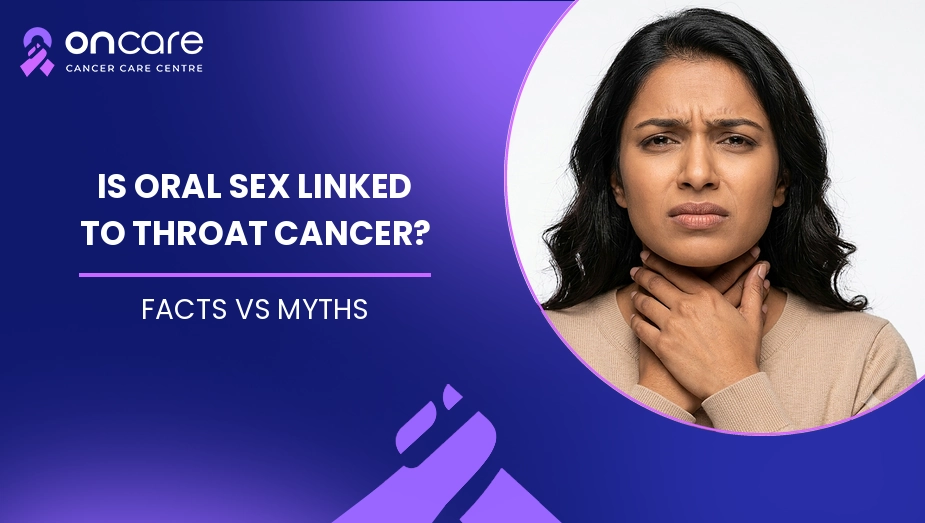
Yes, oral sex can be linked to a higher risk of HPV-related throat cancer, but oral sex itself does not directly cause cancer. The main link is human papillomavirus (HPV). HPV can spread through oral sexual contact and, in some people, a long-lasting infection with a high-risk type such as HPV-16 can later increase the risk of oropharyngeal cancer, which can affect the tonsils and the back of the throat, including the base of the tongue. Most people who get HPV do not develop cancer because the immune system clears the infection on its own.
This topic can be confusing because HPV is very common and many people never know they have it. In this blog, we will explain the connection between oral sex, HPV, and throat cancer in simple words. We will also look at common myths, warning signs, risk factors, and ways to lower your risk.
What Is Throat Cancer?
Throat cancer is a broad term used for cancers that can develop in different parts of the throat. When cancer starts in the back of the throat, including the tonsils or base of the tongue, it is often called oropharyngeal cancer. HPV is an important risk factor for this type of cancer.
It is important to remember that throat cancer can have several causes. Tobacco and alcohol remain important risk factors for head and neck cancers, while HPV is especially linked with cancers of the oropharynx.
For more information, you can also read our blog on throat cancer symptoms to understand which changes should not be ignored.
How Are Oral Sex, HPV and Throat Cancer Connected?
The main connection is HPV. HPV is a very common virus that can infect the mouth and throat. It can spread through sexual contact, including oral sex. A person can have HPV without any visible signs or symptoms and can pass it to a partner without knowing about the infection.
In most people, the immune system clears HPV naturally. However, some high-risk HPV infections can remain in the body for years. If a high-risk infection continues for a long time, it can cause changes in cells that may eventually lead to cancer in a small number of people.
Does Oral Sex Directly Cause Throat Cancer?
No, it would be incorrect to say that oral sex directly causes throat cancer.
The more accurate explanation is that oral sex can provide a way for HPV to reach the mouth and throat. Persistent infection with certain high-risk HPV types can increase the risk of oropharyngeal cancer. This does not mean that everyone who has oral sex will develop HPV or throat cancer.
If you want to understand other causes and risk factors, our oral cancer causes blog explains how tobacco, alcohol, and other factors can affect cancer risk.
Facts vs Myths About Oral Sex and Throat Cancer
Myth or Fact | What Is True? |
|---|---|
Oral sex always causes throat cancer | Myth: Oral sex does not mean a person will develop cancer. |
HPV can spread through oral sex | Fact: HPV can infect the mouth and throat and can be transmitted through sexual contact. |
Everyone with HPV will develop cancer | Myth: Most HPV infections clear naturally and do not cause cancer. |
HPV-16 is linked with oropharyngeal cancer | Fact: HPV-16 is a major high-risk type associated with this cancer. |
Smoking can also increase throat cancer risk | Fact: Tobacco is an important risk factor for head and neck cancers. |
A person can have HPV without knowing it | Fact: HPV infections often have no symptoms. |
How Common Is HPV-Related Throat Cancer?
HPV-related oropharyngeal cancer has become an important health concern, particularly in countries such as the United States. The CDC estimates that HPV is responsible for about 60% to 70% of oropharyngeal cancers in the United States.
However, these figures should not be interpreted as meaning that most people who have HPV will develop cancer. HPV infection is common, while cancer caused by persistent HPV infection is much less common.
The risk also depends on other factors, including tobacco use, alcohol use, immune health, and whether a high-risk HPV infection remains in the body.
What Are the Warning Signs of Throat Cancer?
HPV-related throat cancer may not cause obvious symptoms in its early stages. When symptoms do occur, they may look like common throat problems.
Possible warning signs include:
- A sore throat that does not go away
- Pain or difficulty when swallowing
- A lump or swollen lymph node in the neck
- Persistent hoarseness or voice changes
- Pain in one ear without an obvious ear problem
- A cough that continues
- Unexplained weight loss
These symptoms do not automatically mean cancer. Infections, acid reflux, and other common conditions can cause similar problems. However, symptoms that continue for several weeks should be checked by a healthcare professional.
You can also learn more about mouth cancer symptoms and the changes that may need medical attention.
What Can Increase the Risk?
HPV is only one part of the picture. Several factors can affect the risk of throat and oropharyngeal cancer.
HPV Infection
Persistent infection with a high-risk HPV type, especially HPV-16, is strongly linked with oropharyngeal cancer. The National Cancer Institute notes that oral HPV-16 infection is associated with a significantly higher risk of this cancer.
Tobacco and Alcohol
Smoking and other forms of tobacco use can increase the risk of head and neck cancers. Alcohol is also a known risk factor, and using both tobacco and alcohol can increase the risk further.
Weakened Immune System
People with a weakened immune system may have more difficulty clearing HPV infections. This can increase the chance of HPV-related health problems.
Can You Reduce the Risk?
There is no way to completely remove every risk of throat cancer, but several steps can help reduce your chances.
First, talk to a healthcare professional about HPV vaccination. HPV vaccination helps prevent new infections from HPV types that can cause cancer. It works best before exposure to HPV, but some adults may still benefit depending on their age and individual situation. The CDC recommends routine vaccination at ages 11 to 12 and catch-up vaccination through age 26. Some adults aged 27 to 45 may choose vaccination after discussing the possible benefits with a healthcare professional.
Avoiding tobacco is another important step. Limiting alcohol can also help reduce the risk of several head and neck cancers. Barrier methods such as condoms and dental dams can lower the chance of HPV and other infections being passed on during oral sex, although they cannot provide complete protection.
When Should You See a Doctor?
Do not panic if you have a sore throat or another throat symptom. Most short-term throat problems are not cancer.
However, it is sensible to see a doctor if you have a persistent or unusual symptom, especially if it lasts for several weeks or is getting worse. A doctor may examine your mouth, throat, and neck and decide whether additional tests are needed.
Early medical evaluation can help identify the actual cause of the problem and, if cancer is present, help start treatment sooner.
For more information regarding HPV and oropharyngeal cancer, visit the National Library of Medicine.
Consult Today
The connection between oral sex and throat cancer is mainly related to HPV, not oral sex itself. Oral sex can transmit HPV, and persistent infection with certain high-risk HPV types can increase the risk of oropharyngeal cancer. At the same time, most people with HPV do not develop cancer.
If you have a persistent sore throat, neck lump, swallowing problem, voice change, or another unusual symptom, do not try to diagnose yourself. Getting the right medical evaluation is the better approach.
At Oncare Cancer Hospital, patients can access specialist cancer care, diagnosis, and treatment planning. If you are concerned about a possible throat or head and neck cancer, you can contact Oncare Cancer Hospital for medical guidance and consultation.
Disclaimer
This blog is for educational purposes only and does not replace professional medical advice, diagnosis, or treatment. Any persistent throat symptom requires individual evaluation to determine its cause. Consult a qualified doctor for personalized advice.





Frequently Asked Questions
Oral sex itself does not directly cause cancer. It can transmit HPV, and persistent infection with certain high-risk HPV types can increase the risk of oropharyngeal cancer.
No, most HPV infections are cleared naturally by the immune system and do not lead to cancer.
Possible signs include a persistent sore throat, difficulty swallowing, a neck lump, hoarseness, ear pain, and unexplained weight loss.
Yes, HPV vaccination helps prevent infection with HPV types that can cause certain cancers, including some oropharyngeal cancers. Talk to a healthcare professional about whether vaccination is appropriate for you.
Written and Verified by:
Dr. Gajendra Kumar Himanshu Exp: 10 Yr
Medical Officer
Book an Appointment
Related Blogs
Liver Cancer Surgery Cost in India 2026: Resection, Transplant and Costs
Liver cancer surgery cost in India 2026: compare liver resection & transplant costs, insurance, hospital stay and treatment planning with Oncare Cancer Hospital.
Cervical Cancer Surgery Cost in India 2026: What Influences the Price
Cervical cancer surgery cost in India 2026: compare hysterectomy, trachelectomy & robotic surgery, insurance, and treatment costs with Oncare Cancer Hospital.
Bladder Cancer Surgery Cost in India 2026: Types and Cost Breakdown
Know bladder cancer surgery cost in India 2026, TURBT, cystectomy, robotic surgery and insurance at Oncare Cancer Hospital with expert uro-oncology specialists.