Table of Contents
Internal Radiation Therapy: Benefits of Brachytherapy Explained

By Dr. Gajendra Kumar Himanshu


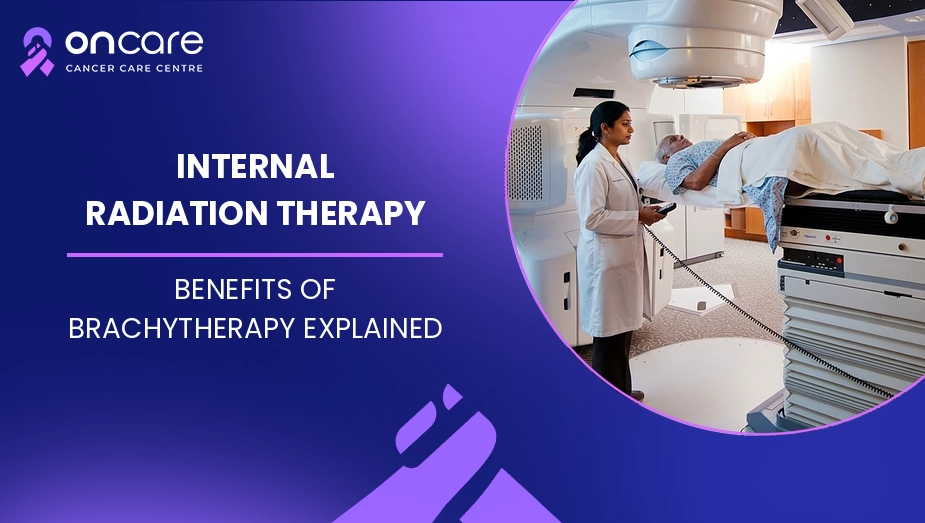
Brachytherapy, or internal radiation therapy, is a type of cancer treatment in which a radioactive source is placed inside or very close to the tumour. This allows a high dose of radiation to be directed at the cancer cells with minimal exposure to surrounding healthy tissue. Brachytherapy is often used to treat cervical, prostate, breast, and several other cancers, either on its own or together with external radiation therapy.
In this blog, we discuss internal radiation therapy and the benefits of brachytherapy, including how the treatment works, which cancers it is used for, its advantages, possible side effects, recovery, and what patients can expect during the process.
Why Brachytherapy Is an Important Cancer Treatment
Radiation therapy is one of the most effective treatments for many cancers, but not every patient needs the same approach. In external beam radiation therapy, radiation is delivered from outside the body, whereas in brachytherapy the radiation source is placed inside or next to the tumour.
This focused method allows doctors to deliver a high dose of radiation exactly where it is needed while sparing the surrounding organs. For many patients it provides effective cancer control with fewer treatment sessions and less overall treatment time.
What Is Internal Radiation Therapy?
Internal radiation therapy, known medically as brachytherapy, involves placing small radioactive implants, seeds, or applicators inside the body for a precisely calculated period. Depending on the type of cancer, the radioactive source may be temporary or permanent.
Unlike surgery, brachytherapy does not cut out the tumour. Instead, it damages the DNA of cancer cells, stopping them from growing and dividing, while nearby healthy tissue receives a far lower dose of radiation.
Which Cancers Can Be Treated With Brachytherapy?
Brachytherapy is a common treatment option for a number of cancers, particularly when the tumour is confined to one area.
Type of Cancer | Role of Brachytherapy |
|---|---|
Cervical cancer | Routinely part of curative treatment |
Prostate cancer | First-line or add-on therapy |
Breast cancer | Selected early cases |
Endometrial cancer | In some patients, following surgery |
Vaginal and vulvar cancers | Localised radiation therapy |
The decision depends on the stage of the cancer, the location of the tumour, the patient's overall health, and the advice of the radiation oncology team.
How Does Brachytherapy Work?
Treatment starts with detailed imaging such as a CT scan, MRI, or ultrasound to locate the exact position of the tumour. Radiation oncologists then develop a customised treatment plan that sets out the dose, where it will be delivered, and for how long.
Temporary Brachytherapy
Applicators containing a radioactive source are placed in position for a few minutes or hours and then removed after the treatment session. Once the source is removed, the patient is no longer radioactive.
Permanent Brachytherapy
Most commonly used for some prostate cancers, tiny radioactive seeds are inserted permanently inside the tumour. The seeds continue to treat the cancer while gradually losing their radioactivity over time.
Advantages of Brachytherapy
Because it is such a targeted approach, brachytherapy offers several advantages over broader radiation methods.
More Accurate Radiation
Placing the radiation source directly into or close to the tumour means more of the dose reaches the cancer cells and less damage is done to healthy organs.
Fewer Treatment Sessions
Most brachytherapy treatments are completed in one or a few sessions, which reduces the number of hospital visits compared with standard external radiation schedules.
Better Protection of Surrounding Tissue
Because the radiation does not travel far, nearby organs such as the bladder, rectum, or healthy breast tissue usually receive less radiation.
Quicker Recovery
Most patients recover fairly quickly and can resume normal activities within a short time, depending on the area treated and their overall health.
What Happens During the Procedure?
Your experience will depend on the type of cancer being treated. Most procedures are carried out in a dedicated radiation therapy unit under local, regional, or general anaesthesia.
The treatment team uses imaging guidance to place the applicators and deliver the planned dose of radiation. Patients are closely monitored throughout the procedure, and many temporary treatments are completed on the same day.
Possible Side Effects and Recovery
Like any cancer treatment, brachytherapy can have side effects, although they are usually limited to the area being treated rather than affecting the whole body.
Short-term effects are usually mild and may include discomfort, tiredness, temporary swelling, urinary symptoms, or local irritation. Most of these improve gradually over days or weeks.
Long-term side effects are less common and depend on the cancer location, radiation dose, and individual patient factors. Regular follow-up helps identify and manage any persistent problems early.
Is Brachytherapy Suitable for Everyone?
No. Brachytherapy is most suitable for carefully selected patients whose tumour location and stage make internal radiation possible. Some patients have brachytherapy alone, while others receive it alongside surgery, chemotherapy, or external beam radiation therapy as part of a combined treatment plan.
A multidisciplinary assessment helps decide whether brachytherapy is the best option for each individual.
For more information regarding radiation therapy, visit the National Cancer Institute.
Consult Today
If you or your loved one has been recommended for internal radiation therapy, the radiation oncology team at Oncare Cancer Hospital can provide a one-on-one consultation, advise whether brachytherapy is the right choice, discuss the expected benefits and side effects, and create a customised treatment plan according to your cancer type.
Disclaimer
This content is for educational purposes only and is not a substitute for professional medical advice, diagnosis, or treatment. Brachytherapy may not be suitable for all patients; suitability depends on the type and stage of cancer and the patient's general health. Always consult a qualified radiation oncologist before deciding on a treatment.





Frequently Asked Questions
No. Brachytherapy is a type of internal radiation therapy in which radioactive sources are placed directly into or next to the tumour to kill cancer cells, while chemotherapy uses drugs that travel through the bloodstream to reach and kill cancer cells.
Not always. Many temporary brachytherapy procedures are performed as day-care treatments; however, depending on the type of cancer, some patients may need a short hospital stay.
Patients normally do not feel pain during the treatment, as it is usually done under anaesthesia. You may experience some soreness afterwards, but it is usually manageable.
The most common are prostate and cervical cancer; however, brachytherapy is also used for breast, endometrial, vaginal, and vulvar cancers.
Written and Verified by:
Dr. Gajendra Kumar Himanshu Exp: 10 Yr
Medical Officer
Book an Appointment
Related Blogs
GIST (Gastrointestinal Stromal Tumour): Symptoms and Treatment
Learn about GIST (Gastrointestinal Stromal Tumor), its symptoms, causes, diagnosis, surgery, and long-term follow-up with expert care at Oncare Cancer Hospital.

Cancer and the Gut Microbiome: What Current Research Shows
Discover how the gut microbiome may influence cancer, immunity, and treatment response. Learn the latest research with expert guidance from Oncare Cancer Hospital.
Ovarian Cancer Surgery Cost in India 2026: A Complete Price Guide
Know the ovarian cancer surgery cost in India 2026, surgery types, factors affecting pricing, insurance coverage, and treatment planning at Oncare Cancer Hospital.