Table of Contents
Anal Cancer: Risk Factors, Symptoms and Modern Treatment

By Dr. Gajendra Kumar Himanshu


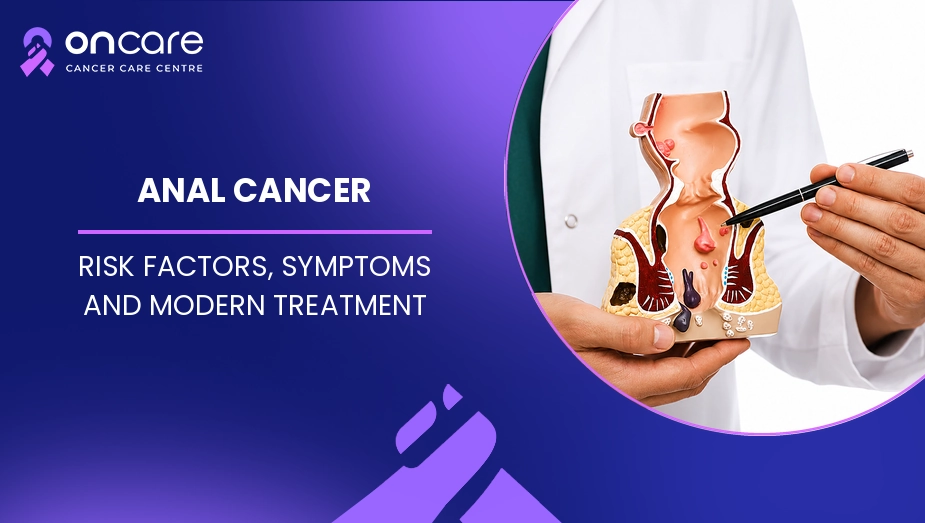
Anal cancer is a rare cancer that forms in the tissues of the anus, the opening at the end of the digestive tract. Common risk factors include chronic human papillomavirus (HPV) infection, smoking, reduced immunity and certain precancerous alterations. Symptoms can include rectal bleeding, discomfort, itching, a lump or changed bowel habits. Usually, the treatment includes chemotherapy and radiation therapy. In some circumstances, surgery could be recommended.
Today’s blog is about anal cancer: what causes it, who is at risk, early warning signs, how it’s diagnosed and what the modern treatment options are. You will also learn why symptoms should not be disregarded, how doctors plan treatment and what patients should expect during follow-up care.
What Is Anal Cancer?
Anal cancer starts when abnormal cells in the anus proliferate and divide without control. The anus is the opening through which feces passes out of the body. This includes the anal canal, which is the passage from the rectum to the outside of the body, and the skin around the opening of the anus.
Most anal tumours are squamous cell malignancies. These malignancies start in the thin, flat cells lining the anal canal. Adenocarcinoma, basal cell carcinoma, and melanoma of the anus are less common forms.
Before cancer occurs, some people may have aberrant cell alterations called anal intraepithelial neoplasia (AIN). These alterations are not invasive cancer, though some high-grade abnormalities may be more likely to progress over time. Having abnormal cells does not mean you will have anal cancer.
What Causes Anal Cancer?
A risk factor can raise the likelihood that a person will develop anal cancer. But having one or more risk factors does not imply that the person will get the disease.
Risk factors for anal cancer
Risk Factor | How it might increase risk |
|---|---|
HPV Infection | Persistent infection with high-risk varieties of human papillomavirus (HPV) can lead to aberrant cell alterations that may eventually become anal cancer. |
Weakened Immune System | Less immunity can make it difficult for the body to control lasting HPV infection and aberrant cell growth. |
Smoking tobacco | Tobacco includes cancer-causing substances and may damage the immune system, which can increase the chance of anal cancer. |
History of HPV-Related Disease | A history of precancerous alterations or cancer of the cervix, vulva, vagina or penis connected to HPV may increase risk. |
Older Age | Older persons have a higher risk of developing anal cancer, although it can occur in younger people as well. |
Chronic anal inflammation | The risk may be affected by some chronic anal illnesses or past precancerous alterations. |
Doctors take into account a person’s whole risk based on their entire medical history, not just one factor.
Symptoms of Anal Cancer
The symptoms depend on the position and size of the tumour. Some people may experience modest symptoms, and some may not even detect obvious changes in the early stages.
Symptoms may include:
- Anus or rectum bleeding
- Pain, pressure or discomfort around the anus
- A bulge or bump close to the anus
- Chronic anal itching
- Abnormal discharge from the rectum
- Alterations in bowel habits
- More loose stools than normal
- Loss of bowel control
- A sensation that the bowel has not emptied entirely
- Enlarged lymph nodes in the groin
The most common symptom described is bleeding from the anus; however, this can also be caused by illnesses other than cancer, such as haemorrhoids. The reason cannot be confirmed from the symptoms alone.
A lump may be confused with a haemorrhoid. Any new lump, persistent bleeding, increased pain or unexplained change in bowel habits should be evaluated by a doctor.
When to See a Doctor
See a health care expert for anal bleeding, pain, itching, discharge, lump, or changes in bowel habits that persist, recur or worsen.
Seek immediate medical assistance if bleeding is heavy, pain is severe, or symptoms are accompanied by unexplained weight loss, increased weakness or persistent changes in general health.
Many people may be uncomfortable discussing symptoms relating to the anus. But these are common issues in medical practice, and early evaluation can help find the cause. If it is not malignant, therapy may alleviate the discomfort. If cancer is found, an early diagnosis can help with planning therapy.
Current Treatment Strategies for Anal Cancer
The kind and stage of cancer, the size and location of the tumour, and the general health of the patient will determine treatment. A multidisciplinary team might collaborate to produce a personalised treatment strategy.
Chemotherapy and Radiotherapy
Chemoradiation, which is chemotherapy with radiation therapy, is the major treatment for many squamous cell anal tumours. Radiation attacks cancer cells. Chemotherapy can increase the efficiency of treatment. This method may treat the cancer, preserve anal function and avoid extensive surgery.
Side effects include fatigue, skin irritation, changes in bowel habits, nausea, loss of appetite and pain with bowel movements. These effects may be eased with supportive care.
Surgery
For some small, early tumours, surgery may be suggested. More extensive surgery may be required if the cancer does not respond to chemoradiation or recurs after treatment.
Management of Advanced Anal Cancer
Chemotherapy can help manage anal cancer if it has spread to other regions of the body and relieve symptoms. For some individuals with advanced or recurring cancer, immunotherapy or clinical trials may be considered. The treatment is tailored to the individual’s health and demands.
If you want to learn more about anal cancer, you can visit the official website of the National Cancer Institute.
Consult Today
Persistent anal bleeding, pain, itching, a lump or changes in bowel habits should not be disregarded or considered to be haemorrhoids without medical evaluation. At Oncare Cancer Hospital, patients can benefit from customised assessment, diagnostic guidance and multidisciplinary cancer care depending on their condition and treatment needs. If you have ongoing symptoms or worries about anal cancer, consult now.
Disclaimer
This article is for general educational purposes only and is not a substitute for professional medical advice, diagnosis or treatment. Every person has different symptoms, risk factors and treatment needs. Always seek a skilled healthcare practitioner for chronic anal symptoms, cancer concerns or customised treatment options.





Frequently Asked Questions
One of the most prevalent symptoms is bleeding from the anus. Other symptoms include pain, itching, a lump, discharge or changes in bowel habits. These symptoms are also seen in non-malignant illnesses; hence, it is crucial to see your doctor.
Persistent infection with certain high-risk forms of HPV is a substantial risk factor for many anal malignancies. However, most people with HPV do not get cancer because the immune system usually clears or manages the virus.
Anal cancer can often be successfully treated, especially if it is found early, before it has spread. The outlook depends on the type of cancer, the stage of disease, the reaction to treatment and the overall health of the patient.
No, chemotherapy and radiation therapy are the main treatments for many squamous cell malignancies of the anus. Surgery may be used for some early tumours, or if cancer has returned or remained after treatment.
Written and Verified by:
Dr. Gajendra Kumar Himanshu Exp: 10 Yr
Medical Officer
Book an Appointment
Related Blogs
Sexual Health and Intimacy After Cancer Treatment: A Practical Guide
Learn how cancer treatment can affect intimacy, sexual health, relationships, and recovery, with expert support from Oncare Cancer Hospital.

Sexuality and Intimacy During Cancer Treatment: Honest Conversations for Couples
Learn how cancer treatment affects intimacy, emotional connection, and relationships with support, guidance, and care from Oncare Cancer Hospital experts.
Can Anal Sex Cause Colon Cancer?
Can anal sex cause colon cancer? Learn the medical facts, real risk factors, and prevention tips. Consult Oncare Cancer Hospital today for expert cancer care.
Is Oral Sex Linked to Throat Cancer? Facts vs Myths
Can oral sex cause throat cancer? Learn how HPV spreads, its link to throat cancer, warning signs, risk factors, and prevention with Oncare Cancer Hospital.