Table of Contents
Actinic Keratosis: Precancerous Skin Condition Explained

By Raveena M Prakash


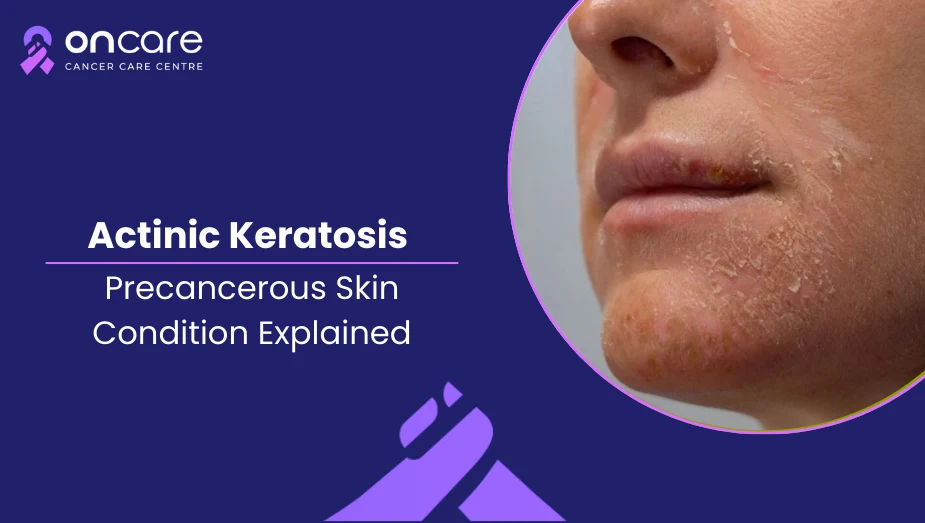
Skin is the largest organ, and it carries the effects of years of sun exposure. One common result of long-term exposure to UV damage often results in actinic keratosis, which is a skin condition that might seem minor at first, but it requires full attention. This condition is considered a precancerous skin condition, which has the potential to develop into skin cancer if left untreated. With early diagnosis and proper skin care, it can be effectively managed.
In this article, we’ll discover more about the symptoms, who is at risk of developing this condition, and the preventive and skin care for this condition.
What is Actinic Keratosis
Actinic keratosis, also known as solar keratosis, develops when a person has previous sun exposure to UV radiation, which tends to damage the cancer cells. Over time, this type of skin damage leads to developing the rough or scaly patches of the skin. These are not considered cancer, but they can progress into squamous cell carcinoma, and early treatment is more crucial to prevent skin cancer development.
Types of Actinic Keratosis
There are several types of Actinic Keratosis and some of the most common types may include:
- Actinic cheilitis: These are dry, cracked or white areas on your lower lip that might burn, peel or not heal.
- Atrophic: A thin, flat, discolored spot on your face, arms or scalp.
- Cutaneous horn: A hard, cone shaped bump sticking out from discolored or irritated skin on your face or hands.
- Hypertrophic: A wart like thick, rough, scaly bumps on the skin and face.
What are the signs and symptoms
Actinic keratosis can look and feel different from person to person, but these are common signs of this condition, including:
- Rough, dry, or scaly patches on the skin
- Flat or slightly raised lesions
- Colors ranging from pink to red to brown or skin-colored
- A gritty or sandpaper-like texture
- Mild itchiness, burning, or tenderness
- Crusting or flaking in some cases
These types of lesions most often appear on sun- exposed skin areas, such as the face, ears, scalp, neck, forearms, and hands. In many cases, they are easier to feel than to see.
Who is at risk of developing this condition
This precancerous condition is more common in people who have frequent long-term exposure to the sun.
These may include:
- People with frequent or long term exposure to the sun
- People with fair skin, light hairs and light eyes
- People live in sunny or high UV rays
- People with a history of sunburns or tanning beds
- People above the age of 40
- People with a low immune system
However, young individuals can also develop Actinic Kerotosis, especially with repeated sun damage.
Why Actinic Keratosis Is Precancerous
Most actinic keratosis conditions remain harmless, but a small percentage of people can turn into squamous cell carcinoma. Because it is difficult to predict which lesions will turn cancerous, many dermatologists usually recommend treating AK early. Early medical intervention reduces the skin damage and prevents further cancer risk.
Diagnosis and Treatment
An experienced dermatologist can detect Actinic Keratosis through a simple skin examination. If a lesion looks suspicious, your doctor might recommend getting a biopsy for further confirmation.
Treatment options for these conditions generally depend on the number and severity of the lesions in suspected patients. These may include freezing the lesion and also prescribing some topical medications, light-based cancer therapies, or minor surgical procedures to remove abnormal tissue.
The treatment options for actinic keratosis, may include:
- Cryotherapy: In this treatment, the doctor freezes off the spot using liquid nitrogen. It works best if you have just a few spots of Actinic Keratosis.
- Photodynamic therapy: In this treatment, the doctor uses a light-sensitive cream and special light to target AKs. It's often used for multiple or recurring spots in the patients. You may need to avoid sunlight for a few days while your skin heals.
- Laser therapy: This treatment uses focused light to destroy damaged skin cells. It might help with multiple AKs or larger areas of lesions.
- Chemical peel: This treatment helps to remove the damaged skin with a special chemical solution. The top layer of skin starts to peel off and new healthy skin forms as it heals.
- Curettage: A doctor scrapes or burns off the damaged area. Your doctor might use this heat or cryotherapy to fully remove the spot.
- Surgical excision: In this procedure, your doctor might cut the area to remove affected portions, and they will numb the areas first and may need to use stitches.
When Should You See a Doctor?
You should consult a dermatologist if you start to experience any rough or scaly patch that does not heal immediately, these changes in color, or it becomes painful, itchy, or inflamed.
- If you observe or experience any spot that bleeds, crusts, or grows rapidly, it should be medically evaluated.
- These changes can signal an effective progression towards skin cancer.
- Practicing regular checkups is essentially too important for people with a history of sun damage or previous actinic keratosis.
Prevention and skin care
People with a past history of getting sun exposure can develop this condition. But people with these conditions can lower the risk of developing this condition by practicing good skin protection routines.
These may include:
- Apply broad spectrum of sunscreen lotions and creams (SPF 30 or above) everyday
- Reapply sunscreen regularly when going outside
- Wear wide-brimmed hats, sunglasses and protective clothing
- Avoid getting sun exposure during peak hours
- Do not use tanning beds
- Perform regular examinations of your skin
- Schedule routine check ups with a dermatologists
Consistently use sunscreen to prevent and protect your skin from developing skin lesions in the future.
Consult Today
Actinic keratosis is a common skin condition caused by long-term sun exposure and serves as an early warning sign of the potential risk of developing skin cancer. It's not cancer itself; its precancerous nature makes early detection and cancer treatment crucial. With proper medical care and ongoing sun protection, most people can successfully manage the actinic keratosis and protect the skin's health.
At Oncare, we offer premium-quality cancer treatments, including advanced cancer surgeries, at an affordable price range with an experienced cancer specialist consultation.
If you or any loved ones of yours are diagnosed with cancer, then visit Oncare Cancer Center and book an appointment with our experienced cancer specialist today. Get an estimated cost of your cancer treatment today!
Frequently Asked Questions
The treatment options for actinic keratosis, cryotherapy, photodynamic therapy, laser therapy, chemical peel, curettage, and surgical excision.
If you start to experience symptoms such as bleeding, blistering, stinging or itchiness, any abnormal growths, and raised or discolored spots in the body.
If you are experiencing any kinds of skin conditions, you might notice an area of the skin bleeding, bumpy, burning, stinging, or uncomfortable under clothing; chapped (lower lip); or discolored (darker than your skin tone, red, pink, brown, or grey).
Book an Appointment
Related Blogs
What Cancers Can Cause Itchy Skin? How Itching Could Indicate Underlying Cancer
Learn what cancer can cause itchy skin, why certain cancers trigger itching, how to tell harmless itching from serious symptoms, and when to see a doctor.
Skin Cancer Symptoms in Darker Skin: What to Look Out For
Discover more about Skin cancer symptoms in darker skin, why this cancer in darker tones are not treated early, types of cancers and when to see a dermatologist
Skin Cancer Diagnosis: What to Expect During a Dermatology Check
Discover more about skin cancer diagnosis, what to expect during a dermatology checkup, why early skin checkups matter, and tips for your dermatology consultation.
Skin Cancer Staging: How It Affects Treatment and Prognosis
Explore more about skin cancer staging: what is skin cancer, types of skin cancer, causes and symptoms, risk factors, and stage-wise treatment options for patients!