
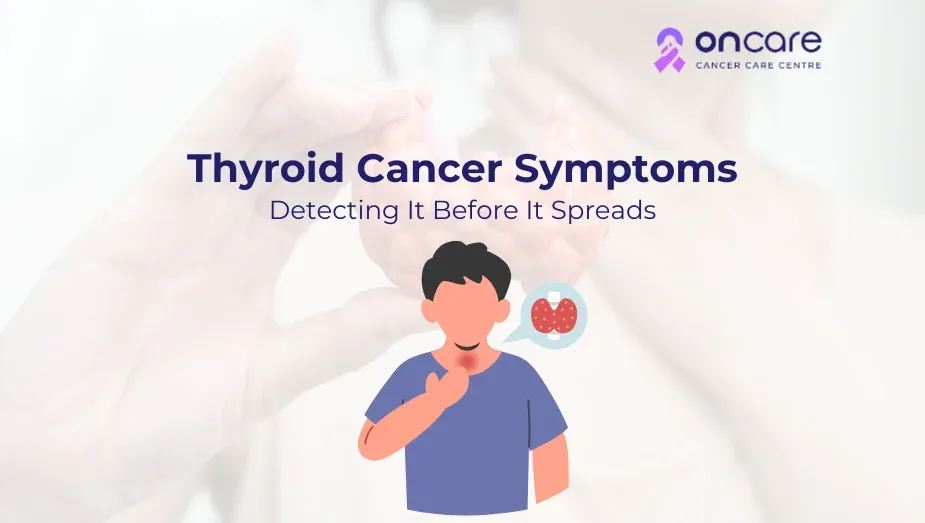
Thyroid cancer is one of the common cancers affecting the endocrine system, yet it often goes unnoticed, especially in its early stages. The thyroid gland, often located in the front of the neck, produces hormones that regulate metabolism, energy, and growth. The thyroid gland has high survival rates when patients get detected early, and it saves lives. One of the challenging parts is recognizing the subtle symptoms, as many of them get ignored or dismissed!
In this blog, we’ll delve more into the common symptoms of thyroid cancer, risk factors for these cancers, and why early detection matters for the treatment outcomes.
Common symptoms of Thyroid Cancer
People with thyroid cancer won’t experience symptoms until the cancer has reached an advanced stage. That’s why people often don't diagnose these cancers until it's too late. There are few warning signs you can watch out for.
Here are some of the common symptoms of thyroid cancer, including:
- Neck lump or swelling: If you are experiencing a neck lump or swelling, then this is the most common sign of cancer. These lumps can appear as firm and painful in people.
- Hoarseness or voice changes: Experiencing voice changes which last for a few weeks or months often change the quality of voice, then that could be a sign of cancer.
- Difficulty swallowing: Once the tumor starts growing, it can press on the esophagus, which further makes it difficult to swallow the food.
- Breathing difficulties: The tumor may start to press on the trachea, causing shortness of breath or the feeling of breathing through the straw.
- Neck or throat pain: Some people might experience neck or throat areas.
- Swollen lymph nodes: Increased lymph nodes in the neck can indicate that the cancer has spread into other parts.
- Continuous cough: If you are facing a dry or continuous cough that is not related to any respiratory infection, it can also be a symptom of this cancer.
Risk factors for Thyroid Cancer
Anyone can develop these types of cancers once in their lifetime. There are several risk factors that might increase the risk of developing these diseases. Including:
- Age
- Gender
- Family history
- Genetic conditions
- Radiation exposure
- Obesity
- Iodine deficiency
- Existing thyroid conditions
Why is early detection crucial?
Thyroid cancer, especially in its early stages, is often considered highly treatable and manageable with a high rate of successful treatment outcomes. In most cases, especially papillary thyroid cancer, they are localized and don’t spread quickly. If you detect thyroid cancer before it becomes metastasized, then there’s a chance of getting a full recovery.
For example: If your cancer is confined to the thyroid gland, then the treatment options are surgery, radioactive iodine therapy, and hormone therapy are very effective for treating cancers. If the cancer has spread to other parts of the body, then the treatment becomes more complex and prognosis (the chance of recovery) is very less.
When should you consult a doctor?
If you notice any of these symptoms, it’s essential to consult a healthcare provider immediately. Early detection of these cancers can make a significant difference in the treatment outcomes. Even if your symptoms seem mild or less serious, then it's better to get a consultation.
If your symptoms suggest any kind of suspicion of cancer, then your oncologists might perform a physical examination, blood tests, ultrasounds, fine needle aspiration biopsy, or other diagnostic tests to determine whether you have thyroid cancer or not.
Consult Today
Thyroid cancer generally comes silently, specifically in its early stages. Understanding these cancer symptoms can be crucial for early detection. A neck lump, voice changes, difficulty in swallowing foods, or any unexplained pain are among the most common signs that should not be ignored and should get immediate medical assistance. The earlier you detect the symptoms, the higher the chances of treatment outcomes.
At Oncare, we offer premium-quality cancer treatments, including advanced cancer surgeries at affordable price ranges with an experienced cancer specialist consultation.
If you or any loved ones of yours are diagnosed with cancer, then visit Oncare Cancer Center and book an appointment with our cancer specialist. Get an estimated cost of your cancer treatments today!
Frequently Asked Questions
What causes thyroid cancer in people?
The exact reason why some cells become cancerous (malignant) and start to attack thyroid. While there are certain factors that increase the risk of thyroid cancer in people. These may include:
- Enlarged thyroid
- Family history of thyroid disease or thyroid cancer
- Thyroiditis
- Low iodine intake
- Obesity
- Radiation therapy for head and neck cancer, especially during childhood
- Exposure to radioactive material
How is thyroid cancer diagnosed?
If you have an enlarged thyroid nodule or other signs of thyroid cancer, then your healthcare provider might order one or more of these tests.
These may include:
- Blood tests
- Biopsy
- Radioiodine scan
- Imaging scans
How is thyroid cancer managed to be treated?
Treatments of thyroid cancer mainly depend on tumor size and whether the cancer has spread in the body.
The treatments may include:
- Surgery
- Radio iodine therapy
- Radiation therapy
- Chemotherapy
- Hormone therapy
Is thyroid cancer curable?
Most of the thyroid cancers are curable with treatment, especially if the cancer cells have not spread to distant parts of your body. If treatment doesn’t fully cure the thyroid cancer, then your healthcare provider might design a specific treatment plan to destroy as much of the tumor as possible and prevent it from growing back or spreading.