Table of Contents
Colonoscopy for Colon Cancer: What Patients Should Expect

By Dr. Gajendra Kumar Himanshu


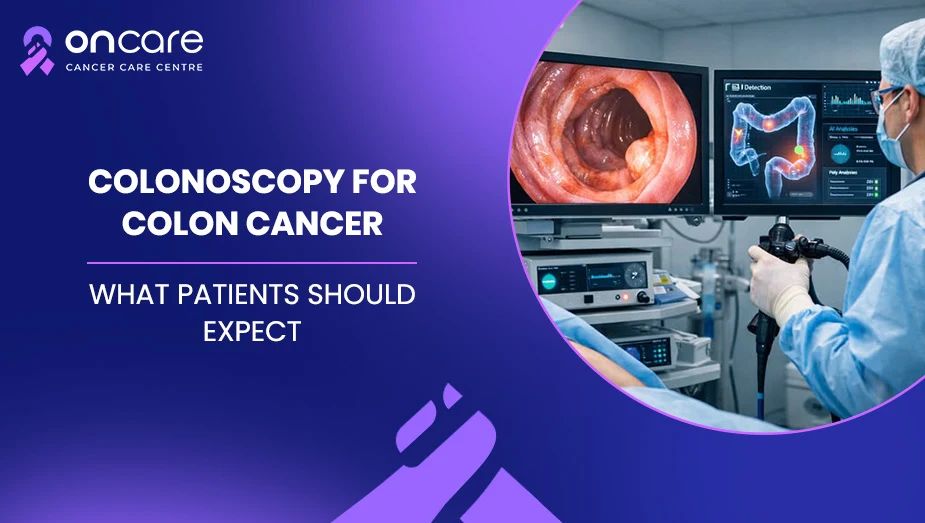
It can be a little stressful to find out that you need a colonoscopy. A lot of folks are afraid of pain, discomfort, or what the treatment will be like. A colonoscopy is a common and crucial examination that can find colon cancer early, sometimes even before symptoms show up.
Finding something early can save lives. Doctors can identify cancer via a colonoscopy, and they can also stop it by removing suspicious growths. Knowing what to expect can make things a lot smoother and less scary.
We'll break everything down for you in this post so you know exactly what happens before, during, and after a colonoscopy.
What Is a Colonoscopy?
A colonoscopy is a medical test that looks inside the large intestine (colon and rectum). Doctors look for things like polyps, inflammation, or cancer with a thin, flexible tube that has a camera on it. It is one of the best techniques to find colon cancer early.
Why is a colonoscopy important for people with colon cancer?
Colonoscopy is very important for both finding and stopping cancer.
- It helps discover cancer early on.
- It lets you get rid of polyps that could turn into cancer.
- It lowers the chance of getting colon cancer.
- It helps figure out what is causing symptoms like discomfort or bleeding.
Regular screenings can stop a lot of colon cancer cases from happening.
When should you have a colonoscopy?
If you have any of the following, your doctor may suggest a colonoscopy:
- You are over 45 years old (screening regularly)
- You have symptoms like blood in your stool or pain that won't go away in your stomach.
- You have a family history of colon cancer.
- Tests that were done before showed problems.
For patients who are more likely to get sick, early screening is really crucial.
How to Get Ready for a Colonoscopy
Getting ready is a big part of the process. A clean gut helps doctors receive results that are clear and correct.
1. Changes to the diet
- You might have to eat only clear liquids the day before the test.
- Stay away from solid foods and some colored drinks.
2. Getting the bowels ready
- Doctors will offer you a special laxative drink.
- This helps you thoroughly clear your colon.
3. Directions for taking medicine
- You might have to stop taking some medicines or change how you take them.
- Always do what your doctor tells you to do.
Getting ready could feel bad, but it's only for a short time and is vital.
What Happens During the Process
A colonoscopy normally takes place in a hospital or clinic and lasts between 30 and 60 minutes.
- You will be given medicine to help you relax.
- A colonoscope, which is a flexible tube, is carefully put into the rectum.
- The camera delivers pictures to a screen so the doctor may look at them.
- If polyps are identified, they can be taken out right away.
Sedation makes the operation mostly painless.
What to Expect After the Operation
After the colonoscopy:
- You can feel bloated or have slight cramps.
- It may take a few hours for the effects of sedation to wear off.
- You shouldn't drive for the rest of the day.
- The next day, most people can go back to their daily routines.
It may take a few days to get the results of a biopsy.
Colonoscopy Procedure: Step-by-Step
Step | What Goes On | How You Might Feel |
|---|---|---|
Getting ready | Laxatives and a liquid diet | Pain and needing to go to the restroom often |
Before the Procedure | Sedation was given | Tired and relaxed |
During the Process | Scope put in and looked at | No pain (because of the anesthesia) |
After the Procedure | Recovery and Observation | A little bloating or cramping |
Safety and Risks
Colonoscopy is usually safe; like any other medical procedure, it has some risks:
- Bleeding that isn't very bad (particularly if polyps are taken out)
- Unusual chance of perforation
- Discomfort for a short time
Doctors take steps to lower these dangers.
Why You Should Choose Expert Care
To make sure that a colonoscopy is done correctly and safely, it should always be done by trained specialists.
Oncare Cancer Hospital uses sophisticated technology and experienced care to make sure that patients are comfortable and get reliable results from advanced diagnostic tests, such as a colonoscopy.
Source You Can Trust for More Information
The National Cancer Institute's official page has a lot of accurate and useful information. This is the government body that gives cancer screening guidelines that have been examined by experts.
Consult Today
A colonoscopy is a simple yet effective way to fight colon cancer. The thought of the treatment may make you feel uneasy, but it is usually short, safe, and quite successful.
Knowing what to expect will help ease your worries and get you to the screening on time. Colonoscopy can help find problems early, which can save lives.
Don't put off getting a colonoscopy if your doctor tells you to. Oncare Cancer Hospital has trained staff who can help you with every stage of the procedure, from screening to treatment.





Frequently Asked Questions
No, the procedure is usually not painful because the person is given sedation.
It usually takes between 30 and 60 minutes.
Most people need it every ten years; it depends on their risk factors.
Yes, it is one of the best ways to find colon cancer early and stop it from happening.
Written and Verified by:

Dr. Gajendra Kumar Himanshu Exp: 10 Yr
Medical Officer
Book an Appointment
Related Blogs
Stomach Pain in Colon Cancer: Causes and Warning Signs
Learn why stomach pain occurs in colon cancer, its warning signs, and when to see a doctor. Get expert diagnosis and treatment guidance from Oncare Cancer Hospital.
Stage 4 Colon Cancer Survival Rate: What the Numbers Really Mean
Learn about stage 4 colon cancer, survival rates, and treatment options. Get expert care and support to improve outcomes at Oncare Cancer Hospital.
How Serious Is Stage 4 Colon Cancer? Key Facts Explained
Learn about stage 4 colon cancer, its symptoms, and treatment options. Get expert care and support at Oncare Hospital to manage stage 4 colon cancer effectively.
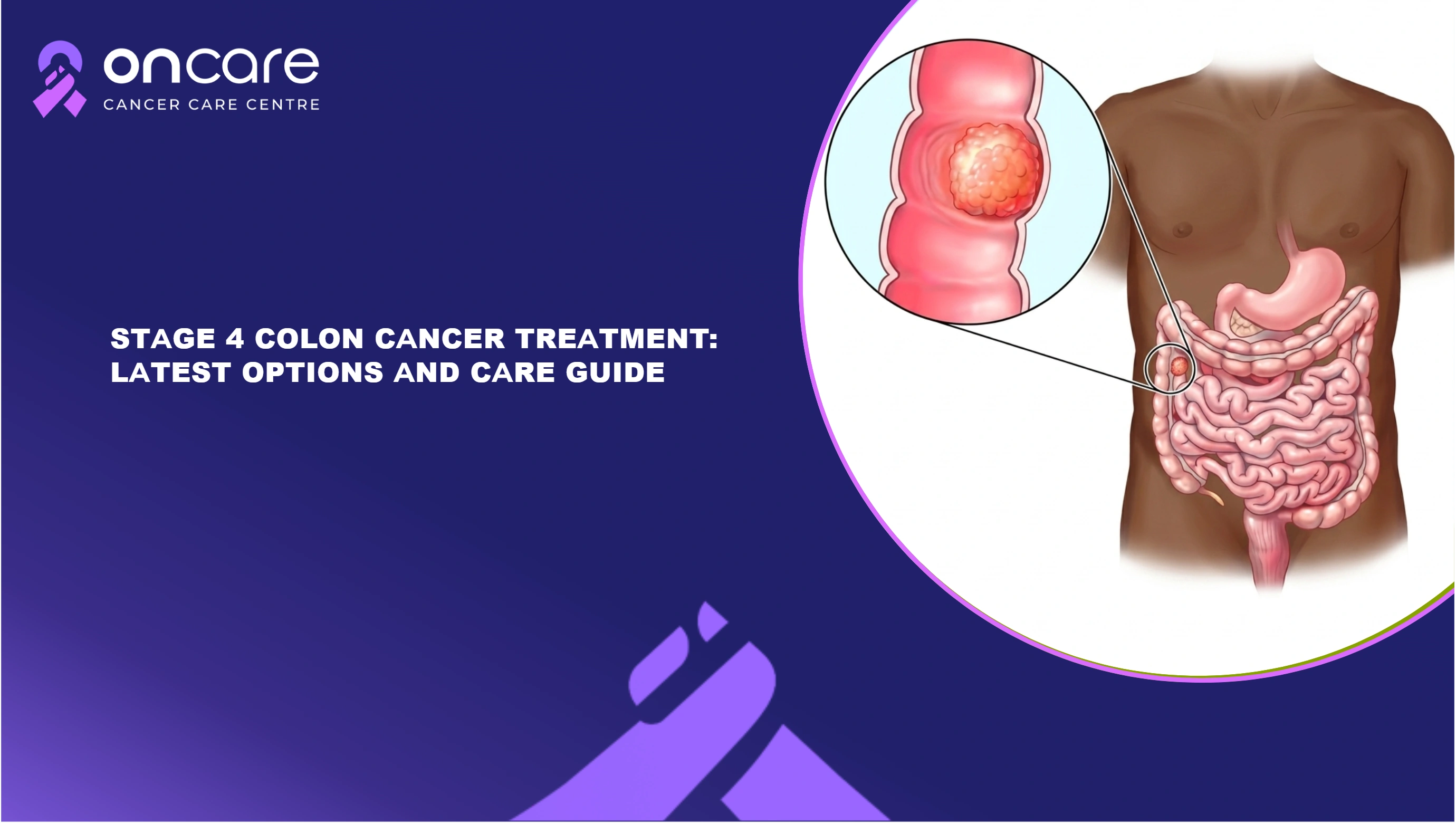
Stage 4 Colon Cancer Treatment: Latest Options and Care Guide
Learn about modern treatment options for stage 4 colon cancer, including chemotherapy and surgery. Get expert care and support at Oncare Cancer Hospital today.