Table of Contents
Stage 4 Breast Cancer: Managing Life with Advanced Cancer

By Raveena M Prakash


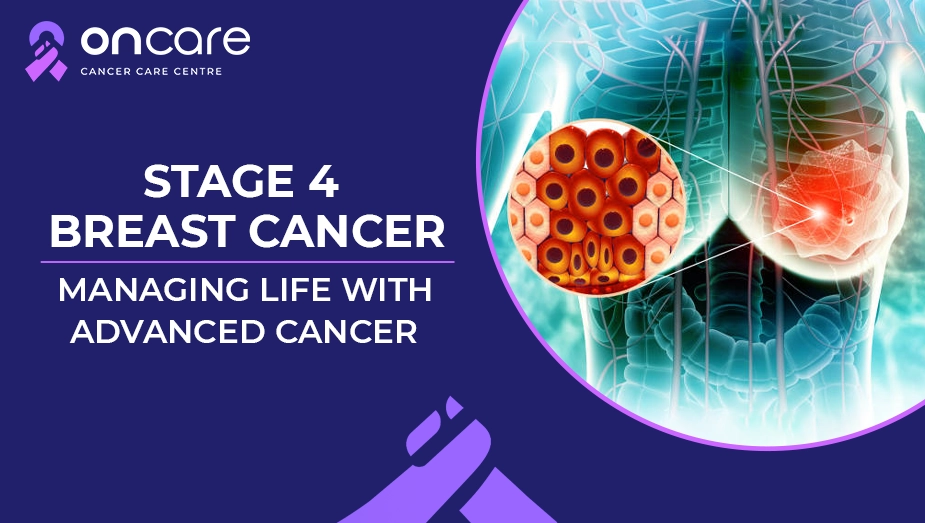
A diagnosis of stage 4 breast cancer, also known as advanced breast cancer, can feel overwhelming and life-changing. This marks a point where cancer has spread beyond the breast and nearby lymph nodes to other parts of the body, such as bones, liver, lungs or brain. While stage 4 breast cancer is often considered advanced and not currently curable, it's important to emphasize that it is treatable.
In this article, we’ll discover more about managing stage 4 breast cancer and its physical symptoms, living with advanced cancer!
Understanding Stage 4 Breast Cancer
Stage 4 breast cancer develops when the cancer cells start to spread through the bloodstream or lymphatic system and form tumors in distant organs. At this stage, the treatment mainly focuses on controlling the disease, slowing its progression, reducing symptoms, and maintaining the quality of life.
The treatment outcomes mainly depend on various factors, including cancer subtypes, including hormone receptor-positive, HER2-positive, or triple-negative, and its areas of metastasis, response to treatment, and improving the overall health.
In recent times, advancements in targeted therapies, hormone treatments, immunotherapy, and chemotherapy have also significantly improved the survival rates and daily functioning for many cancer patients.
Managing Life with advanced cancer
Living with advanced cancer often creates questions about identity, values, and even priorities. However, roles related to career, parenting, or independence might shift, which requires emotional adjustment in patients.
Many individuals find some renewed meaning through, including:
- Breast cancer advocacy or awareness programs
- Deepening relationships with loved ones and families
- Living more intentionally and peacefully
- Purpose does not appear with a diagnosis
While planning ahead can also provide peace of mind. Some people might choose to address advance care planning, legal matters, or financial arrangements early, which can reduce uncertainty and stress.
Managing physical symptoms and treatment side effects
Advanced breast cancer and its treatments often come with some physical challenges, including fatigue, pain, nausea, neuropathy, appetite changes, and cognitive difficulties. Additionally, managing these symptoms is considered a vital part of the overall care of patients.
Palliative or supportive care plays an essential role in an advanced-stage patient’s life, as it can be introduced at any point during your treatment. The main goal is to relieve the cancer symptoms, reduce discomfort, and improve the quality of patients' lives, but not to replace any major treatments.
Effective symptom management may include:
- Having an open and constant communication with the oncology care team
- Medication adjustments to control the pain or side effects
- Practising gentle physical activity when possible
- Nutrition support when possible
- Prioritizing enough rest and listening to the body
People who address the symptoms and changes happening to their body early can make their daily life more manageable and empowering with the help of immediate treatments and care.
Emotional and mental well-being
The emotional and mental well-being greatly impacts advanced breast cancer patients. They may face the feelings of fear, sadness, anger, and anxiety, and loneliness is common and might change over time. Emotional health deserves the same attention as physical health.
Here are some of the support options, including
- Counseling or therapy with oncology specialists
- Join the cancer support groups specifically for advanced stage
- Open communications with loved ones and friends
- Practice mindfulness activities and breathing techniques
It’s important to keep in mind that there is no requirement to stay positive at all times. However, patients who experience a full range of emotions are naturally valid and cannot be dismissed.
Relationships and social support
A metastatic breast cancer diagnosis often changes the dimensions of relationships. In most cases, families and loved ones struggle to help, while the social dynamics also change; for instance, some connections get deeper, while others may fade during this tough phase.
Here’s how a clear and open communication can help both patients and their loved ones, including:
- Openly express your specific needs and limits without any hesitation
- Setting clear boundaries around your time, energy and availability
- Ask and accept help, even when you feel uncomfortable.
- Letting go of relationships that may feel emotionally draining
- Protect your emotional energy, because it's a significant part of self-care.
Living with stage 4 breast cancer
One of the most difficult aspects of managing stage 4 breast cancer is dealing with the uncertainty of ongoing treatment outcomes. Additionally, scan results, treatment changes, and fluctuating symptoms can often bring ongoing anxiety in patients. While many people find themselves balancing hope with realism, learning to live in the present rather than focusing too far ahead.
Here are some of the approaches would help patients, including:
- Taking one day at time
- Celebrating the milestones of stable scans and symptom improvements
- Allowing yourself to grieve along with gratitude
As we all know, the uncertainty and fear about the future can be exhausting during the treatment phase, but many people discover inner strength they never knew they had.
Consult Today
Living with stage 4 breast cancer is a journey often marked by resilience, courage, and adaptation. While the advanced breast cancer diagnosis brings undeniable challenges, it also reveals the importance of compassion, support and advances in medical care that continue to improve both longevity and improving the quality of life.
At Oncare, we offer premium-quality cancer treatments, including advanced cancer surgeries, at an affordable price range with an experienced cancer specialist consultation.
If you or any loved ones of yours are diagnosed with cancer, then visit Oncare Cancer Hospital and book an appointment with our experienced cancer specialist today! Get an estimated cost of your cancer treatments today!
Frequently Asked Questions
Here are some of the tests to diagnose the disease, including breast ultrasound, breast magnetic resonance imaging (MRI) scan, breast biopsy, immunohistochemistry.
Surgery is considered as the primary cancer treatment, but healthcare providers might use some other treatments, including other treatments including mastectomy, lumpectomy and breast reconstruction surgery. Additionally, chemotherapy, radiation therapy, immunotherapy, hormone therapy, and targeted therapy.
Many experts suggest that women may not be able to prevent breast cancer. But you can reduce the risk of developing it by following some prevention methods. Performing regular self-examinations and mammograms can detect breast cancer early on, when it's easier to treat.
Book an Appointment
Related Blogs
Stage 2 Breast Cancer: Understanding the Intermediate Stage
Learn more about Stage 2 breast cancer and understand the intermediate stage and its symptoms, diagnosis, treatment options, and living with Stage 2 breast cancer!
Stage 1 Breast Cancer Symptoms: Early Signs to Notice
Learn more about Stage 1 breast cancer and its common early symptoms, what the early signs are to notice, when to consult a doctor, and its prognosis and outlook!

Inflammatory Breast Cancer: A Rare but Aggressive Type
Learn more about inflammatory breast cancer, symptoms, risk factors, difficulties in getting diagnosed with this cancer, and treatments and living with IBC!

Best Breast Cancer Doctors in Delhi: How to Choose the Right Specialist
Learn more about the best breast cancer doctors in Delhi and how to choose the right specialist, key factors to consider, and why the cancer specialist matters!