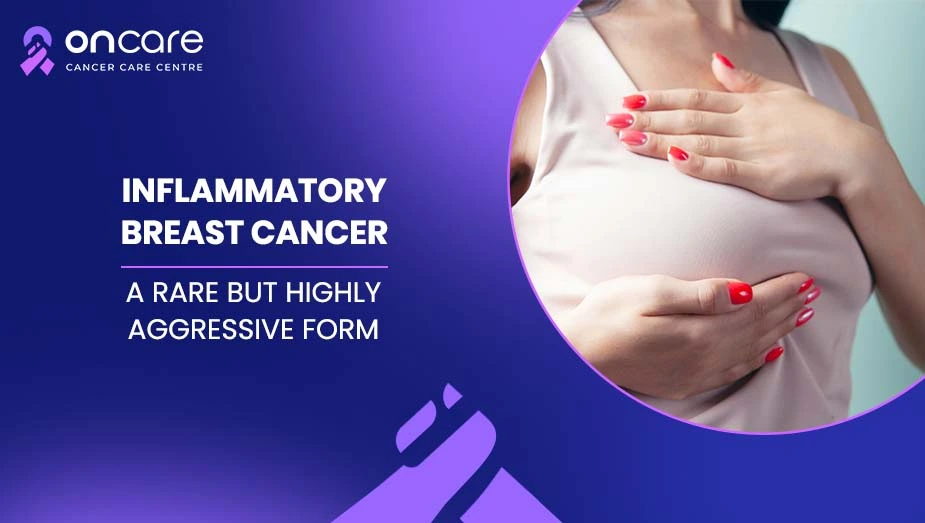
A lot of people think of breast cancer as a lump in the breast. But not all breast cancers look like that. There is a rare kind of breast cancer termed inflammatory breast cancer (IBC) that acts extremely differently.
It can show up out of nowhere, spread swiftly, and typically doesn't make a visible lump. Because of this, many people don't notice it right away, which can make it take longer to find out what's wrong. It's really crucial to know what it means and how it operates.
What is breast cancer that causes inflammation?
Inflammatory breast cancer is a type of breast cancer that is not common and is very aggressive. When cancer cells block the lymph arteries on the surface of the breast, this happens.
Instead of making a lump, this blockage makes the breast look different, like it is red and swollen.
It doesn't happen very often, but it tends to grow and spread faster than other types of breast cancer.
Important Signs to Look Out For
Some people disregard IBC symptoms because they appear like an illness at first. Some common indicators are:
- Breast pain, redness, swelling, or growth in breast size
- Skin that appears like the peel of an orange (thickened or pitted)
- Pain or soreness
- Changes in the nipple, like flattening or turning inside out
These symptoms can show up fast, sometimes in just a few weeks.
Why Do People Think It's Aggressive?
Aggressive breast cancer is named this because:
- It expands quickly.
- It spreads quickly to lymph nodes or other regions of the body.
- It is frequently identified at a more advanced stage.
- It may not be found in standard screenings like mammography in the early stages, which is different from other malignancies.
How do you find out?
Most of the time, diagnosis takes many steps:
- A doctor looks at you physically.
- Tests that use pictures, like a mammogram or ultrasound
- Biopsy to make sure there are cancer cells
Instead of just a bump, doctors look for certain patterns of spread and symptoms.
Choices for treatment
People with inflammatory breast cancer commonly have treatment in stages, which can include:
Chemotherapy
A lot of the time, this is the initial step to making cancer cells smaller before surgery.
Surgery
Most of the time, doctors recommend removing the afflicted breast (mastectomy).
Radiation Treatment
Used after surgery to kill any cancer cells that are still there.
Immunotherapy or Targeted Therapy
These advanced treatments are employed in some circumstances, depending on the type of cancer.
A summary of inflammatory breast cancer
Aspect | Details |
|---|---|
Type | Uncommon and aggressive breast cancer |
The main reason | Cancer cells obstructing lymphatic channels |
A common sign | No lump, redness, or swelling |
How fast things grow | Quick |
Detection | Often, during a later stage of treatment |
Therapies that work together | Combination treatments |
Who Is in Danger?
Anyone can get IBC, but some things may make it more likely:
- Younger women
- Being overweight
- A history of breast cancer in the family
But it can also happen without any obvious risk factors.
Why it's important to pay attention early
Ignoring symptoms might be harmful since IBC grows quickly.
If your breasts are red, swollen, or changing strangely and it doesn't get better in a few days, you should see a doctor right away. Taking action early can change how well therapy works.
More Information from a Trusted Source
You can go to the National Cancer Institute for correct and research-based information:
Consult Today
Oncare Cancer Hospital has expert physicians who focus on early diagnosis and individualized treatment programs for complicated situations like IBC. They offer advanced cancer care.
Causing inflammation, breast cancer isn't very common, but it is very dangerous and spreads quickly. It often shows up as changes in the skin instead of a lump, which is different from most breast cancers.
It's important to know about these strange signs. Early diagnosis and the correct treatment plan can make things better and help you deal with the sickness.
It's always best to get something looked at right away if it doesn't feel right.
Frequently Asked Questions
1. Is it common to have inflammatory breast cancer?
No, it's not common, but it's more dangerous than other varieties.
2. Does it always make a lump?
No, it normally doesn't make a lump.
3. Is it possible to treat it?
Yes, but it needs to be treated early and aggressively.
4. How quickly does it spread?
It can spread swiftly, sometimes in just a few weeks or months.