Getting a diagnosis of stomach cancer can be stressful, especially when you hear "Stage 2." Many patients and their families want to know right away what it means, how bad it is, and what will happen next.
The good news is that Stage 2 stomach cancer is still treatable, especially if it is identified and treated quickly. With the right treatment plan and good care, many people get well and have good results.
In this blog, we'll discuss Stage 2 stomach cancer in plain terms. We'll cover treatment options, what to expect throughout recovery, and what patients should know moving forward.
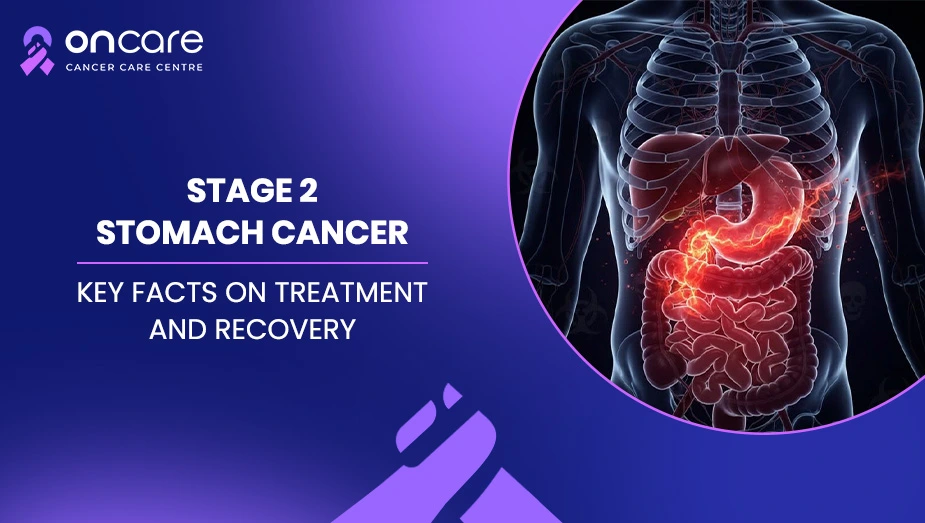
What does it mean to have Stage 2 stomach cancer?
Stage 2 stomach cancer means that the cancer has spread beyond the stomach's inner lining but not to other organs that are farther away. It could be lymph nodes that are nearby or deeper layers of the stomach wall.
At this point:
- The tumor is larger than an early-stage cancer.
- Lymph nodes close by can have cancer in them.
- People still think it is limited or locally progressed.
Doctors can decide on the best method to treat a patient by staging them.
Common signs
Symptoms of Stage 2 stomach cancer may vary and can include:
- Stomach pain or discomfort that doesn't go away
- Feeling full just after a meal
- Feeling bad or throwing up
- Weight loss that doesn't make sense
- Feeling ill or full
At first, these symptoms are often mild, which is why it could be hard to figure out what's wrong with you right away.
How to Treat Stage 2 Stomach Cancer
Most of the time, treatment comprises a mix of therapies to get rid of cancer and keep it from coming back.
1. A surgery
Surgery is the most common technique to treat Stage 2 stomach cancer.
- Gastrectomy is the process of taking out part or all of the stomach.
- Taking out nearby lymph nodes is the purpose.
The goal is to get rid of all the cancer that can be seen.
2. Chemotherapy
Chemotherapy employs drugs to kill cancer cells.
- Can be given before surgery to shrink tumors
- Or after surgery (to get rid of any cells that are still there)
It makes it more likely that the treatment will work and less likely that it will come back.
3. Treatment with radiation
Radiation therapy may be used in specific cases.
- Attacks cancer cells with high-energy radiation
- A lot of the time, it is utilized with chemotherapy.
It keeps cancer from coming back and keeps it under control.
4. Focused Treatment
Some patients may be told to try targeted therapy.
- Focuses on certain proteins in cancer cells
- Has fewer bad effects than standard chemotherapy
Treatment Approaches and Their Purpose
Type of Treatment | Why | When to Use It |
|---|---|---|
Surgery | Remove the tumor and the affected lymph nodes that are affected. | Main treatment |
Chemotherapy | Remove the final malignant cells | Before and after the operation |
Radiation therapy | Get rid of cancer cells | With chemotherapy |
Treatment with a goal | Attack certain cancer cells | The cases that were chosen |
Improving the following treatment
How long it takes to get well depends on the type of treatment and the patient's overall health.
Quick Recovery
- Being in the hospital after surgery
- Getting back to eating slowly
- Coping with bad effects like nausea or sleepiness
Getting Better as Time Goes On
- Regular check-ups for follow-up
- Changes to what you eat
- Keeping an eye out for a return
Most people can go back to their normal lives with the correct treatment and support.
Things That Help You Get Better
There are a lot of elements that affect how well someone recovers:
- The patient's general health
- The tumor's size and how far it has spread
- How the treatment works
- Quick diagnosis
Getting the appropriate treatment early on makes it much more likely that you will live.
Why it's important to get help early and from a professional
It's really crucial to choose the right cancer center if you want to get better. Getting the appropriate diagnosis, staging, and treatment options is very crucial.
Oncare Cancer Hospital has expert doctors, state-of-the-art equipment, and treatment plans that are personalized to each patient's needs at every stage of their cancer.
More Information from a Reliable Source
The National Cancer Institute's official page has accurate and in-depth information. Experts have looked at the cancer treatment guidelines that this government body gives.
Consult Today
Even though stage 2 stomach cancer is quite serious, it can still be treated properly if you get the right care. Surgery, chemotherapy, and other treatments can work together to control and get rid of cancer.
Knowing what treatments are available and how long it will take you to get better will help you feel less anxious and make better choices. Taking action early and having the right treatment can have a huge effect on the results.
If you or a loved one has stomach cancer, don't wait to obtain treatment. Oncare Cancer Hospital assists patients every step of the way by giving them expert advice and high-quality care.
Frequently Asked Questions
1. Is it possible to treat stage 2 stomach cancer?
Yes, many cases can be treated well, especially if they are discovered early and managed the right way.
2. How do you treat Stage 2 stomach cancer the most?
Surgery is the major way to treat it, and chemotherapy is often used with it.
3. How long does it take to become better?
The time it takes to recover from each treatment is different, although it could take weeks to months.
4. Can stomach cancer come back after it has been treated?
Yes, it can come back; it's important to keep seeing your doctor often.