When people have moderate digestive problems, they don't usually think of stomach cancer. People typically dismiss a little bloating, discomfort, or loss of appetite. But sometimes these little indications can mean that something worse is about to happen.
In the early stages, stomach cancer frequently doesn't make any noise or has extremely modest symptoms. That's why a lot of instances are found late. The good news is that stomach cancer is significantly easier to treat if it is found early.
In this blog, we'll talk about the early signs you should never overlook and why it's important to respond quickly.
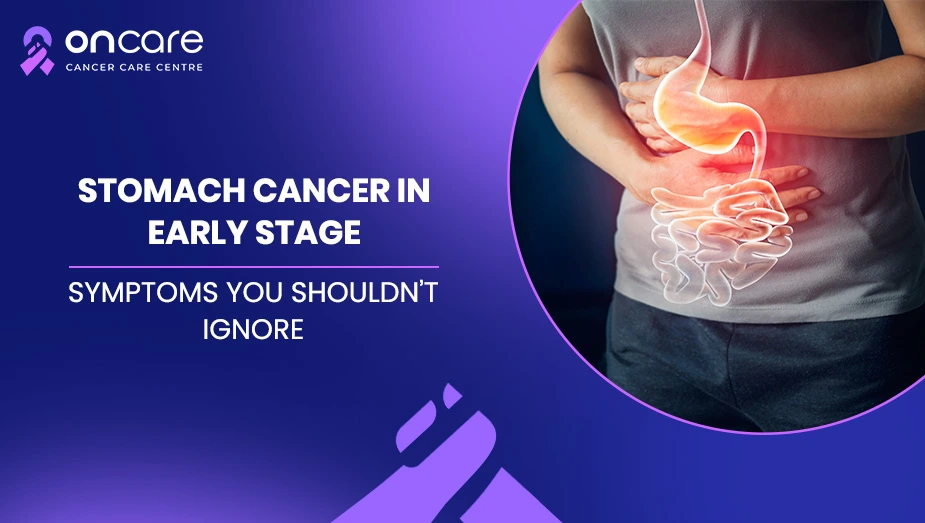
What does it mean to have early-stage stomach cancer?
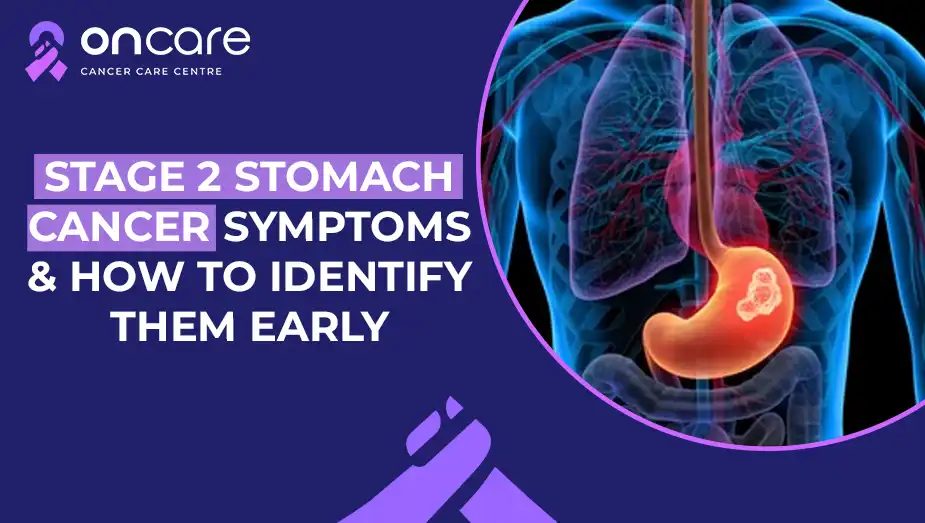
Early-stage stomach cancer means that the cancer is only in the stomach's inner lining and hasn't spread to other organs.
At this point:
- The tumor is small.
- Symptoms are not very distinct or are not very strong.
- The rates of success for treatment are higher.
Finding things early is really important for getting better results.
Early Signs You Shouldn't Ignore
1. Constant stomach problems
One early indicator is having indigestion that doesn't go away.
- Feeling like your gut is on fire
- Feeling bad after eating
- Feeling bad in the upper abdomen
2. Not wanting to eat
You shouldn't disregard a sudden drop in appetite for no evident reason.
- Eating less than you normally do
- Getting full soon
3. Losing weight for no reason
If you lose weight without trying, it could be a symptom.
- Slowly losing weight
- Feeling weak or tired
4. Feeling bloated after meals
If you feel bloated even after eating a tiny meal, there may be a problem.
- Stomach tightness
- Gas and pain
5. Feeling sick or throwing up
Stomach problems can cause nausea a lot of the time.
- A lot of the time, you feel like throwing up.
- Sometimes throwing up
6. Mild Pain in the Stomach
Pain may not be bad at first, but it might last for a long time.
- Pain that doesn't go away or is dull
- Pain in the upper abdomen
Early Signs of Stomach Cancer
Sign of a problem | What It Feels Like | When to Be Worried |
|---|---|---|
Upset stomach | Burning or pain | Lasts for weeks |
Not Wanting to Eat | Less food | Sudden and lasting |
Losing weight | Weight loss that wasn't planned | No clear rationale |
Swelling | Feeling full after meals | Happens a lot |
Sick | Feeling bad | Many times |
Pain in the stomach | Some little pain | Pain that doesn't go away |
Why do people often ignore early signs
A lot of the early indicators of stomach cancer are the same as normal digestive issues like gas or acidity. For this reason:
- People put off going to the doctor
- Home remedies are used to treat symptoms.
- Diagnosis happens later.
Being aware is vital to avoid delays.
When do you need to see a doctor?
If you have any of the following, you should see a doctor:
- Symptoms linger longer than two to three weeks.
- You have several symptoms at the same time.
- There is a weight reduction that can't be explained.
- Your family has a history of stomach cancer.
Getting medical advice early can help find the problem quickly.
How do doctors find out whether someone has early-stage stomach cancer?
Doctors might suggest:
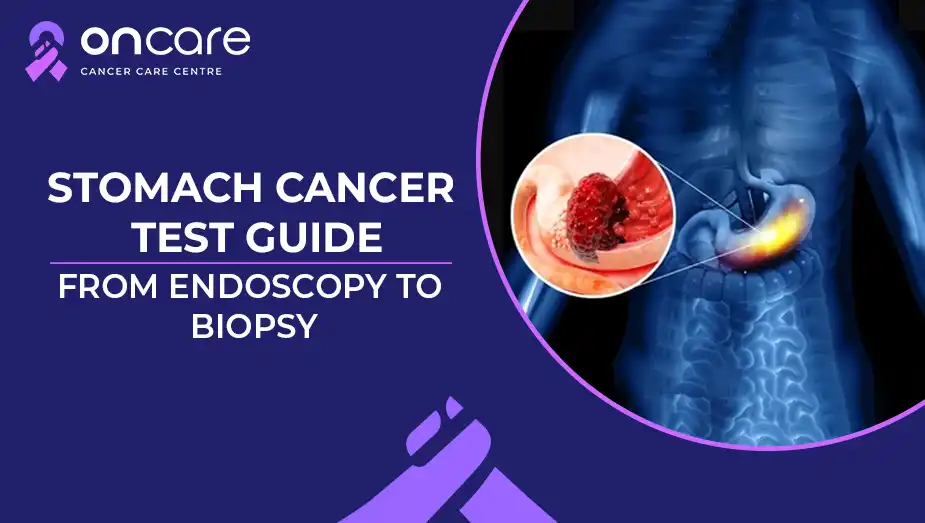
- Endoscopy (to look inside the stomach)
- Biopsy (to check for cancer)
- Tests that use pictures (like a CT scan)
These tests can find cancer early, when it can be treated.
How important it is to get treatment early
When found early:
- The treatment works better
- Surgery might get rid of all the cancer.
- There is a better possibility of recovery.
- The chances of survival go up a lot.
Ignoring symptoms might make the disease worse, which makes it tougher to treat.
Why Expert Care Is Important
Experienced doctors and cutting-edge facilities are needed for accurate diagnosis and early treatment.
Oncare Cancer Hospital offers skilled cancer screenings, early diagnoses, and individualized treatment plans to give patients the best chance of getting better.
A Reliable Source for More Information
You can get detailed and dependable information from the National Cancer Institute's official page. This government group gives out cancer information that has been reviewed by experts.
Consult Today
In the early stages, stomach cancer often has symptoms that are hard to notice. But paying attention to these indicators can save your life.
If symptoms don't go away, you shouldn't wait to see a doctor. Finding a problem early on leads to better treatment results and a higher quality of life.
If you see any warning symptoms, you should see a doctor right away. Oncare Cancer Hospital gives patients advanced care and assistance to help them get through early diagnosis and treatment.
Frequently Asked Questions
1. Is it possible to find stomach cancer early?
Yes, especially with tests like endoscopy and biopsy.
2. Are the first signs of illness serious?
They might not appear bad, but you shouldn't ignore them if they don't go away.
3. What is the most common sign of the disease?
Indigestion and a lack of appetite are common early indications.
4. Can stomach cancer in its early stages be cured?
Yes, it is quite easy to treat if you find it early.