Table of Contents
Stage 2 Lung Cancer Symptoms: How They Differ From Stage 1

By Raveena M Prakash


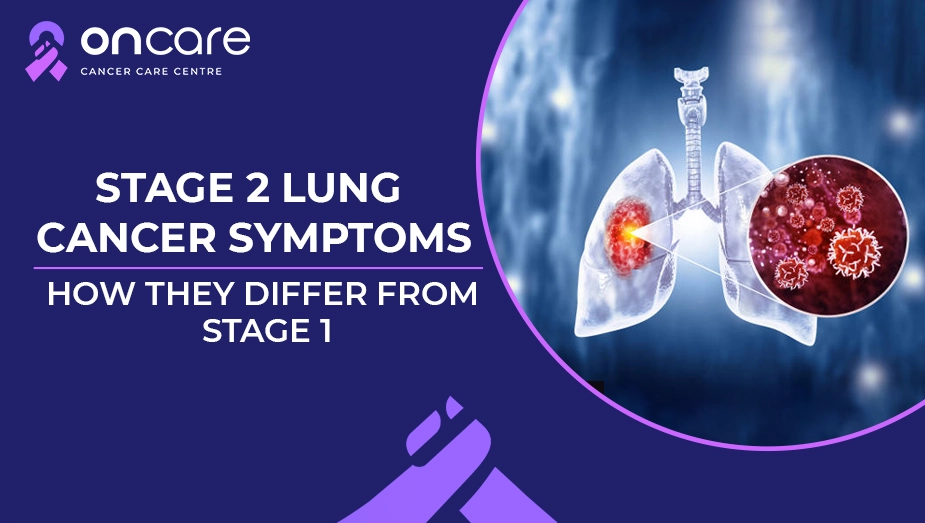
Lung cancer symptoms can appear subtle in the early stages; that’s one of the many reasons why these cancers are not diagnosed until the disease has progressed. Understanding how stage 2 lung cancer symptoms differ from stage 1 can help patients to recognize signs earlier and seek timely medical care. While both of these stages are considered early-stage cancers, they often cause more noticeable symptoms due to an increased tumor size or limited spread to nearby lymph nodes.
In this article, we’ll explain more about the key differences in symptoms, what to watch out for, and when to consult a doctor!
Understanding Lung cancer staging
Lung cancer staging helps to describe how large the tumor is and how far it has spread in the lungs. This helps doctors to determine the best treatment plan.
Here’s how:
- Stage 1 Lung cancer : In this stage, the cancer is often confined to the lungs and has not spread to the lymph nodes. This cancer is localized and hasn’t spread to lymph nodes.
- Stage 2 Lung cancer : In this stage, the tumor is larger and has spread to the nearby lymph nodes within the lung.
Symptoms of Stage 1 Lung Cancer
Stage 1 lung cancer is often called the ‘silent’ stage because many cancer patients have few or no symptoms. When these symptoms start to appear, they are usually mild and easy to ignore.
Common stage 1 symptoms may include:
- Experiencing a mild or occasional cough
- Experiencing slight shortness of breath
- Chest discomfort
- Fatigue
- Recurrent respiratory infection
All of these symptoms are often mistaken as signs of less serious health concerns, such as allergies, smoking-related irritation, or minor infections.
Symptoms of Stage 2 Lung Cancer
In stage 2 Lung cancer, symptoms tend to become persistent, constant, and also noticeable. It happens because the tumor may be larger or affecting nearby lymph nodes.
Common stage 2 symptoms may include:
- Persistent cough that does go away easily
- Chest pain that worsens with deep breathing or coughing
- Shortness of breath, even during light activity
- Coughing up with blood (hemoptysis)
- Frequent lung infections
- Fatigue and weakness
- Unexplained weight loss
All of these symptoms are often more difficult to ignore and usually prompt medical evaluation.
Key differences between stage 1 and Stage 2 symptoms
The main differences between stage 1 and stage 2 lung cancer symptoms may include:
Symptom severity
Stage 1 symptoms are comparatively mild or absent in some or most cases. Meanwhile, the stage 2 symptoms are more frequent and constant.
Breathing difficulties
Stage 1 symptoms might often cause slight shortness of breath, while stage 2 often causes noticeable breathing issues during performing daily activities.
Chest pain
In stage 1 patients, they will experience rare or mild in stage 1. While in stage 2 patients chest pain is more common and often noticeable.
Cough changes
Patients with stage 1 might experience occasional cough, but stage 2 patients experience chronic cough and start to get worse.
Systemic symptoms
Stage 1 usually does not affect the overall health conditions of a patient. Stage 2 patients might experience fatigue, weakness, and weight loss.
Why symptoms starts to worsen in stage 2
In stage 2 patients the symptoms start to worsen because of some reasons.
These may include:
- The tumor is larger and may block the lung airways.
- Nearby lymph nodes may be involved.
- Lung function becomes more impaired.
- Inflammation and irritation start to increase
As the disease starts to progress, the patient's body’s ability to compensate for these symptoms starts to decrease, making the symptoms more noticeable.
Treatment outlook for Stage 2 Lung cancer
Stage 2 lung cancer is often considered treatable and managed with effective cancer treatments. Patients getting immediate medical attention and timely treatments might receive successful outcomes, generally better than for advanced stages.
Here are the treatments used:
- Surgery to remove the tumor
- Chemotherapy to reduce the cancer recurrence risk
- Radiation therapy in selected cases
- Targeted therapy or Immunotherapy for certain cancer types
The stage 2 throat cancer is still localized. Many cancer patients might achieve long-term control or remission with proper cancer treatment.
When to consult a doctor
If you are experiencing any of these symptoms, then consult a healthcare provider immediately, if you experience:
- A cough lasts more than three weeks
- Chest pain that does not improve
- Shortness of breath
- Blood in the cough
- Experiencing repeated lung infections
- Unexplained weight loss
- Fatigue
Early medical evaluation can make a significant difference in treatment outcomes and recovery.
Importance of early detection and why it matter
Early diagnosis allows diseases to be identified at an early stage, when treatment is often more effective and less aggressive in nature. Detecting a medical condition early can improve survival rates, reduce complications, lower treatment costs, and help patients to maintain better lives.
Understanding the difference between stage 1 and stage 2 lung cancer symptoms highlights the importance of:
- Lung cancer screening for high-risk individuals
- Immediate medical attention for persistent symptoms
- Stopping cigarettes smoking and practising its risk- reduction strategies
The earlier the lung cancer gets diagnosed, the more chances of recovery and more treatment options are available.
Consult Today
Stage 2 lung cancer symptoms are typically more noticeable and constant than those with stage 1 lung cancer. While early symptoms can be subtle, paying more attention to changes in cough, breathing, chest discomfort, and overall health can lead to earlier diagnosis and better treatment outcomes.
At Oncare, we offer premium-quality cancer treatments, including advanced cancer surgeries, at an affordable price range with an experienced cancer specialist consultation.
If you or any loved ones of yours are diagnosed with cancer, then visit Oncare Cancer Center and book an appointment with our experienced cancer specialist today! Get an estimated cost of your cancer treatments today!
Frequently Asked Questions
The common symptoms of stage 2 lung cancer may include persistent cough, chest pain, shortness of breath, fatigue and occasional blood in sputum.
Symptoms are more noticeable in stage 2 due to larger tumors or nearby lymph node involvement.
If you start to experience constant respiratory issues and unexplained weight loss.
Book an Appointment
Related Blogs

Stage 4 Breast Cancer Treatment Options: What Works Best Today
Discover more about breast cancer and stage 4 breast cancer and understand the breast cancer type and how to choose the treatment options and what works best today!
Stage 2 Blood Cancer Management: What Patients Must Know
Discover more about stage 2 blood cancer and common symptoms, treatment options, managing side effects during cancer treatments, and the importance of regular monitoring.
Stage 2 Ovarian Cancer Symptoms: From Mild to Severe Indicators
Discover more about stage 2 ovarian cancer and its symptoms, starting from mild to severe indicators of cancer, why these symptoms are missed, and why early detection matters!

Stage 1 Mouth Cancer: Risk Factors and How to Reduce Them
Learn about Stage 1 mouth cancer, early symptoms, major risk factors, and prevention tips. Early detection improves recovery. Get complete awareness here.