Table of Contents
Spinal Cord Compression: A Cancer Emergency You Should Recognise

By Dr. Gajendra Kumar Himanshu


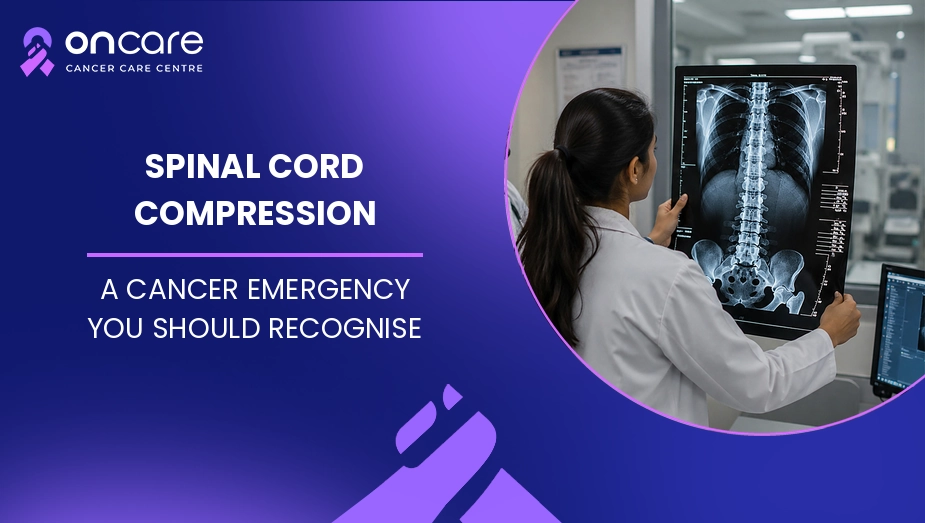
Spinal cord compression is a dangerous cancer emergency. It occurs when a tumour presses on the spinal cord or the nerves around it. Severe back pain, weakening of the arms or legs, numbness, and trouble controlling the bladder or bowel might occur. Getting diagnosed and treated early is crucial because waiting might cause irreversible nerve damage or paralysis.
In this blog, we discuss spinal cord compression as a cancer emergency you should recognise: why it occurs, the warning signals to look for, how doctors diagnose it, treatment options available, and when you should get emergency medical attention.
Why Recognising Spinal Cord Compression Is Important
Sometimes cancer can metastasise to the bones in the spine. When it gets bigger, the tumour can press on the spinal cord and interrupt the nerves that convey messages to and from the brain and the rest of the body. This is called spinal cord compression and needs urgent medical intervention.
Early recognition of symptoms can make a big difference. Prompt therapy can ease pressure on the spinal cord, preserve movement, minimise pain, and assist in preventing lifelong impairment. This problem is more common in cancer patients, such as those with breast, lung, prostate, renal, thyroid, or multiple myeloma, although it can also occur in other tumours.
Definition of Spinal Cord Compression
The bones of the spine protect the spinal cord. The spinal cord is a bundle of nerves. It governs movement, sensation, and many vital body processes.
When a tumour develops in or around the spine and presses on the spinal cord or surrounding nerves, this is called spinal cord compression. In most cancer patients, this is because the malignancy has advanced to the vertebrae and caused the bone to weaken or collapse. As pressure develops, the spinal cord is unable to function properly, and symptoms often deteriorate quickly if left untreated.
What Are the Early Warning Signs?
Symptoms normally develop over days to weeks, although occasionally they may start suddenly.
Typical indications to look out for are:
- Chronic back or neck pain that may be greater at night or when lying down.
- Pain radiating to the arms, chest, or legs.
- Weakness in one or both arms or legs.
- Numbness, tingling, or decreased sensation below the afflicted area.
- Difficulty walking or keeping balance.
- In serious circumstances, loss of bladder or bowel control.
If a cancer patient gets new back discomfort with weakness or numbness, they should be evaluated medically urgently.
What Types of Cancer Cause Spinal Cord Compression?
The tumours most likely to metastasise to bone are also the ones most likely to cause spinal cord compression.
Cancers most often linked with spread to the spine
Type of Cancer | Spread to the Spine |
|---|---|
Breast cancer | Common |
Lung cancer | Common |
Prostate cancer | Common |
Multiple myeloma | Common |
Kidney cancer | Common |
Thyroid cancer | Common |
These are the tumours most commonly associated with spinal metastases, but any malignancy might cause spinal cord compression.
How Do You Diagnose Spinal Cord Compression?
Doctors begin with questions regarding symptoms, then a neurological exam to test muscular strength, reflexes, sensation, and capacity to walk.
The most significant test is an MRI scan of the spine, which gives comprehensive images of the spinal cord and helps to pinpoint the specific location of the compression. If MRI is not appropriate, alternative types of imaging such as CT scans may be employed. Blood tests and other scans may also be recommended to work out how far the cancer has spread.
Treatment Options for Spinal Cord Compression
The major goal of treatment is to reduce pressure on the spinal cord as rapidly as possible, to prevent lasting damage to the nerves, maintain movement, and to control the cancer that is causing the compression. How the treatment is approached depends on where the compression is, the type of malignancy, and the patient’s general condition.
Steroid Medicines
High-dose corticosteroids are often initiated without delay on suspicion of spinal cord compression. These medications decrease swelling around the spinal cord and may temporarily alleviate symptoms.
Radiation Therapy
The tumour producing the compression is often treated with radiation. This is especially helpful when surgery is not needed or when several locations are involved.
Surgery
If the spine is unstable and there is severe pressure on the spinal cord, surgery may be indicated to remove the tumour and to fix the afflicted bones.
Cancer-Specific Therapy
In some cases, chemotherapy, targeted therapy, hormone therapy, or immunotherapy is also used as part of the overall treatment plan to help control the underlying malignancy.
How Can Spinal Cord Compression Be Prevented?
Not all cases are preventable, but early discovery of the spread of cancer can help decrease the chance of serious complications. Patients with malignancies that frequently spread to the spine should have regular follow-up visits and should report any new back pain or neurological concerns immediately.
Ignoring symptoms and hoping they will go away on their own might lead to lasting nerve damage.
Visit the National Library of Medicine for accurate information on spinal cord compression and cancer treatment.
Consult Today
Spinal cord compression is a medical emergency and should never be neglected. If you or a loved one with cancer has unexpected back pain, weakness, numbness, or difficulty walking, get quick medical assistance. Oncare Cancer Hospital has a team of skilled oncology specialists who rapidly assess cancer-related emergencies and develop individualised treatment strategies to preserve mobility, decrease symptoms, and enhance quality of life.
Disclaimer
This material is for informational purposes only and is not a substitute for professional medical advice, diagnosis, or treatment. Each patient is distinct. Always see your physician or other certified health expert with any questions you may have regarding a medical condition.





Frequently Asked Questions
Yes. Spinal cord compression is a medical emergency because delaying treatment might result in permanent nerve damage or paralysis.
The first sign is usually persistent back pain. Subsequently, there may be weakness, numbness, trouble walking, or abnormalities in bladder and bowel function.
Many individuals benefit from early treatment with steroids, radiation therapy, surgery, or other cancer treatments. Treatment is usually more successful if begun before substantial damage to the nerves has occurred.
Spinal cord compression is most often related to breast, lung, prostate, multiple myeloma, kidney, and thyroid malignancies.
Written and Verified by:
Dr. Gajendra Kumar Himanshu Exp: 10 Yr
Medical Officer
Book an Appointment
Related Blogs

What Is a Tumour Board and How a Team of Doctors Plans Your Treatment
What a tumour board is, which specialists take part, the step-by-step way the team reviews reports and decides on treatment, and what questions to ask your doctor after the meeting.

Recovery After Pancreatic Cancer Surgery (Whipple): A Home Care Guide
What recovery looks like in the first weeks after a Whipple procedure, the digestive and appetite changes to expect, nutrition and wound care at home, how to rebuild activity safely, and when to call your care team.

Throat Cancer Recurrence: Signs and Long-Term Monitoring
What throat cancer recurrence means, why it happens, the signs that need medical attention, the tests used during long-term monitoring, and how to look after your emotional well-being between appointments.

Colon Cancer Recurrence: Surveillance Tests and Risk Factors
What colon cancer recurrence means, the surveillance tests doctors use after treatment, the risk factors that shape a follow-up plan, and the symptoms worth reporting to your care team.