Table of Contents
Robotic Surgery for Cancer: Precision Meets Innovation

By Raveena M Prakash


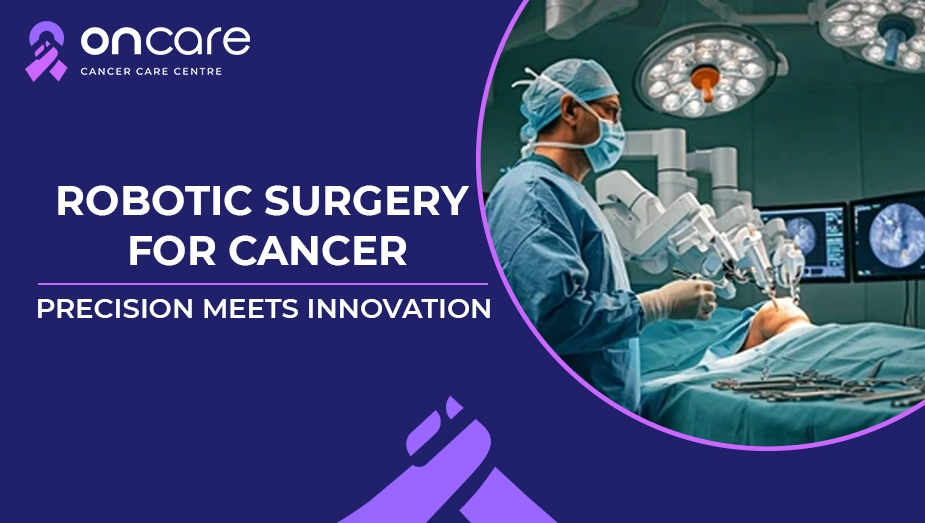
Cancer treatment has evolved dramatically over the past few years. What once required such large incisions, longer hospital stays, and long recovery periods is now increasingly managed through these advanced, minimally invasive surgical procedures. Among the most transformative of these advances is happening in robotic surgery for cancer. While blending human experience with advanced cancer surgeries, robotic-assisted procedures are redefining how cancer is treated.
In this article, we’ll discover more about robotic surgery for cancer and comparison of robotic surgery for cancer with traditional cancer treatments.
Understanding robotic surgery for cancer
Robotic surgery for cancer does not mean the machines will operate on the patients without any human assistance. A robotic surgery for cancer is controlled by a system designed to enhance the surgeon’s technical capabilities. They will take control of the console, and the surgeon might be equipped with any tiny kind of surgical instrument with a high-definition camera.
Every movement of the equipment made by the surgeon is often translated into precise and controlled actions inside the body. This advancement often allows the surgeon to make the movements steadier and more refined with the human hand alone. As we all know, in advanced cancer surgery where the centimeters can make a significant difference, while this enhances control of equipment are especially important.
Why is robotic surgery important for cancer care?
Cancer surgeries are highly complex and delicate. These are often performed by experienced surgical oncologists, and they will remove tumors completely while protecting the surrounding healthy tissues, nerves, and organs. While in some cases, performing surgeries by a surgeon can be challenging, especially in hard-to-reach areas of the body; that’s when the need for robotic surgery is important to cancer care.
Robotic surgery helps to address these challenges by offering:
- Exceptional precision and accuracy:
- An improved 3D visualization:
- Greater control and stability:
All of these features make robotic surgery especially effective for cancers involving sensitive or complex anatomy.
Types of cancer treated with robotic surgery
Performing robotic surgery can be commonly used in treating several types of cancer cases. Including:
- Prostate cancer: This is one of the most common cancers in both men and women. In treating and managing these cancers, doctors often use robotic surgery because its precision gets more crucial to preserve the urinary tract and sexual function of cancer patients.
- Gynecological cancer: Cancers like cervical, ovarian and uterine cancers also use robotic surgery for the cure of cancer.
- Colorectal cancer: Robotic surgery used for tumor removal in the colon and rectum.
- Lung cancer: These surgeries are often used in early stage cancers.
- Head and neck cancers: Treating and managing cancers doctors often recommend robotic surgery because access and visibility are often blocked in traditional surgical practices.
Benefits for patients
Undergoing robotic surgery often leads to a comfortable and less stressful treatment experience. When compared to a traditional open surgery, a robotic-assisted procedure typically involves smaller incisions, which offer several advantages to the patients.
These may include:
- Reduced blood loss during surgery
- Less pain after the surgery
- Lower chance of getting an infection
- Minimal scarring
- Shorter hospital stays
- Faster to normal activities
For many cancer patients, these benefits are highly meaningful. As many patients undergo additional treatments like chemotherapy or radiation, a quicker recovery from surgery can help them continue their overall treatment plan.
Comparison of robotic surgery with traditional cancer treatments
Traditional cancer surgeries such as open surgery have long been considered the standard for cancer treatment and are still considered essential in many cases. Performing a robotic surgery offers an alternative that can often reduce the physical stress on the body.
When compared to an open surgery, performing a robotic surgery for cancer can generally results in, these:
- Smaller incisions instead of large cuts
- Less trauma to the surrounding healthy tissues
- Comparatively quick recovery
Compared to a conventional laparoscopic surgery, a robotic system tends to provide better visualization and more flexible instrument movement, which can improve the surgical outcomes in complex cases.
The future of Robotic surgery for cancer
The future of robotic surgery for cancer care looks more promising and it holds potential to change the dimension of conventional cancer treatments. Many cancer researchers and engineers are working continually to improve these systems.
These are the emerging technologies, including:
- Integration of artificial intelligence to assist surgical planning
- Performing real time imaging tests to help surgeons to distinguish between cancerous tissues more clearly
- An improved feedback system that might enhance precision and safety in cancer patients.
These innovations have become widely available across the world. A robotic surgery is expected to play an even larger role in larger cancer treatment.
Consult Today
Robotic surgery for cancer represents a powerful blend of technology precision, innovation and human expertise. In cancer treatment, surgical accuracy can directly impact survival and quality of life, while this technological innovation has changed the dimension of cancer treatments. These surgeries may not replace any kinds of traditional cancer treatments but offer a valuable option for many cancer patients.
At Oncare, we offer premium-quality cancer treatments, including advanced cancer surgeries, at an affordable price range with an experienced cance r specialist consultation.
If you or any loved ones of yours are diagnosed with cancer, then visit Oncare Cancer Center and book an appointment with our experienced cancer specialist today. Get an estimated cost of your cancer treatments today!
Frequently Asked Questions
A surgeon might control the console of the equipment, the areas often viewed in 3D images, and the robotic arms with their arms, which often perform delicate surgical procedures.
The benefits of performing robotic surgery in cancer patients include:
- Minimally invasive surgeries
- Faster recovery
- Better function and improving the quality of life
- Better efficacy when compared to normal cancer surgeries
Cancers including prostate, gynecological (uterine), colorectal and gastrointestinal cancers.
Book an Appointment
Related Blogs

Mouth Cancer Treatment Options: From Surgery to Immunotherapy
Discover more about mouth cancer treatment options and common symptoms, early detection and cancer preventive measures and lifestyle tips during cancer treatments!

Brain Tumor Treatment Without Surgery: Options You Should Know
Discover more about brain tumor treatment without surgery, when surgery is not possible, non-surgical brain tumor treatments, and the importance of personalized care!

Brain Tumor Treatment Without Surgery in India: Effective Alternatives
Learn about brain tumor treatment without surgery in India, including radiation, SRS, targeted therapy, immunotherapy, and other safe non-surgical options.

Cryosurgery Procedure for Cancer and Other Conditions
Discover more about Cryosurgery and its benefits, risks and complications of this procedure, practical patient advice and what to discuss with your doctor!