Table of Contents
Cryosurgery Procedure: When and Why It’s Used in Cancer Care

By Dr. Gajendra Kumar Himanshu


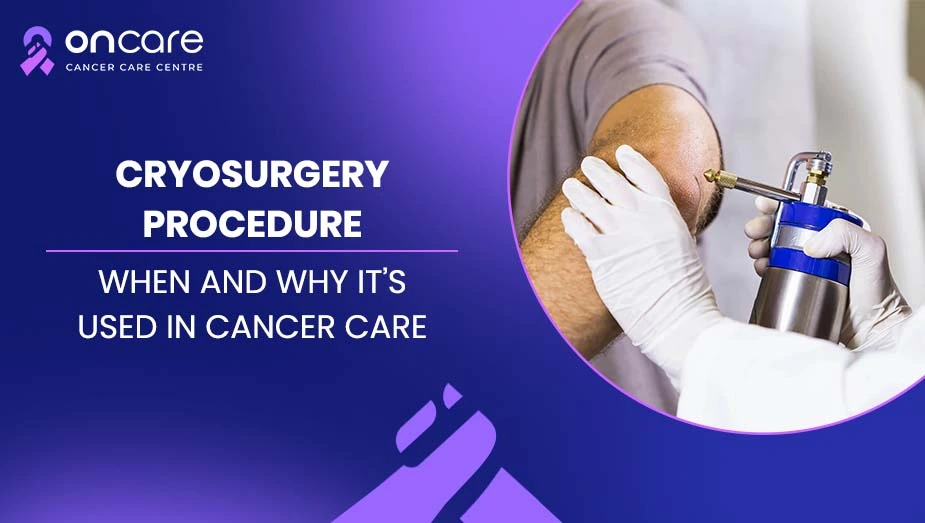
Surgery, chemotherapy, and radiation are not the only ways to treat cancer. Cryosurgery is one of the advanced techniques that modern medicine offers.
It may sound complicated, but the premise is simple: use severe cold to kill cells that are aberrant or malignant.
If you or someone you know is looking into treatment alternatives, knowing how cryosurgery works, when it is performed, and what its benefits are will help you make smart choices.
The National Cancer Institute says that cryosurgery is a method that uses liquid nitrogen or argon gas to freeze and kill aberrant tissue.
What Is Cryosurgery?
Cryosurgery, which is also termed cryotherapy or cryoablation, is a medical treatment that uses very low temperatures to eliminate malignant or abnormal cells.
Doctors use freezing agents like:
- Nitrogen in liquid form
- Gas argon
These chemicals freeze the tissue they are meant to affect, which kills the cells.
How does cryosurgery work?
The method works by freezing cells to a point where they can't live.
Steps to take:
- Extreme cold is applied via a probe or spray.
- Inside the cells, ice crystals form.
- The tissue's blood supply is cut off.
- The body naturally destroys and gets rid of cells.
This method is quite accurate and just affects the area that needs it, which protects healthy tissue around it.
When is cryosurgery used to treat cancer?
Cryosurgery is only utilized for certain types of cancer, typically when the tumors are tiny or in one place.
Some common uses are:
- Skin cancer (lesions in the early stages)
- Abnormal cells in the cervix that could lead to cancer
- Prostate cancer (in some instances)
- Tumors in the liver
- Tumors in the retina (eye cancer)
The American Cancer Society says that cryosurgery is routinely used to treat tiny tumors or diseases that could lead to cancer.
Why Choose Cryosurgery?
There are several reasons why doctors could suggest cryosurgery:
1. Not very invasive
There is no need for big cuts or sutures.
2. Recovery goes faster
Patients frequently heal faster than they do after standard surgery.
3. Less Pain
Most of the time, pain is minimal and easy to handle.
4. Specific Treatment
Only the area that is hurt is treated.
5. Choice for Patients at High Risk
Helpful for people who can't have extensive surgery.
Cryosurgery and regular surgery
Characteristic | Cryosurgery | Surgery the Old-Fashioned Way |
|---|---|---|
Being invasive | Not very invasive | More invasive |
Time to Get Better | Faster | Longer |
Pain | Less | More |
Precision | High | Moderate |
Hospital stay | Not much or none | May need to stay |
What Happens During the Process?
The location of the tumor affects the process.
For tumors on the outside:
You can use a spray or cotton swab to put liquid nitrogen directly on the skin.
For malignancies inside the body:
A thin probe called a cryoprobe is put into the body.
Imaging (CT, ultrasound) helps with the positioning.
To make sure that all of the cancer cells are destroyed, the freezing cycle can be done again.
The negative effects of cryosurgery
Cryosurgery is usually safe, it can have some negative effects:
- Swelling
- Pain or discomfort
- Blistering (for skin care)
- Nerve injury that lasts for a short time (rare)
The NHS says that side effects are usually modest and go away on their own.
Who Is a Good Person to Choose?
Cryosurgery might be right for:
- Cancers in their early stages
- Small, localized tumors
- Patients not suitable for major surgery
- Precancerous conditions
But it might not be the best choice for malignancies that are big or spread out.
Pros and cons
Pros:
- Not very invasive
- Fast recovery
- Can be done again if necessary
Limitations:
- Not good for all kinds of cancer
- May not get rid of all cancer cells in one session
- Needs must be watched over time
Does Cryosurgery Work?
For some types of cancer, especially when caught early, cryosurgery can work quite well.
But success depends on:
- Type of cancer
- Size of the tumor
- Place
Doctors typically use it with other treatments to get better results.
After Cryosurgery, the Recovery
Most of the time, recovery is quick:
- Most patients can go back to their normal lives within a few days.
- A little pain might last for a short period.
- Follow-up visits are very crucial.
Disclaimer for Medical
This post is simply meant to give you information and should not be taken as medical advice. Always talk to a certified healthcare provider about how to diagnose and treat your condition.
Consult Today
Cryosurgery is a new, minimally invasive method that employs very cold temperatures to kill cancer cells. In some circumstances, it is a safer and faster option than regular surgery.
It doesn't work for all malignancies, but it can be quite helpful for tumors that are still small and in the early stages.
If you're looking at treatment choices, talk to a doctor to see if cryosurgery is the best one for you.
You might think about Oncare Cancer Hospital and other reputable cancer care clinics for expert advice and treatment.





Frequently Asked Questions
It doesn't normally hurt much, and the pain is moderate.
It varies from case to case, but it normally doesn't take long.
It can work for some malignancies that are still in their early stages.
Most of the time, it is done as an outpatient operation.
Written and Verified by:

Dr. Gajendra Kumar Himanshu Exp: 10 Yr
Medical Officer
Book an Appointment
Related Blogs
Stage 3 Cancer Treatment: Options, Procedures, and Recovery
Discover more about stage 3 cancer treatment and what to expect during treatments and its recovery and life after cancer treatments, outlook, and hope for stage 3!
TARE Procedure: A Complete Guide for Liver Cancer Treatment
Discover more about the TARE procedure for liver cancer treatment, who needs the TARE procedure, what to expect during the procedure, and the benefits and side effects of the TARE procedure!
Brain Tumor Surgery: Procedure, Risks, and Recovery
Learn what to expect from brain tumor surgery, including the procedure, recovery, risks, and when surgery is needed. Get expert tips for better outcomes.
Biopsy Procedure: Step-by-Step Guide for First-Time Patients
Biopsy procedure explained—learn steps, types of biopsy tests, and what to expect before and after. Book a biopsy consultation with Oncare today.