Table of Contents
Risk-Reducing Surgery: When Preventive Mastectomy or Oophorectomy Is Considered

By Dr. Gajendra Kumar Himanshu


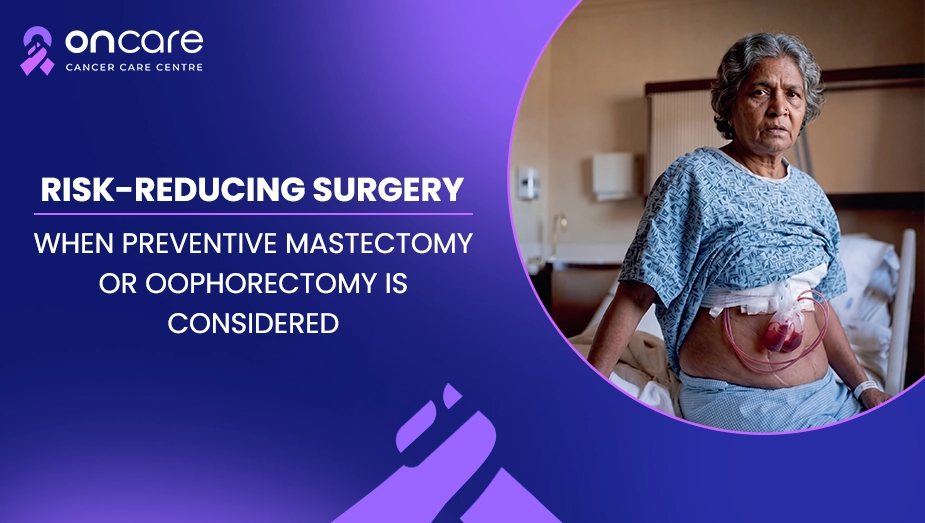
Individuals who are at substantially higher risk for acquiring certain cancers due to inherited genetic abnormalities, strong family history, or other medical conditions may undergo risk-reducing surgery. Preventive mastectomy is the removal of breast tissue to lessen the chance of breast cancer, while preventive oophorectomy is the removal of the ovaries and sometimes the fallopian tubes to minimize the risk of ovarian cancer.
These surgeries aren’t for everyone, and they don’t ensure that you’ll never have cancer. Rather, they are possibilities that can be explored for carefully selected persons following a rigorous review. Understanding the reasons why these treatments may be explored, their possible benefits and limitations, and the factors that influence decision-making can help patients and families feel more informed and confident when discussing preventative options with their healthcare team.
This blog will cover what risk-reducing surgery is, when preventive mastectomy or oophorectomy may be considered, potential benefits and restrictions, and how doctors help patients make informed decisions.
The Concept of Surgery to Reduce Risk
Risk-reducing surgery is performed before cancer starts to lessen the risk of specific cancers in those who are at higher risk.
The two techniques most often discussed are:
- Prophylactic mastectomy
- Prophylactic oophorectomy
Usually, these surgeries are recommended only after a complete medical evaluation and discussion with health care providers. It is a very personal decision and depends on many things.
What is a Prophylactic Mastectomy?
Preventive mastectomy is surgery to remove breast tissue from a person who does not have breast cancer but may be at higher risk for getting it. Doctors may discuss this possibility for persons with:
- Certain inherited gene mutations
- A strong family history of breast cancer
- Past medical findings that raise risk
- Other risk factors recognised by experts
The goal is to decrease risk, but it is crucial to know that surgery does not provide 100% protection.
What Is Preventive Oophorectomy?
Preventive oophorectomy is the surgical removal of the ovaries, and sometimes the fallopian tubes.
You may want to consider this surgery if you have some inherited genetic disorders that are connected with an increased risk for ovarian cancer. Doctors may mention this option when there is:
- Ovarian cancer in a family member
- Some findings of genetic testing
- A higher cancer risk from inherited genes
- Other personal medical factors
Timing and appropriateness of surgery vary from person to person.
Why Some People Get These Procedures
Finding out that they have an increased inherited cancer risk can, for some people, lead to worries about the future.
People might consider risk-reducing surgery to:
- Reduce the risk of some malignancies
- Encourage long-term preventative planning
- Provide some with more peace of mind
- Supplement other screening and monitoring measures
But surgery is simply one of many viable options.
Things Physicians Think About Before Suggesting Surgery
Family History
A personal or strong family history of breast, ovarian, or similar malignancies in close relatives may impact recommendations.
Doctors might ask about:
- Parents, brothers and sisters
- Grandparents
- Extended family
Genetic Test Results
Some genetic alterations that are inherited can raise the risk of cancer. Also, genetic testing can give information that may help in guiding preventative conversations.
General Health
General health is a crucial part of the decision-making process.
Doctors consider:
- Age
- Pre-existing medical conditions
- Previous operations
- Current health
Personal Preferences
Risk means a different thing to everyone. Some people prefer to be closely monitored, while others may want to discuss preventive surgery.
A Practical Guide to Considerations for Surgery to Reduce Risk
Factor | Why It’s Important |
|---|---|
Family history | Helps evaluate hereditary risk |
Findings of genetic testing | Can identify higher-risk individuals |
Medical (personal) history | Supports personalised planning |
General health | Helps decide surgical candidacy |
Age and plans for the future | Affects when decisions are taken |
Personal preferences | Shared decision-making is important |
Potential Advantages of Surgery to Reduce Risk
Some possible advantages may be:
- Lowered risk of some malignancies
- A better understanding of prevention
- Long-term planning possibilities
- Greater peace of mind for some people
The advantages differ for each individual’s circumstances. The decision should always be an individual one.
Understand the Limits
The limitations have to be understood, too. Risk-reducing surgery:
- Offers no certainty of cancer prevention
- May not be suitable for everyone
- May carry surgical risks
- Needs close consultation with a specialist
Every medical choice weighs benefits against risks.
Other Risk Management Alternatives
There are other options besides surgery. Doctors might also suggest:
- Regular screening programs
- Imaging tests
- Clinical trials
- Lifestyle suggestions
- Routine surveillance
There is no single best way; it depends on the person’s circumstances.
The Emotional Dimension of Decision-Making
Thinking about preventive surgery might stir up a lot of emotions.
Some people might feel:
- Worry about potential cancer risk
- Unsure about key decisions
- Uncertain about preventive alternatives
- Information overload
These feelings are normal and natural.
Support may be provided by:
- Relatives
- Friends
- Genetic counsellors
- Oncology specialists
- Support groups
- Psychologists
Open interactions typically make people feel better about their decisions.
Learn More From Trusted Sources
Providing reliable information can help patients and families better understand their inherited cancer risk and prevention alternatives.
The National Cancer Institute provides evidence-based educational information on hereditary risk, cancer prevention, and risk-reducing surgery.
Looking Forward - Confidently
Risk-reducing surgery is a very personal decision that must be carefully discussed and planned. Preventative mastectomy and preventative oophorectomy may be appropriate for some persons at elevated risk, but are not suggested for everyone. What is best will rely on personal risk factors and family history, genetic testing findings, overall health, personal preferences, and recommendations by qualified health professionals.
Consult Today
Some people with an increased genetic risk of developing cancer may be offered risk-reducing surgery, e.g., prophylactic mastectomy and preventive oophorectomy. These techniques can contribute to long-term risk management, but they do not ensure prevention and are not for everyone. The decision to have surgery should always be based on individual risk, family history, genetic testing results, general health and the doctor’s advice.
Oncare Cancer Hospital is a trusted name for expert guidance, comprehensive cancer care, and compassionate patient support through diagnosis, treatment, recovery, and survivorship.





Frequently Asked Questions
Risk-reducing surgery is a type of operation that is performed to assist in reducing the risk of certain cancers developing in patients who are at higher risk.
It’s the excision of breast tissue to help lower the chance of breast cancer in chosen high-risk individuals.
It’s the removal of the ovaries, and sometimes the fallopian tubes, to help minimise the chance of ovarian cancer in specific instances.
No. Risk-reducing surgery can reduce your risk, but it is not a guarantee that you will not develop cancer.
Written and Verified by:
Dr. Gajendra Kumar Himanshu Exp: 10 Yr
Medical Officer
Book an Appointment
Related Blogs
Cancer-Associated Blood Clots: Why Risk Is Higher and How to Prevent Them
Learn about why blood clots can occur during cancer treatment, warning signs, prevention tips, and when to seek medical help at Oncare Cancer Hospital.
Mesothelioma in India: Risk Factors and Diagnostic Pathway
Learn about mesothelioma in India, its risk factors, symptoms, diagnosis, and treatment options with expert cancer care at Oncare Cancer Hospital.

Cancer Prevention for High-Risk Individuals: What You Can Do
Learn effective cancer prevention for high risk individuals. Discover lifestyle changes, screenings, and expert guidance. Consult Oncare Cancer Hospital today.
Quitting Tobacco: Simple Steps to Lower Your Cancer Risk
Learn how quitting tobacco to reduce cancer risk can improve health. Discover benefits, tips to quit, and expert guidance from Oncare Cancer Hospital.