Table of Contents
Cancer-Associated Blood Clots: Why Risk Is Higher and How to Prevent Them

By Dr. Gajendra Kumar Himanshu


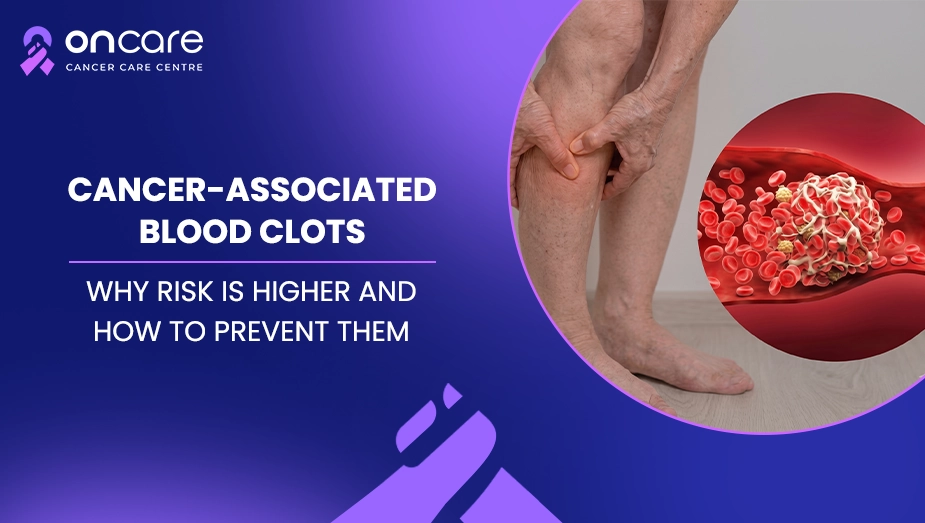
Blood clots are a common medical complication of cancer and can occur in certain people during cancer therapy or recovery. Blood clots are formed when blood hardens and clumps inside a blood vessel. Blood clotting is a normal process that stops bleeding after injury. But clots that form inside veins or arteries can cause health concerns if they impede regular blood flow. People with cancer can have an increased risk of blood clots due to the illness itself, some treatments, restricted physical activity, surgery, and other health issues that might impact blood circulation and blood clotting.
The good news is that doctors are very aware of this danger and typically take efforts to detect, prevent, and treat blood clots when needed. Patients and families can feel more informed and confident throughout the cancer journey by understanding the warning signs, knowing the risk factors, and following medical advice.
In this blog, we will discuss why the risk of blood clots may be higher during cancer, typical signs to look out for, prevention that may assist, and when to seek medical attention.
Blood Clots: Why They Matter
Blood clots are blood that has become a thick, gel-like substance inside the blood vessels. Clotting is a normal process that stops bleeding after damage. But if a clot forms inside a vein or artery for no obvious cause, it might impede blood flow and require medical intervention.
One kind is deep vein thrombosis (DVT), which typically occurs in the legs. Another complication is pulmonary embolism (PE), which can happen if a portion of a clot gets to the lungs. Not all cancer patients will develop blood clots, but knowing about the risk can enable patients to be aware and informed.
Why Cancer Can Raise the Risk of Blood Clots
Some cancers cause blood clots. Understanding why they develop might help people identify the risk factors and seek early medical care.
Cancer Can Impact the Body's Clotting System
Some tumors can release chemicals that make blood more prone to clotting. Cancer can also produce changes in the body that disrupt the regular processes of blood flow and coagulation.
Certain Cancer Treatments May Have a Role
Some treatments may raise the risk of clotting in some people.
For example, it can be:
- Chemotherapy
- Targeted therapy
- Hormonal Therapy
- Some supportive medicines
The effect is dependent on the treatment strategy and on the particular patient.
Less Movement When Recovering
Long durations of sitting or lying in bed or restricted physical activity might cause slow blood flow. This can happen:
- Post-surgery
- In the hospital
- In the time of illness or weariness
Movement often helps promote good circulation.
Most Common Warning Signs To Watch For
The symptoms of blood clots will vary based on where the clot is located. Some possible symptoms are:
- Swelling of a leg or arm
- Leg pain or tenderness
- Heat in the affected area
- Redness or staining of the skin
- Acute dyspnea
- Pain in the chest
- Fast heart rate
Many of the symptoms may be caused by other things, but any changes that you are worried about should be discussed with a healthcare provider as soon as possible.
Practical Guide To Possible Symptoms
Symptom | Why might it need attention |
|---|---|
Swollen legs | May show a blockage impacting circulation |
Pain in the leg or calf | May need a medical examination |
Dyspnoea (shortness of breath) | Medical review needed urgently |
Chest pain | Rapid evaluation required |
Redness or hot skin | May indicate local alterations related to coagulation |
Who Is at Increased Risk?
Every patient’s condition is different. Doctors might take into account things like:
- Cancer type
- Cancer staging
- Recent activity
- Hospitalizations
- Limited mobility
- History of blood coagulation
- A few drugs
- General health
Always talk about the individual risk assessment with your healthcare team.
How Your Doctor Can Help Prevent Blood Clots
Based on your Cancer type, treatment plan, and general health, your doctor can suggest preventive steps to help minimize the chance of blood clots.
Promoting Safe Physical Activity
Gentle movements and walking may be recommended by doctors when suitable. This might help:
- Improve blood flow
- Less stiffness
- Promote overall recovery
All recommended activities should be in line with medical guidance.
Blood Thinning Drugs
Some individuals may be given drugs that assist in minimizing the chance of clotting. These drugs are not for everyone and are best taken under the supervision of a doctor.
Compression Devices or Stockings
Sometimes doctors may recommend:
- Compression socks
- Compression devices whilst in hospital
They may assist in increasing blood flow to the legs.
If You Have Any Of The Symptoms
It is crucial to communicate early. Tell your healthcare practitioner if you have:
- New swelling
- Unexplained leg pain
- Sudden trouble breathing
- Pain in the chest
- Any symptom that is odd or bothersome
Getting an immediate medical assessment helps the doctor find out what is causing it and propose treatment.
Learn More From Trusted Sources
Accurate information raises the awareness of patients and their families about health issues associated with cancer.
For evidence-based information about cancer therapy and supportive care, readers may refer to the National Library of Medicine, which provides reliable educational resources for patients and caregivers.
Looking Forward With Confidence
Doctors frequently analyze the risk during treatment; however, many cancer patients never develop blood clots. There is no need to panic about the potential of blood clots. It is about enabling people to identify symptoms, to follow preventive guidance, and to seek support when needed.
No two care plans are the same. Decisions concerning prevention, monitoring and treatment rely on an individual’s risk, family history, results of genetic testing, overall health, and the doctor’s recommendation.
Consult Today
Cancer-associated blood clots can happen because cancer, treatment, surgery, decreased activity and other health issues might impact the body’s natural clotting process. Recognizing warning signs, remaining active when medically appropriate, attending follow-up appointments, and speaking openly with healthcare providers can help encourage safer recovery and treatment. Not every person with cancer develops blood clots, and preventative methods are individualized.
Prevention and treatment decisions should always be based on an individual’s risks, family history, the results of genetic testing, general health, and advice from one’s doctor. Oncare Cancer Hospital is a name you can trust for expert guidance, comprehensive cancer care, and compassionate patient support through diagnosis, treatment, recovery, and survivorship.





Frequently Asked Questions
Some patients are more likely to develop clots. These include patients with cancer, patients being treated for cancer, patients who have surgery, and patients who are less physically active.
Symptoms may include swelling, leg pain, redness, warmth, shortness of breath, or chest pain.
Depending on individual risk, doctors may recommend movement, compression devices, or blood-thinning drugs in some circumstances.
Get immediate help if you develop any new swelling, unexplained pain, breathing issues, chest discomfort, or other troubling symptoms.
Written and Verified by:
Dr. Gajendra Kumar Himanshu Exp: 10 Yr
Medical Officer
Book an Appointment
Related Blogs
Blood Cancer Relapse: Why Leukemia and Lymphoma Can Return
Why leukemia and lymphoma can return after remission, the signs that may need medical attention, why follow-up appointments matter, and the treatment options available if a relapse is confirmed.
Blood Cancer Treatment in India: BMT and Costs
Learn about blood cancer treatment in India, Bone Marrow Transplant (BMT), recovery, and treatment costs with expert care from Oncare Cancer Hospital.
Blood Cancer Survival: Reading the Numbers
Understand blood cancer survival rates and what they mean. Oncare Cancer Hospital explains statistics, factors, and how to read numbers with clarity and hope.
Blood Cancer Treatment in India: Success Rates and Advanced Therapies
Explore blood cancer treatment in India with Oncare Cancer Hospital. Learn success rates, advanced therapies, and affordable care options for better outcomes.