Table of Contents
Pseudoprogression: When Scans Look Worse but Immunotherapy Is Working

By Dr. Gajendra Kumar Himanshu


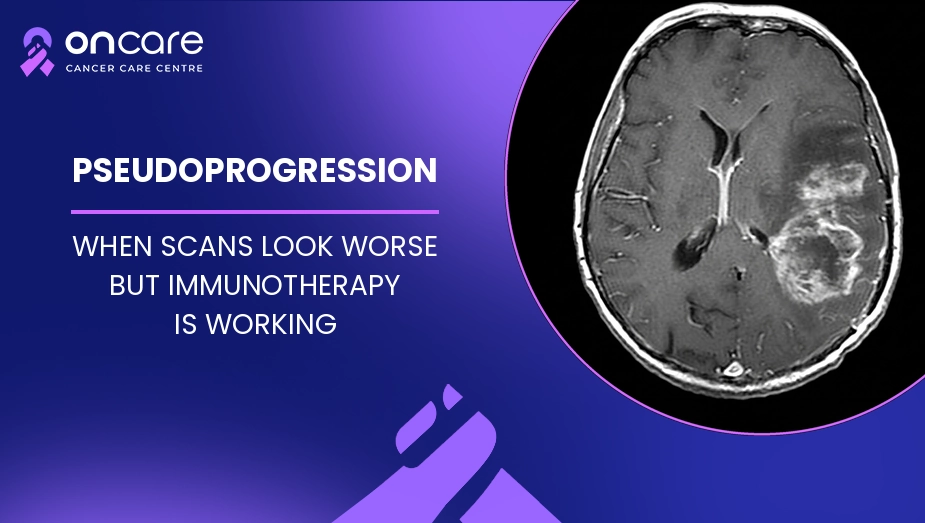
Pseudoprogression is a temporary change seen on a cancer scan after immunotherapy, where a tumour may look bigger or new spots may appear, even though the treatment may actually be helping. This can happen because immune cells enter the tumour and cause swelling or inflammation. So, a scan that looks worse does not always mean the cancer is truly getting worse. Doctors use follow-up scans, symptoms and other test results to understand what is really happening.
In this blog, we are talking about pseudoprogression, why it can happen during immunotherapy and why scan results can sometimes be confusing. We will explain the difference between pseudoprogression and true cancer progression, how doctors check the response and why treatment should not be stopped only because of one unexpected scan result.
What is pseudoprogression?
Pseudoprogression means that cancer appears to have grown or changed on an imaging scan, but the cancer may not actually be growing. It is a treatment-related change that can happen with some forms of immunotherapy.
This can happen because immunotherapy activates the immune system to recognise and attack cancer cells. Immune cells can move into and around a tumour, causing inflammation and swelling. On a CT or MRI scan, this extra swelling can sometimes look similar to tumour growth.
You can also learn more about how different immunotherapy treatments work in our blog on Types of Cancer Immunotherapy.
Why can immunotherapy make a scan look worse?
Traditional cancer scans check for changes such as tumour size. This is helpful for many treatments, but immunotherapy can cause a distinct pattern of response.
When the immune system gets involved with a tumour, several things can happen at the same time. The tumour area can look bigger, more immune cells can move to the site, and inflammation can occur. These changes may make the tumour seem larger even when cancer cells are being damaged or removed.
That’s one reason doctors may not make a definitive treatment decision from a single scan alone, especially if the patient is generally doing well.
Pseudoprogression vs true progression
The most important question after a concerning scan is whether the cancer is truly growing or whether the change is related to the immune response. True progression means the cancer is continuing to grow despite treatment. Pseudoprogression means the scan looks worse because of treatment-related inflammation or immune-cell activity rather than clear cancer growth.
Finding | Pseudoprogression | True Progression |
|---|---|---|
Tumour on scan | May look larger | Usually continues to grow |
Reason for change | Immune cells and inflammation | Cancer cells are increasing |
Treatment response | Immunotherapy may still be helping | Treatment may not be controlling the cancer |
What doctors do | Review symptoms and repeat imaging when appropriate | May consider changing treatment |
Confirmation | Needs follow-up | Confirmed through overall clinical and scan findings |
A scan by itself may not always clearly separate these two situations. Doctors therefore look at the whole picture rather than relying on tumour size alone.
When can pseudoprogression happen?
Pseudoprogression is typically described in the setting of immunotherapy, especially immune checkpoint inhibitors. These medicines block signals that normally keep the immune system in check, allowing T cells to target tumours.
It is not seen in all patients, and it is not expected with every cancer or every type of immunotherapy. A worsening scan should therefore never be immediately labelled as pseudoprogression.
Doctors will look at the type of cancer, the therapy you are receiving, when the scan was done, your symptoms and previous scan findings to try to work out what the change may mean.
For more information about immunotherapy and its possible effects, you can also read our blog on Immune-Related Side Effects of Immunotherapy.
What do doctors do after a scan looks worse?
In India, patients receiving immunotherapy should discuss unexpected scan results with their treating oncology team. Doctors may review symptoms, blood test results and previous scans before deciding whether follow-up imaging or a change in treatment is needed.
If a scan indicates that the cancer has probably spread, clinicians look first at the patient’s general condition. They may consider symptoms, physical examination findings, blood tests and previous scans.
If the patient is stable and pseudoprogression is possible, the doctor may order another scan after an appropriate period to check whether the changes continue or improve. Special criteria for assessing response to immunotherapy have also been developed, because the usual scan criteria may not fully describe an immune response. iRECIST, designed to evaluate immunotherapy responses in clinical studies, is one example.
The approach depends on the individual patient. Doctors also need to look for signs of true disease progression or serious complications that would require a change in treatment.
Should immunotherapy be stopped after one bad scan?
Not necessarily. A single scan that shows a bigger tumour does not necessarily mean that treatment has failed. In some situations, stopping treatment too soon may prevent a patient from receiving a benefit that could come later.
At the same time, doctors do not assume that every worsening scan is pseudoprogression. Continuing a treatment that is no longer effective may delay another treatment that could work better. This is why careful assessment and follow-up are so important.
Never stop or change immunotherapy on your own.
What symptoms should patients report?
During immunotherapy, patients should tell their oncology team about new or worsening symptoms. These symptoms may come from the cancer, treatment side effects or another health problem, so they need proper medical evaluation.
Important symptoms can include:
- New or worsening pain
- Increasing breathlessness or cough
- Persistent fever
- Severe weakness
- New neurological symptoms
- Major changes in appetite or weight
Some immune-related side effects can affect organs such as the lungs, liver, bowel, heart, kidneys and nervous system.
You can also read our blog on Types of Cancer Treatment to understand how immunotherapy fits with other cancer treatments.
Why follow-up scans are important
Follow-up images help doctors decide whether a suspicious change is temporary or a sign that the cancer is continuing to grow. Looking at several scans over time can give a better picture than looking at one scan alone.
The doctor may use CT, MRI, PET or other tests based on the type and location of the cancer. The timing of follow-up depends on the patient’s treatment and individual condition.
Most importantly, scan findings should always be evaluated together with the patient’s symptoms, examination and other test results.
If you want to learn more about pseudoprogression and immunotherapy response patterns, then you can visit the official website of the National Library of Medicine.
Consult Today
A scan that looks worse during immunotherapy can be worrying, but it does not always mean that the treatment has stopped working. At Oncare Cancer Hospital, patients can discuss scan changes, immunotherapy response, follow-up testing and treatment decisions with the specialist team based on their individual cancer and treatment plan.
Disclaimer
This information is for educational purposes only and does not constitute medical advice, diagnosis, or treatment. Always discuss decisions about scan results, immunotherapy or any change in treatment with a certified cancer healthcare provider.





Frequently Asked Questions
Pseudoprogression is a treatment-related change where cancer appears to grow on a scan even though the cancer may not actually be progressing.
It can happen when the immune system is active against the tumour, but a scan alone cannot prove that immunotherapy is working.
Not always. Doctors may need follow-up scans and other information before deciding whether the cancer is truly progressing.
Doctors compare follow-up scans with earlier images and also consider symptoms, examination and other test results. Special immune-response criteria may also be used.
Written and Verified by:
Dr. Gajendra Kumar Himanshu Exp: 10 Yr
Medical Officer
Book an Appointment
Related Blogs
Cancer Immunotherapy in India: Cost and Access
Learn about cancer immunotherapy in India, treatment costs, benefits, side effects, and access to advanced expert cancer care at Oncare Cancer Hospital.
How to Read Your Pathology Report?
Learn how to read a pathology report in simple terms. Understand medical jargon, diagnosis, and what your results mean for cancer treatment and care.
Immunotherapy Cost in India: Factors That Affect the Price
The cost of immunotherapy in India varies from ₹2,00,000 to ₹6,00,000 per cycle, while advanced options like CAR-T cell therapy can cost around ₹30 lakh to ₹60 lakh. The total cost typically depends on the type and stage of cancer, the drug used, the number of cycles, hospital charges, and supportive care offered.