Table of Contents
Nail Changes During Chemo: What's Normal, What's Not

By Dr. Gajendra Kumar Himanshu


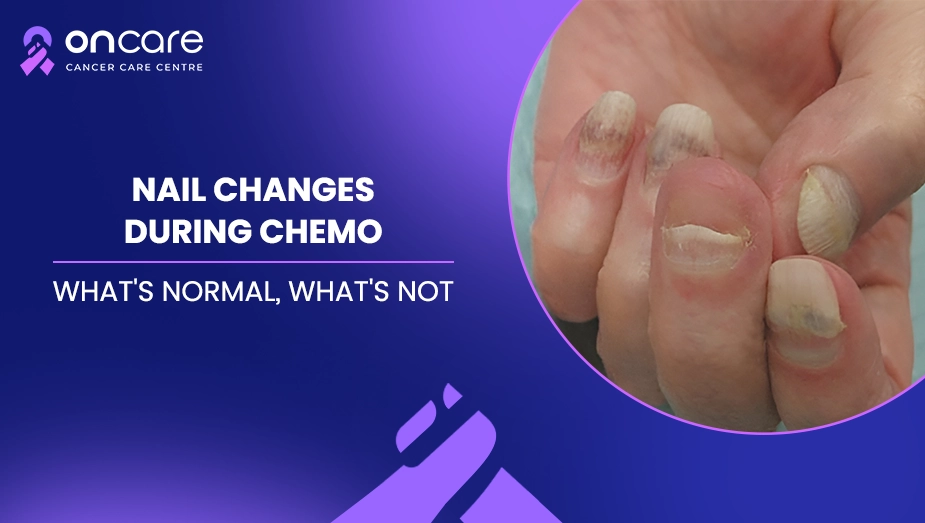
Chemotherapy can affect several parts of the body, including the nails on the hands and feet. Some patients may notice nail changes during treatment such as discoloration, brittleness, ridges, sensitivity or even loosening of the nails. These changes happen because chemotherapy medicines may temporarily affect fast-growing healthy cells involved in nail growth.
Many nail changes during chemotherapy are temporary and harmless, but some symptoms may require medical attention if infection or severe nail damage develops. Nail problems may also affect daily activities and emotional confidence during treatment.
In this blog, we will discuss common nail changes during chemotherapy, normal side effects, warning signs to watch for, safe nail care habits and practical ways to protect nail health during cancer treatment.
Why Chemotherapy Causes Nail Changes During Treatment
Chemotherapy drugs target fast-growing cancer cells, but they may also affect healthy cells that support nail growth. Since nails constantly grow and renew, chemotherapy may temporarily change nail texture, strength, color and appearance.
Some nail changes develop gradually after several treatment sessions, while others may appear earlier depending on the chemotherapy medicines used.
According to the National Library of Medicine, cancer treatments may cause temporary side effects involving the skin, hair and nails, which often improve after treatment is completed.
Common Nail Changes Patients May Notice During Chemotherapy
Nail Change | What Patients May Notice |
|---|---|
Darkened nails | Brown, black or yellow discoloration |
Brittle nails | Nails breaking or cracking easily |
Nail ridges | Uneven nail surface |
Nail sensitivity | Pain or tenderness around nails |
Loosening nails | Partial separation from nail bed |
Understanding Which Nail Changes Are Usually Normal
Many chemotherapy-related nail changes are expected and may gradually improve after treatment ends. Patients may notice mild discoloration, dry nails, slower nail growth or temporary brittleness.
These changes often occur because chemotherapy temporarily affects the body's normal cell growth process.
Minor Nail Problems That Often Improve With Basic Care
These symptoms are commonly manageable with gentle nail care and proper hygiene:
- Mild nail discoloration
- Dry or rough nails
- Thin or brittle nails
- Small nail ridges
- Mild nail sensitivity
Warning Signs That May Require Medical Attention
Although many nail changes are harmless, some symptoms may indicate infection or severe nail damage during chemotherapy. Since chemotherapy may weaken the immune system, even small nail injuries can become infected more easily.
Symptoms Patients Should Report to Doctors
Early treatment may help prevent more serious complications during chemotherapy. Patients should report:
- Severe pain or swelling around nails
- Pus or unusual discharge
- Bleeding around nail beds
- Severe redness or warmth
- Complete nail detachment
- Fever with nail infection symptoms
Why Infection Prevention Is Important During Chemotherapy
Low immunity during chemotherapy may increase the risk of bacterial or fungal infections around damaged nails. Patients should avoid harsh nail treatments, aggressive cuticle cutting or strong chemical products that may injure the skin around the nails.
Keeping nails clean and protected may help reduce infection risk during treatment.
Safe Daily Nail Care Habits During Cancer Treatment
Nails become more delicate during chemotherapy, so gentle care routines may improve comfort and reduce further damage.
Helpful Nail Care Tips During Chemotherapy
Small preventive habits may help avoid worsening nail problems during treatment:
- Keep nails short and clean
- Use gloves during household work
- Moisturize nails and cuticles regularly
- Avoid artificial nails and strong chemicals
- Protect nails from injury and pressure
- Use gentle nail care products
Nutrition and Hydration for Nail Recovery
Good nutrition supports overall healing and may help improve nail recovery after chemotherapy. Patients are often encouraged to eat balanced meals and stay properly hydrated.
Foods and Habits That May Support Nail Health
Healthy eating habits may also support skin, hair and immune system recovery after treatment. Helpful options include:
- Protein-rich foods
- Fresh fruits and vegetables
- Plenty of fluids
- Balanced vitamin-rich meals
Managing Emotional Concerns Related to Nail Changes
Visible nail changes may affect emotional confidence, especially when patients are already experiencing hair loss, fatigue or other treatment-related physical changes. Some patients may feel uncomfortable or emotionally stressed because of appearance-related side effects.
Support from family members, realistic expectations and open communication with healthcare providers may help patients cope emotionally during treatment.
Understanding That Most Nail Changes Improve After Treatment
In many cases, nails gradually recover after chemotherapy is completed, although full nail regrowth may take several months. Recovery time varies depending on the treatment type, overall health and individual healing process.
Patients should remain patient and continue gentle nail care practices during recovery.
Consult Today
Nail changes during chemotherapy are common and usually temporary, but understanding what is normal and what may require medical care is important during treatment. Symptoms such as discoloration, brittleness and nail ridges often improve gradually after therapy ends, while infections or severe discomfort should be evaluated early.
Gentle nail care, good hygiene, balanced nutrition and emotional support may help patients manage nail-related side effects more comfortably during cancer treatment.
Oncare Cancer Hospital is known for advanced cancer treatment, compassionate care and patient-centered support throughout the treatment and recovery journey.





Frequently Asked Questions
Chemotherapy may temporarily affect healthy nail-growing cells, causing discoloration, brittleness or sensitivity.
Yes, temporary nail darkening or discoloration is a common side effect during chemotherapy.
Patients should seek medical advice if they notice severe pain, swelling, discharge, bleeding or signs of infection around the nails.
Yes, most chemotherapy-related nail changes gradually improve after treatment is completed, although recovery may take several months.
Written and Verified by:
Dr. Gajendra Kumar Himanshu Exp: 10 Yr
Medical Officer
Book an Appointment
Related Blogs
Drugs Used in Breast Cancer: Hormone Therapy, Chemo and Targeted Medicines
How hormone therapy, chemotherapy and targeted therapy work in breast cancer treatment, when each may be prescribed, possible side effects, and how doctors decide which approach is right for a patient.