Table of Contents
Maintenance Therapy: Keeping Cancer in Remission After Treatment

By Dr. Gajendra Kumar Himanshu


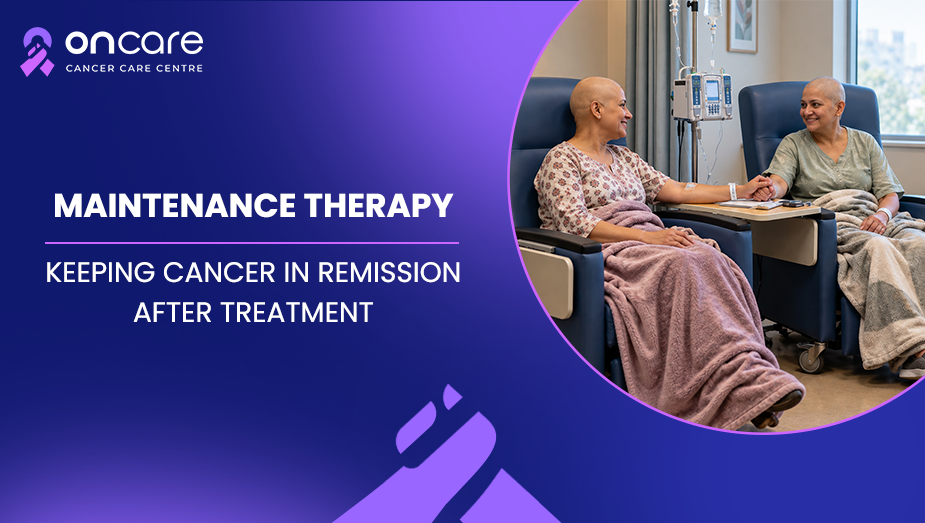
Maintenance therapy is treatment given after the first course of cancer treatment has reduced or cleared signs of cancer, with the aim of keeping the disease under control and preventing or delaying its return. It may involve drugs such as targeted therapy, immunotherapy, hormone therapy or other cancer treatments. How well it works depends on the type of cancer, how the patient responds to treatment and the risk of recurrence.
In this blog, we discuss maintenance therapy, why it may be suggested after initial cancer treatment and how it can help some patients stay in remission for longer. We look at how it works, which cancers might benefit from it, the possible advantages and side effects, how patients are monitored during therapy, and what to ask an oncologist.
What Maintenance Therapy Means After Cancer Treatment
Finishing chemotherapy, surgery, radiation or another first treatment can be a big milestone, but cancer care does not always end there. Some cancers have a high risk of recurring or progressing even when they respond well to treatment. Maintenance therapy may be used to help control small numbers of cancer cells that standard tests cannot detect, and to reduce the chance of the disease returning or delay its recurrence.
Remission does not necessarily mean that every cancer cell has been removed for good. Complete remission means that there is no sign or symptom of cancer. However, cancer cells can sometimes remain in the body and cause the disease to come back later.
What Is Maintenance Therapy?
Maintenance therapy is treatment given after the original therapy has produced a response or remission. The main aim is usually to stop the cancer from coming back or to control the disease for as long as possible. It may involve drugs taken over a longer period, depending on the cancer and the treatment plan.
How Is Maintenance Therapy Different From Initial Treatment?
The primary treatment usually deals with the main burden of the cancer. Maintenance therapy then follows, with the aim of keeping that response going.
The exact approach differs from cancer to cancer. Some people stay on maintenance medicine continuously, while others are treated at regular intervals for a fixed period. In some cancers, maintenance therapy may be continued until the disease progresses or side effects become unacceptable.
Which Cancers May Be Treated With Maintenance Therapy?
Maintenance therapy is not suitable for all cancers or all patients. Its use depends on the biology of the disease, the response to initial treatment and evidence that continuing treatment offers a meaningful benefit.
Myeloma
Maintenance therapy is often given after the first treatment for multiple myeloma, including after an autologous stem cell transplant. Depending on the patient's circumstances, lenalidomide, proteasome inhibitors or monoclonal antibodies may be considered.
Ovarian Cancer
Maintenance therapy has also been used in selected patients with ovarian cancer following an initial response to treatment. Some targeted treatments, such as PARP inhibitors, have been studied and approved for particular groups of patients.
Lymphoma
Maintenance treatment may also be used for some kinds of lymphoma. For example, rituximab maintenance has been used in selected patients with mantle cell lymphoma after first-line treatment.
Maintenance strategies are also being investigated or used in certain other cancers, depending on the treatment setting and the available evidence.
Which Drugs Are Used for Maintenance Therapy?
The type of medicine chosen depends on the type of cancer, its molecular characteristics and the previous treatment.
Targeted Therapy
Targeted therapies act on specific features involved in the growth of cancer. They can be used as maintenance treatment when the cancer has a target that makes this approach appropriate.
Immunotherapy
Some cancers may be treated with immunotherapy to help the immune system recognise and fight cancer cells. How long a patient stays on it, and how well it works, depends on the type of cancer and how it responds to treatment.
Hormone Therapy
Some cancers are sensitive to hormones, for example certain breast and prostate cancers. Long-term hormone treatment may help reduce the stimulation that encourages those cancer cells to grow.
Other Cancer Treatments
In some cancers, chemotherapy or other drug-based treatments may also be used for maintenance. The choice is based on the evidence for that particular cancer, not a single approach that suits all patients.
What Are the Advantages of Maintenance Therapy?
The main goal is to control the cancer for longer. Depending on the condition, maintenance therapy may delay the return or progression of the cancer.
The benefit can be particularly relevant when the cancer has a high chance of recurrence but responds well to initial treatment. However, the expected benefit varies widely between cancers and between individual patients. Maintenance therapy is therefore recommended only when the likely benefits outweigh the risks and burden of continuing treatment.
What Are the Potential Side Effects?
Side effects depend on the drug used. Some people may experience fatigue, nausea, changes in blood counts, hormonal effects, skin changes, digestive problems or other treatment-related difficulties.
Targeted therapy and immunotherapy also have their own specific side effects that need to be watched for. Because maintenance therapy may be given for months or years, doctors generally weigh the long-term benefits against quality of life and how well the patient tolerates treatment.
A side effect does not necessarily mean that treatment has to stop. Doctors may adjust the dose, change the schedule or provide supportive treatment as needed.
How Are Patients Monitored During Maintenance Therapy?
Regular follow-up is an important part of maintenance treatment. Depending on the type of cancer, doctors may review symptoms, physical examination findings, blood tests and imaging studies.
The treatment plan may also be reviewed over time. If the disease is controlled and treatment is well tolerated, maintenance therapy can continue as planned. If the cancer progresses, or if serious side effects develop, the plan may need to be changed.
Does Maintenance Therapy Mean the Cancer Is Gone?
Not necessarily. Maintenance therapy helps keep the cancer under control or reduces the chance of the disease returning. However, it does not guarantee that the cancer has been cured.
Follow-up usually continues even when there is no sign of cancer, because the disease can sometimes come back later.
For more information regarding maintenance therapy, visit the National Library of Medicine.
Consult Today
If you have finished your first cancer treatment and your oncology team has suggested maintenance therapy, talking through the plan with them can help you understand the reasoning behind it and what benefits you might expect. At Oncare Cancer Hospital, patients can discuss their response to treatment, maintenance options and follow-up plans with the specialist team, and make decisions based on their particular cancer and overall health.
Disclaimer
This text is for educational purposes only and is not a substitute for professional medical advice, diagnosis or treatment. Not every patient is suited to maintenance therapy, and treatment should be planned according to the type of cancer, the response to treatment and the health of the individual. Please consult a qualified oncologist for individual guidance.





Frequently Asked Questions
Maintenance therapy is treatment given after an initial response or remission to cancer treatment. The aim is to help stop the cancer from coming back or progressing, for as long as possible.
No. Maintenance therapy is used only for certain cancers and certain situations. The decision depends on the type of cancer, the risk of recurrence, the response to initial treatment and the available evidence of benefit.
The duration varies a great deal. Some treatments are given for a limited period. Others may continue until the cancer progresses or side effects make it no longer appropriate.
Yes. Side effects vary with the treatment used and may range from mild to significant. Regular monitoring helps doctors manage side effects and decide whether treatment should be continued, adjusted or changed.
Written and Verified by:
Dr. Gajendra Kumar Himanshu Exp: 10 Yr
Medical Officer
Book an Appointment
Related Blogs

Retinoblastoma in Children: Early Signs Parents Should Not Ignore
Learn the early signs of retinoblastoma in children, including a white pupil, crossed eyes, diagnosis, and treatment at Oncare Cancer Hospital with expert care.

Difficulty Swallowing (Dysphagia): When to Suspect Cancer
Difficulty swallowing isn't always cancer. Learn the causes, warning signs, diagnosis, and when to see a specialist at Oncare Cancer Hospital for timely care.

Unexplained Weight Loss: When Should You Worry About Cancer?
Learn when unexplained weight loss may be a sign of cancer, its causes, warning symptoms, diagnosis, and when to seek expert care at Oncare Cancer Hospital.