Table of Contents
What Is Invasive Lobular Carcinoma? A Complete Guide

By Raveena M Prakash


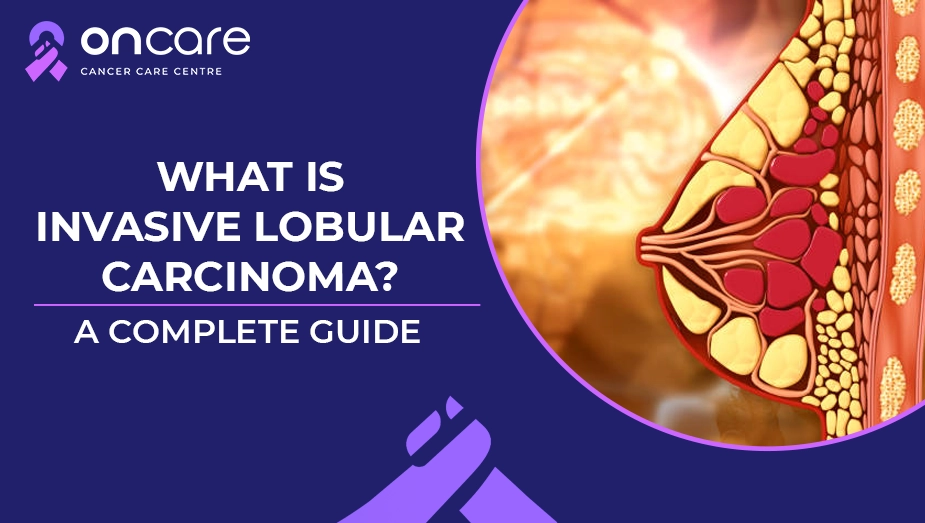
Breast cancer is not a single type of cancer; it includes several subtypes, each with unique characteristics, behavior, and cancer treatment preferences. One such subtype is invasive lobular carcinoma, which is the second most common type of invasive breast cancer. Although it may be less well known than invasive ductal carcinoma, understanding ILC is essential for early diagnosis and effective cancer treatments.
In this article, we’ll discover more about invasive lobular carcinoma and its symptoms, causes, treatment options, and prognosis.
What is Invasive Lobular Carcinoma
Invasive lobular carcinoma is a type of breast cancer that begins in the lobules, the milk producing glands of the breast. The term ‘invasive’ simply means that the cancer cells have spread beyond the lobules into surrounding breast tissue and might eventually spread to lymph nodes or other parts of the body.
Many experts suggest that ILC accounts for approximately 10-15% of all invasive breast cancers. These often tend to grow in a more subtle, diffuse pattern when compared to other breast cancers, which can make it harder to detect on imaging tests.
How Invasive Lobular Carcinoma differs from other breast cancers
Unlike an Invasive ductal carcinoma (IDC), which forms a distinct type of lump, ILC often spreads in single file lines (linear patterns) through breast tissue rather than developing a cohesive and palpable lump.
This growth pattern might cause:
- Thickening of breast tissue rather than a clear lump
- Changes in breast size or shape
- Difficulty in detecting the cancer on mammograms
Many experts suggest that, because of these reasons, ILC is sometimes diagnosed at an advanced stage.
Symptoms of Invasive Lobular Carcinoma
ILC may not cause any obvious symptoms in its early stages. However, when symptoms start to appear, these may include:
- Thickening or firmness in one area of the breast
- Changes in breast shape or contour
- Swelling in part of the breast
- Inward turning of the nipple
- Skin changes such as dimpling or tightening
- A feeling of fullness or heaviness in the breast
Pain is not a common early symptom, but it can occur in more advanced cases.
Causes and Risk factors
The exact cause of invasive lobular carcinoma is not known yet, but there are several risk factors that increase the chance of developing this cancer.
These may include:
- Gender: In most cases, these cancers can occur in women, though men can also develop breast cancer.
- Age: These cancers are more common in women over 50.
- Hormone exposure: Women who have received a long-term use of hormone replacement therapy can develop this cancer.
- Family history of breast cancer: A Family history of ovarian and breast cancer can also cause this risk.
- Genetic mutations: There are genetic mutations in the CDH 1 gene can cause this cancer.
- Dense breast tissue: In some women, this can make the detection more difficult.
Diagnosis
A cancer diagnosis typically involves a combination of imaging tests and biopsy. These may include:
Imaging tests
- Mammogram: Performing these tests helps to show subtle changes rather than a distinct mass.
- Ultrasound: These tests help to identify abnormal tissues in a patient's body.
- Breast MRI: These tests are often used to identify ILC due to its ability to detect diffuse growth patterns in patients.
- Biopsy: A core needle biopsy or surgical biopsy is often required to confirm the diagnosis of cancer. The tissue sample is examined under a microscope to identify lobular cancer cells.
Treatment options
The treatment for ILC depends on the stage, tumor size, hormone receptor status, and overall health of the patient.
These may include:
Surgery
Lumpectomy: These surgeries are often used for the removal of the tumor and surrounding tissue.
Mastectomy: These surgeries are often used for the removal of the entire breast, often recommended if cancer is widespread.
Radiation Therapy
These treatments are often used after surgery to destroy remaining cancer cells and reduce cancer recurrence risk.
Hormone therapy
These treatments often used in most ILC tumors are estrogen receptor positive (ER+), making hormone therapy highly effective.
Chemotherapy
These treatments may be recommended if the cancer is aggressive or has spread to lymph nodes.
Targeted therapy
These treatments are often used when a specific genetic or molecular marker is present.
Living with Invasive Lobular Carcinoma
A recent diagnosis of ILC can be emotionally challenging and intimidating to hear. Additionally, getting supportive care, which can also include counseling, support groups, and survivorship programs, can also help patients to cope physically and emotionally during their treatment period.
Patients need to maintain regular follow-up appointments, adopting a healthy lifestyle, and staying informed about treatment options play a key role in long-term well-being.
Consult Today
An invasive lobular carcinoma is a different type of breast cancer that requires awareness, careful diagnosis, and individualized cancer treatments. Understanding its subtle symptoms and unique patient behavior can lead to earlier detection and treatment outcomes.
At Oncare, we offer premium-quality cancer treatments, including advanced cancer surgeries, at an affordable price range with an experienced cancer specialist consultation.
If you or any loved ones are diagnosed with cancer, then visit Oncare Cancer Hospital and book an appointment with our experienced cancer specialist today. Get an estimated cost of your cancer treatment today!
Frequently Asked Questions
Here are some of the treatment options used for this condition, including breast cancer surgery, chemotherapy before or after surgery, hormone therapy, radiation therapy, and targeted therapy.
A doctor might perform the following tests, including mammograms, breast MRI, breast Ultrasound, and breast biopsy.
Here are some of the symptoms of Invasive lobular carcinoma, including breast pain or growth, breast skin that looks thicker than usual, changes in breast shape and size, inverted nipple, lump near your armpit, nipple discharge, skin discoloration.
Book an Appointment
Related Blogs

Inflammatory Breast Cancer: A Rare but Aggressive Type
Learn more about inflammatory breast cancer, symptoms, risk factors, difficulties in getting diagnosed with this cancer, and treatments and living with IBC!

Best Breast Cancer Doctors in Delhi: How to Choose the Right Specialist
Learn more about the best breast cancer doctors in Delhi and how to choose the right specialist, key factors to consider, and why the cancer specialist matters!

Breast Self-Examination: Step-by-Step Guide for Early Detection
Discover more about Breast Self-Examination and its Step-by-Step Guide for Early Detection for breast cancer and why early detection matters and its limitations!

Breast Cancer Lumpectomy vs Mastectomy: What’s the Difference?
Discover more about breast cancer surgeries, understanding lumpectomy and mastectomy and their advantages, challenges, and their emotional and psychological impact.