Table of Contents
Driving and Travel Restrictions After Major Cancer Surgery

By Dr. Gajendra Kumar Himanshu


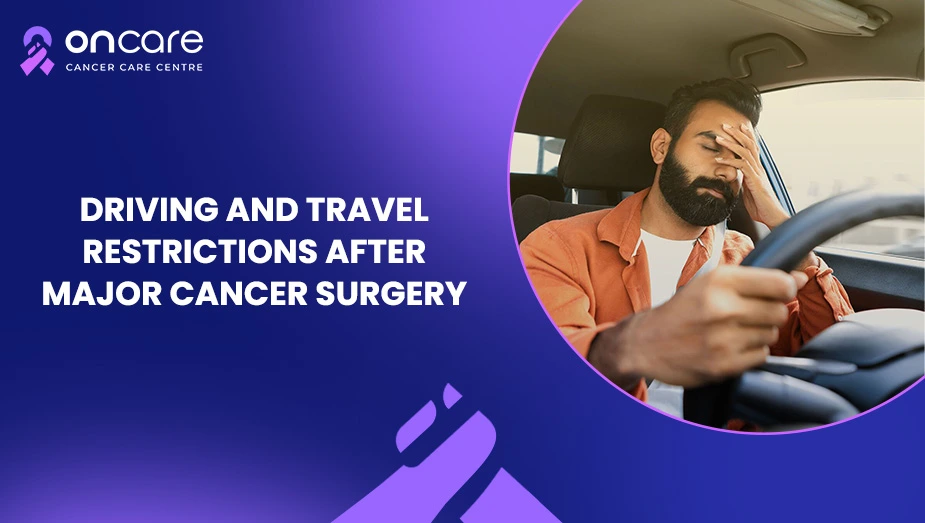
After major cancer surgery, patients are often advised to follow temporary driving and travel restrictions. These precautions help support safe healing and reduce the risk of complications during recovery.
Pain, weakness, fatigue, limited movement and side effects from medications may affect a patient’s ability to drive safely or travel comfortably after surgery. Recovery time may vary depending on the type of surgery, overall health condition and medical advice provided by doctors.
Many cancer survivors look forward to returning to normal routines such as driving, travelling and resuming work after surgery. However, travelling too early or driving before the body has healed properly may increase discomfort, delay recovery or create safety risks.
Proper medical guidance, rest, follow-up care and a gradual return to daily activities may help patients recover more comfortably and confidently after major cancer surgery.
This blog explains driving and travel restrictions after cancer surgery, why these precautions are important, general recovery recommendations, emotional challenges during healing and how patients may safely return to normal activities over time.
Why Driving Restrictions Matter After Cancer Surgery
Physical strength, concentration, reaction time and mobility may all be affected during recovery from major cancer surgery. Some patients may not be able to drive safely during the early healing period due to pain medications, tiredness or physical discomfort.
Doctors usually advise patients to avoid driving until they are able to move comfortably and safely without significant pain or limitations.
How Surgery Recovery May Affect Driving Ability
Patients may experience:
- Weakness
- Fatigue
- Pain or discomfort
- Limited arm or leg movement
- Drowsiness caused by medications
Why Medical Clearance Is Important Before Driving Again
Healthcare professionals may evaluate healing progress before advising patients that it is safe to resume driving.
Understanding Travel Restrictions After Surgery
Long-distance travel, physical strain and limited access to medical care may affect recovery after major surgery. Some patients may need to delay air travel or long journeys until healing has progressed and complications are less likely.
Why Long-Distance Travel May Be Difficult During Recovery
Travel lasting several hours may increase:
- Physical discomfort
- Fatigue
- Swelling
- Risk of blood clots
- Stress during recovery
The Importance of Rest and Comfort During Healing
Avoiding exhausting travel schedules during recovery may help patients heal more comfortably.
Do Not Miss Follow-Up Appointments
Travel plans should not interfere with important medical reviews and follow-up visits required to monitor recovery.
Driving and Travel Recovery Guidelines at a Glance
Recovery Concern | Why It Matters |
|---|---|
Driving too early | May increase safety risks |
Long-distance travel | May increase fatigue and discomfort |
Pain medication use | Can affect alertness and reaction time |
Missing follow-up visits | May delay recovery monitoring |
Proper rest and hydration | Supports healing and rehabilitation |
Safe Recovery Practices Before Returning to Daily Activities
Returning to normal activities after major cancer surgery should happen gradually and according to medical advice and personal comfort levels. Recovery times differ depending on surgery type and overall health condition.
Patients should focus on safe healing instead of comparing their recovery to others.
Listen to Your Body During Recovery
Patients should stop activity and seek medical guidance if they experience:
- Severe pain
- Dizziness
- Fatigue
- Breathing difficulties
- Increased discomfort
Small Steps Help Rebuild Strength
Gentle walking and light physical movement may support recovery and help rebuild strength safely over time.
Emotional Challenges During Surgical Recovery
Recovery from major cancer surgery may affect emotional wellbeing as much as physical health. Many patients feel frustrated when they cannot immediately return to driving, travelling or normal daily routines.
Patience, emotional support and encouragement may help survivors adjust more comfortably during this stage of healing.
Common Emotional Challenges
Patients may experience:
- Stress
- Anxiety
- Frustration
- Fear during recovery
- Emotional fatigue
Stay Connected With Family and Support Systems
Support from loved ones may help reduce feelings of isolation and provide emotional reassurance during rehabilitation.
Healthy Lifestyle Habits That Support Recovery
Healthy daily habits may improve healing and overall wellbeing after cancer surgery. Good nutrition, hydration and rest remain essential during rehabilitation and long-term recovery.
Nutrition and Hydration During Recovery
Nutritious meals and proper fluid intake may support healing, strength and energy levels.
Prioritize Rest and Sleep
The body needs adequate rest and sleep to recover properly after major surgery.
Stay Connected With Healthcare Providers
Doctors may continue monitoring recovery progress and rehabilitation safety during follow-up appointments.
Trusted Government Health Information
Cancer survivors should always seek accurate recovery guidance from trusted medical organizations and healthcare professionals. Reliable information may help patients make safer decisions about travel, driving and rehabilitation after surgery.
Patients can visit the official website of the National Library of Medicine for trusted information about cancer recovery, rehabilitation and patient care guidelines.
Consult Today
Driving and travel restrictions after major cancer surgery are an important part of safe recovery and rehabilitation. Pain, weakness, fatigue and medication side effects may affect a patient’s ability to drive or travel comfortably during healing. Following medical advice, attending follow-up appointments and allowing the body enough time to recover may reduce complications and support smoother rehabilitation.
Each patient’s recovery journey is different, and emotional support, healthy habits and a gradual return to normal activities remain essential throughout healing. Patients should feel comfortable discussing travel plans, physical limitations and recovery concerns openly with their healthcare providers.
For patients seeking advanced cancer surgery, compassionate recovery care and rehabilitation support, Oncare Cancer Hospital is known for providing advanced cancer treatment, supportive rehabilitation services and patient-focused recovery care throughout the healing journey.





Frequently Asked Questions
Most patients need time to recover before they can safely return to driving after surgery.
Long-distance travel may increase fatigue, discomfort and recovery-related complications.
Yes, some medications may reduce alertness and slow reaction time during recovery.
Yes, patients should always seek medical advice before planning travel during recovery after cancer surgery.
Written and Verified by:
Dr. Gajendra Kumar Himanshu Exp: 10 Yr
Medical Officer
Book an Appointment
Related Blogs
Recovery After Ovarian Cancer Surgery: What to Expect at Home
Learn what to expect after ovarian cancer surgery, including recovery tips, symptom management, nutrition, and follow-up care at Oncare Cancer Hospital.