Table of Contents
Turmeric and Cancer: What Science Actually Says About Curcumin

By Dr. Gajendra Kumar Himanshu


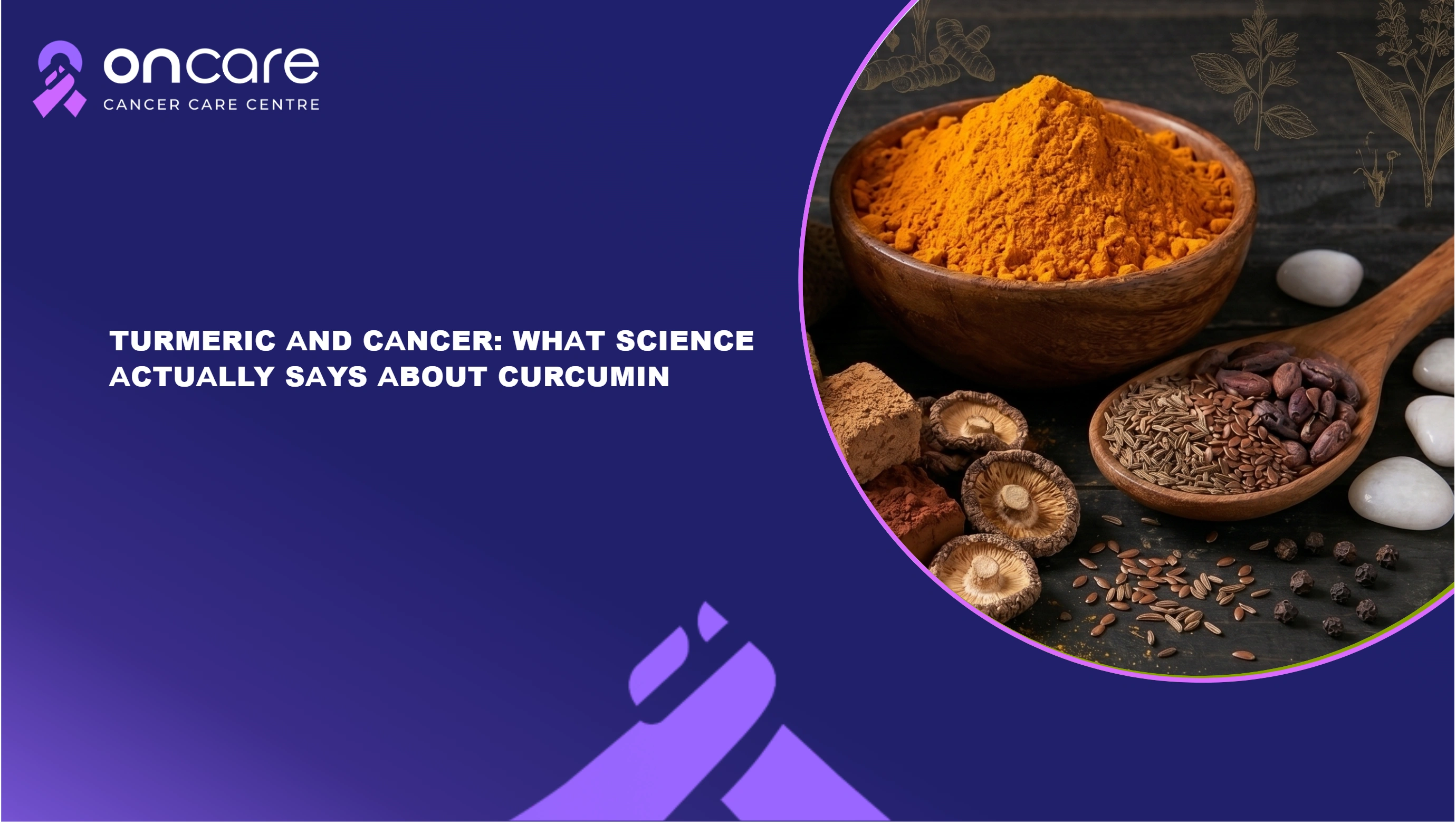
Turmeric is a common spice used extensively in Indian cooking and traditional medicine. Its active ingredient, curcumin, has gained attention because of its antioxidant and anti-inflammatory properties. Many studies suggest that curcumin may help reduce inflammation, protect cells from damage and support general wellbeing. Due to these possible effects, researchers are also exploring whether curcumin may play a supportive role in cancer prevention and cancer care.
However, turmeric or curcumin should not be considered a treatment for cancer. Research is still ongoing, and most experts agree that curcumin must never replace proven cancer treatments such as chemotherapy, radiation therapy, surgery or immunotherapy. Cancer patients should always speak with their doctor before taking turmeric or curcumin supplements because high doses may interact with medicines or treatment.
In this blog we will discuss what scientific research says about curcumin, its possible benefits in cancer care, important precautions and how turmeric may be safely included in a balanced diet.
Why Curcumin Is Gaining Attention In Cancer Research
Curcumin is the natural compound that gives turmeric its yellow colour. Researchers are interested in curcumin because it may help reduce inflammation and oxidative stress, both of which are linked with several chronic illnesses including cancer. Some laboratory and animal studies suggest that curcumin may influence cancer cell growth and support the body’s natural defence mechanisms.
Although these early findings are promising, larger clinical studies in humans are still needed to understand how curcumin works in cancer patients. Patients may also refer to the National Cancer Institute for nutritional guidance and healthy eating information during illness and recovery.
Potential Health Benefits Associated With Curcumin
- Anti-inflammatory effects
- Antioxidant support
- Immune system support
- Possible reduction of oxidative stress
- Digestive health support
- Potential support during recovery and rehabilitation
What Science Says About Turmeric And Cancer
Many studies are exploring whether curcumin may help support standard cancer therapies. Researchers are examining its possible role in reducing inflammation and helping the body cope with treatment-related stress. Some laboratory research also suggests that curcumin may influence signalling pathways in cancer cells.
Despite this interest, scientific evidence in humans is still limited and ongoing studies are required before clear medical conclusions can be made.
Important Facts Patients Should Know Before Using Curcumin
- Curcumin is not a replacement for cancer treatment
- Scientific evidence in humans is still limited
- Supplements may interact with medicines
- High doses may cause stomach discomfort
- Doctor supervision is important before taking supplements
How To Safely Include Turmeric In A Balanced Diet During Cancer Treatment
Turmeric is generally considered safe when consumed in moderate amounts as part of a balanced homemade diet. Since turmeric is commonly used in Indian meals, many patients can include small amounts through daily cooking. Common examples include turmeric milk, dal, vegetable curries, soups and khichdi.
Foods That May Be Combined With Turmeric In A Balanced Diet
Food Type | Examples | Benefits |
|---|---|---|
High-protein meals | Dal, paneer and tofu | Helps maintain strength |
Hydrating foods | Soups and coconut water | Supports hydration |
Soft foods | Khichdi, oats and curd rice | Easier digestion |
Antioxidant-rich foods | Fruits and vegetables | Supports general health |
Healthy fats | Seeds and nuts | Provides nourishment and energy |
Precautions Cancer Patients Should Consider Before Taking Supplements
Some cancer patients may believe that taking high amounts of turmeric supplements will improve recovery faster, but this is not always safe. Certain supplements may interfere with chemotherapy, blood-thinning medicines or other treatments. Patients with gallbladder conditions or digestive disorders may also need extra caution.
When Patients Should Speak With A Doctor About Curcumin
- Before starting curcumin supplements
- During chemotherapy or radiation therapy
- If taking blood-thinning medicines
- If severe digestive side effects develop
- Before combining herbal or alternative therapies
Consult Today
Turmeric and curcumin continue to receive attention in cancer research because of their anti-inflammatory and antioxidant properties. While early scientific findings are promising, curcumin should be viewed as a supportive dietary ingredient rather than a cancer treatment. Patients should always follow evidence-based cancer therapies and seek medical advice before using supplements.
Oncare Cancer Hospital is known for providing advanced cancer care, expert treatment guidance and compassionate patient-focused support throughout the cancer journey.





Frequently Asked Questions
No, turmeric does not cure cancer and should never replace medical cancer treatment.
Some patients may use curcumin safely, but supplements should only be taken after consulting a doctor.
Curcumin is being studied for its anti-inflammatory and antioxidant properties and its possible supportive role in cancer care.
Yes, moderate amounts of turmeric used in regular homemade meals are generally considered safe for many patients.
Written and Verified by:
Dr. Gajendra Kumar Himanshu Exp: 10 Yr
Medical Officer
Book an Appointment
Related Blogs

How to Avoid Bone Cancer: Lifestyle and Health Guide
Learn how to avoid bone cancer with simple lifestyle habits, stronger nutrition, regular checkups, safe practices, and awareness of early warning signs.

How to Check for Mouth Cancer: Red Flags You Should Notice
Learn how to check for mouth cancer at home by spotting early signs like sores, patches, lumps, and swallowing issues. Know what to look for and when to see a doctor.
Lung Cancer Last Stage Symptoms and Life Expectancy Explained
Understand lung cancer last stage symptoms in simple words. Learn what happens in the final stage, how the body changes, and how to support your loved one with the right care.
Blood Tests for Cancer Detection: What They Can and Can’t Tell You
Discover more about blood tests for cancer detection and why blood tests are used, the future of blood tests for cancer diagnosis, and how to use blood tests wisely!