Table of Contents
Is Your Buttock Pain Serious? Possible Cancer Warning Signs

By Dr. Gajendra Kumar Himanshu


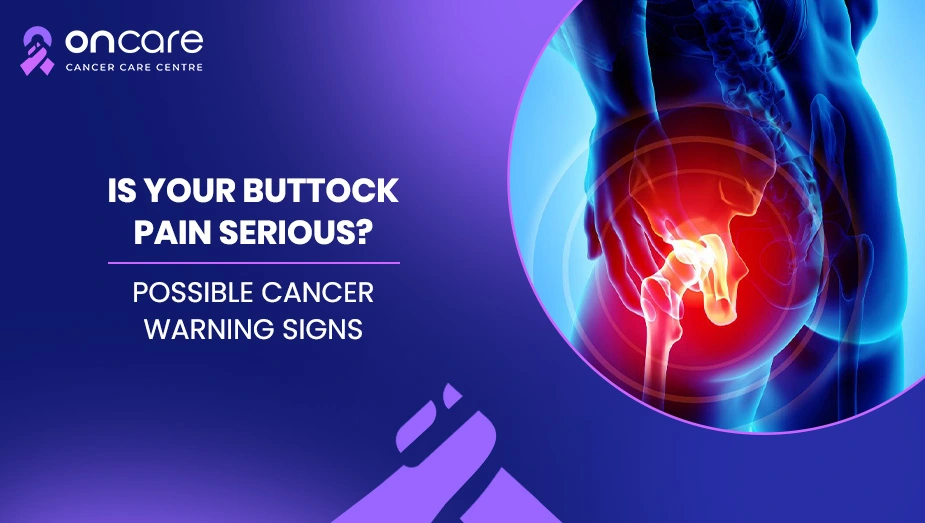
Buttock pain is most often due to common problems like muscular strain, sciatica, or prolonged sitting and is rarely a symptom of malignancy. However, pain that lingers for weeks, intensifies over time, or is accompanied by unexplained weight loss, a lump, swelling, or weakness should be investigated medically to rule out serious illnesses, including some malignancies.
A lot of people have buttock pain at some point in their lives. Most of the time, it's because of simple things like muscle strain, sitting for a long period, or small injuries. People generally disregard it because of this.
But here's the essential part: you shouldn't dismiss all discomfort, especially if it doesn't go away or gets worse. In very rare circumstances, long-term pain in the buttocks can be a sign of a serious illness, such as some kinds of cancer.
This blog talks about when buttock discomfort is normal, when it could be a warning sign, and what signs you should pay attention to. The World Health Organization is a good place to go for general cancer information.
Most of the time, buttock pain isn't serious, but here are some common causes
It's crucial to know that most buttock discomfort isn't significant before you start to worry about it.
Some common non-serious causes are:
- Muscle strain or damage
- Sciatica (pain in the nerves)
- Sitting for a long time
- Bad posture
- Small infections or boils
Rest, stretching, or basic treatment usually helps these problems get better.
When Buttock Pain Could Be a Big Deal
Persistent or unexpected pain, however rare, could be a sign of something more serious.
Things to look out for:
- Pain that doesn't get better after weeks
- Pain that becomes worse with time
- Pain at night that keeps you awake
- Weight reduction that can't be explained
- Weakness or tiredness
- A lump or enlargement in the buttocks area
If you see these signs, you should not wait to get medical help.
Is buttock pain a sign of cancer?
Yes, in rare situations, pain in the buttocks can be a sign of some malignancies. These are:
1. Cancer of the bone
Cancer that affects the pelvic bones or hip area can produce pain in the buttocks that lasts for a long time.
2. Sarcoma of the soft tissues
This is an uncommon type of cancer that starts in muscles, fat, or other tissues. It may start as a lump that doesn't hurt and then become painful.
3. Cancer of the colon and rectum
Pain may spread to the buttocks, especially in later stages.
4. Cancer that spreads
Cancer from other parts of the body can move to the bones or tissues close to the buttocks.
You may get more information on different types of cancer and their symptoms at the National Cancer Institute.
Differences: Pain that is normal vs. pain that is serious
Normal pain | Pain that could be serious |
|---|---|
Duration | Gets better in days |
It lasts for weeks or months. | Strength |
Not too bad to not too bad | Very bad or getting worse |
Response to Rest Gets Better | No change |
Other Signs | Not usually any |
Things You Should Never Ignore
Some indicators make it evident you need to see a doctor:
- A bump that is getting bigger in the buttocks
- Pain that goes down to the legs or lower back
- Having trouble walking or sitting
- Swelling or redness that doesn't go away
- Not wanting to eat or losing weight quickly
These signs don't usually signify cancer, but you should see a doctor about them.
Who Is More Likely to Get It?
A few things can raise the chance of serious conditions:
- Over 40 years old
- A history of cancer
- Living an unhealthy life or smoking
- Cancer runs in the family
- Symptoms that last a long time without treatment
If you are in a high-risk group, you should have regular checks.
When is it time to see a doctor?
You should see a doctor if:
- Pain lasts longer than two to three weeks.
- The pain continues to become worse.
- You see a bulge or swelling
- You have lost weight for no clear reason.
- Pain has an effect on your daily life.
Getting a diagnosis early can have a huge effect on how well treatment works.
Tests and Diagnosis
Based on symptoms, doctors may suggest tests:
- Physical exam
- X-ray or MRI scan
- CT scan
- Biopsy (if there is a lump)
These tests assist find out what is causing the pain.
Is it possible to treat it?
Yes, the reason affects the treatment.
For conditions that aren't very serious:
- Rest and physical therapy
- Medicines for pain alleviation
- Changes in lifestyle
For serious illnesses, such as cancer:
- Surgery
- Chemotherapy
- Radiation treatment
- Therapy that targets specific things
Finding the problem early makes it more likely that treatment will work.
Advice for Staying Safe
- Don't disregard pain that lasts a long time.
- Live a healthy life
- Get some exercise every day
- Don't sit for long periods of time.
- Get regular checks for your health.
One of the best ways to stay healthy is to pay attention to your body.
Consult Today
You don't generally need to worry about soreness in your buttocks. Most of the time, it's because of simple things like muscle tension or bad posture.
But you shouldn't dismiss the discomfort if it lasts a long time, is uncommon, or comes with additional symptoms. Cancer is not a common cause, but it is always crucial to find it early.
If you see any warning symptoms, you should see a doctor right away. Taking action early might keep you healthy and give you peace of mind.





Frequently Asked Questions
No, most of the time it's because of small problems like muscular strain or sitting for a long time.
Yes, although that doesn't happen very often. Some malignancies can cause pain that doesn't go away or is strange.
If the discomfort doesn't go away after 2–3 weeks, you should see a doctor.
The most prevalent reasons are muscle strain and sciatica.
Written and Verified by:

Dr. Gajendra Kumar Himanshu Exp: 10 Yr
Medical Officer
Book an Appointment
Related Blogs
Stomach Pain in Colon Cancer: Causes and Warning Signs
Learn why stomach pain occurs in colon cancer, its warning signs, and when to see a doctor. Get expert diagnosis and treatment guidance from Oncare Cancer Hospital.

Is a Mammogram Painful? What to Expect During Breast Screening
Learn about mammogram tests for early breast cancer detection, procedure, pain, and cost in India. Get expert care and advanced technology at Oncare Hospital.
Is Heel Pain a Sign of Breast Cancer?
Heel pain is common and usually caused by foot problems, not breast cancer. Learn the real causes of heel pain, rare cancer links, and when to see a doctor.

Is Chemotherapy Treatment Painful for Breast Cancer?
Many people fear chemotherapy pain in breast cancer. Learn whether chemotherapy really hurts, what discomfort may occur, and how doctors manage pain during treatment.