Table of Contents
BI-RADS 1 vs BI-RADS 4: Should You Be Worried About Your Report?

By Dr. Gajendra Kumar Himanshu


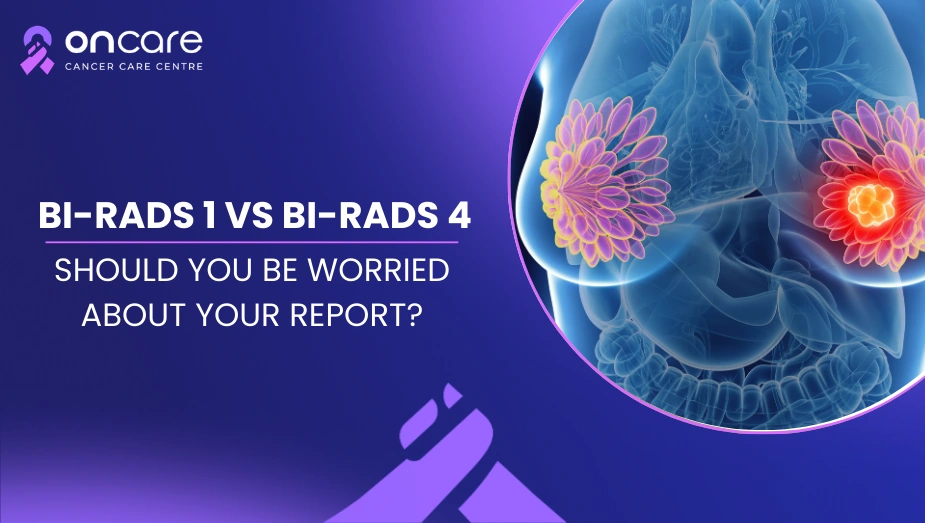
BI-RADS 1 signifies your breast imaging results are normal with no indications of cancer or abnormalities, however BI-RADS 4 suggests a suspicious finding with a 2% to 95% likelihood of malignancy, typically needing a biopsy for confirmation. BI-RADS 4 is then classified into 4A, 4B, and 4C, according to the amount of suspicion for cancer, but it’s crucial to realize that a BI-RADS 4 result does not necessarily signify breast cancer.
A BI-RADS grade given to a mammography, ultrasound or breast MRI can be distressing and perplexing for first-time patients. A BI-RADS 1 score frequently offers confidence because the breast tissue appears healthy and normal, whereas a BI-RADS 4 score leads to further medical evaluation and closer research. Understanding what these categories signify may help patients make informed decisions about follow-up care, further imaging or biopsy procedures.
In this blog, you will learn about the difference between BI-RADS 1 and BI-RADS 4, what these scores mean in breast cancer diagnosis, when a biopsy may be needed, the benefits and limitations of BI-RADS scoring, and how doctors use these results to guide breast cancer screening and treatment decisions.
What is BI-RADS?
BI-RADS stands for ‘Breast Imaging-Reporting and Data System. It’s a standardized system that radiologist professionals use to describe the results from breast imaging tests such as ultrasound, mammography, and MRIs. The healthcare team also uses it to determine the next steps after an imaging test.
The purpose of this standardized system was developed to:
- The tests help to standardize how radiologists report findings from breast imaging tests so it's consistent across the healthcare providers.
- The test helps to identify the risk of your breast cancer in a simple manner.
Why is BI-RADS important in breast cancer diagnosis?
Breast Imaging Reporting and Data System, also known as BI-RADS. This test is considered crucial in breast cancer treatments, as it shows standardized breast imaging scores, which helps to ensure clarity in the communication between radiologists and other breast cancer professionals, which often helps to better patient lives.
Here’s why it's important in overall breast health:
- Standardized Communication: Performing BI-RADS tests helps to clear any misunderstandings regarding breast health. It makes it easier for the radiologists to analyze the results and decide the right treatment options for the patient.
- Enhance Treatment Results: With clear guidelines, most patients are less likely to experience delays in terms of diagnosis or avoid unnecessary tension over unclear results.
- Guides Doctors to Take Necessary Decision: These test results show the risk levels, such as BI-RADS levels. It often helps the medical team to choose the right steps, from additional imaging results to urgent biopsies.
- Supports the Data Collection and its Research: The BI-RADS categories are mainly used in cancer studies and their research, which further helps researchers to analyze any different types of trends and improve their screening programs.
BI-RADS 1
A BI-RADS test score of 1 means the findings are negative and the breast tissue appears normal. In this test, there are no masses, calcifications, asymmetry, or other abnormalities found. The breast tissue seemed healthy. However, the test results suggest continued monitoring with regular mammograms.
The results generally mean that the radiologists didn’t find a significant abnormality on the images.
Should you be worried?
A BI-RADS score 1 means that the findings are negative, but it suggests that follow-up care or routine checkups should be continued to avoid any future complications.
What is BI-RADS 4?
A BI-RADS 4 suggests a suspicious abnormality that needs an immediate medical investigation, usually a biopsy. However, the score does not confirm cancer. But the findings are concerning enough to get more details. These test results won't be overlooked or ignored.
Category 4 has three subcategories based on the risk of cancer:
- 4A means a low possibility of cancer (2% to 10%)
- 4B means a moderate possibility of cancer (10 to 50%)
- 4C means a high possibility of cancer (50 to 95%)
Should you be worried?
The BI-RADS 4 doesn’t confirm cancer in suspected patients. But it suggests getting a biopsy to confirm the nature of the abnormality.
How to approach BI-RADS 4 results
The BI-RADS 4 score from breast imaging results usually indicates a chance of suspicious abnormality that insists on further investigation and medical intervention, usually a biopsy. However, it doesn’t confirm the patient is declared with cancer; it shows the probability of potential malignancy, which urges the doctor and patients to get deeper check-ups and monitoring.
Here’s what’s to look for:
- Consult with your oncologists
- Consider a second opinion
- Schedule a biopsy
- Consider taking follow-up tests
Advantages of BI-RADS Tests
There are many advantages of performing this breast cancer diagnosis,
Including:
- Normalization of BI-RADS: Radiologists usually use the tests to communicate the results to the patients about the findings, the consistency is considered as valuable to quality control and reduces the risk of misunderstandings.
- Risk Evaluation: BI-RADS tests generally estimate the level of risk connected to breast cancer health, which can be considered helpful for making a decision to get an effective treatment to meet follow-up requirements.
- Effectiveness: These test results help to fit the category, which further helps with the efficiency because the majority of radiologists explain the clinical findings regarding the breast health of the patients.
For more trusted information about BI-RADS visit the National Cancer Institute.
Consult Today
BI-RADS 1 and BI-RADS 4 represent the two different spectrums of a breast cancer diagnosis. There is an understanding that there is a need for an immediate medical intervention when you receive a test score of 4. While BI-RADS 1 offers a sense of peace and relief, BI-RADS 4 offers caution and immediate action. The most important part is to stay proactive and follow your oncologist's recommendations.
At Oncare, we offer premium-quality cancer treatments, including cancer surgeries at affordable price packages with experienced cancer specialist consultations.
If you or any loved ones of yours are diagnosed with cancer, then visit Oncare Cancer Hospital and book an appointment with our cancer specialist today! Get an estimated cost of your cancer treatments today!
Expert Insights by Dr. Raajit Chanana





Frequently Asked Questions
Some of the disadvantages of BI-RADS tests are:
- Subjectivity: There are some issues regarding subjectivity in the readings of these tests and its assigning category.
- False reports: There is a chance that people might get false positives or false negatives. It could cause some unnecessary problems, including mental disturbances or delays in the cancer treatments.
- Unspecific: The test scores mostly outline how to categorize the results, it doesn’t give any additional information about the suspicious findings.
The different categories in BI-RADS indicate a chance of cancer being present in the results. For example, a BI-RADS 6 means that there is a malignancy, this test result only comes after a breast biopsy.
It doesn’t mean the patient has cancer. The category 4 means that your imaging results are abnormal and a biopsy test is required. The chance of having breast cancer usually ranges from 2% to 95%.
Written and Verified by:

Dr. Gajendra Kumar Himanshu Exp: 10 Yr
Medical Officer
Book an Appointment
Related Blogs
Cancer Test Guide: How Doctors Detect Cancer Early
Discover more about the cancer test, why early detection matters, warning signs that lead to cancer testing, and the types of cancer tests used for cancer diagnosis.

Is Throat Cancer Curable? Latest Treatment Approaches Explained
Discover more about throat cancer, if throat cancer is curable, the importance of early diagnosis, advanced treatment approaches for throat cancer, and its prevention!

Gastrointestinal Cancer Symptoms by Type: Stomach, Colon, and Esophageal
Discover more about Gastrointestinal Cancer and its symptoms by type including stomach, colon, and esophageal cancer and its risk factors and when to consult a doctor!
Stage 3 Stomach Cancer Survival Rate: Latest Statistics
Learn the stage 3 stomach cancer survival rate, factors that affect outcomes, treatment options, and ways to improve long-term recovery with timely care.