Table of Contents
How Is Hodgkin’s Lymphoma Different from Non-Hodgkin’s?

By Dr. Gajendra Kumar Himanshu


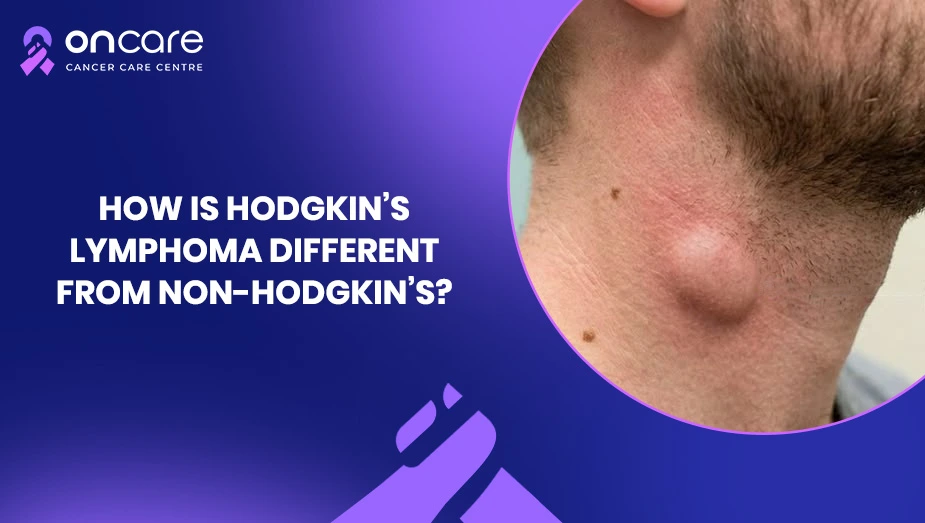
People may feel confused straight away when they hear the phrase lymphoma. A lot of individuals don't know that lymphoma is more than one disease. In fact, it is a group of tumors that attack the lymphatic system, which is part of the body's immune system.
There are two primary types: Hodgkin's lymphoma and Non-Hodgkin's lymphoma. They may sound alike, but they are very different in how they grow, spread, and are treated. Patients and families can make better choices about care if they know about these differences.
What Is Lymphoma?
Lymphoma is a kind of cancer that develops in white blood cells known as lymphocytes. These cells assist the body in fighting against infections.
Lymphoma happens when these cells grow too quickly and out of control. It normally starts in the lymph nodes, although it can spread to other regions of the body.
What is Hodgkin's lymphoma?
The Reed-Sternberg cell is a distinct form of cell that is found in Hodgkin's lymphoma. This kind of lymphoma usually spreads in a straight line, going from one set of lymph nodes to another.
It is less frequent than Non-Hodgkin's lymphoma, but it is often thought to be quite curable, especially if it is found early.
What does it mean to have Non-Hodgkin's Lymphoma?
Several different kinds of lymphomas fall under the umbrella of non-Hodgkin lymphoma (NHL).
It doesn't have Reed-Sternberg cells as Hodgkin's lymphoma does. It can act in a lot of different ways. Some varieties develop slowly, while others are more aggressive.
NHL is more common and can happen to anyone of any age.
Important Differences Between Hodgkin's and Non-Hodgkin's Lymphoma
Hodgkin's Lymphoma | Non-Hodgkin's Lymphoma |
|---|---|
Special cells | There are Reed-Sternberg cells. |
Pattern of spread | Predictable and organized |
Common age group | Adults in their 20s and 30s |
Kinds | Less types |
How fast does it grow | Usually easy to guess |
Signs of Both Types
Hodgkin's and Non-Hodgkin's lymphoma can have the same symptoms, such as:
- Lymph nodes that are swollen (in the neck, armpits, or groin)
- Fever
- Sweating at night
- Weight reduction that can't be explained
- Tiredness
It's really crucial to get the right diagnosis because the symptoms are similar.
How Do They Find Out?
To find out if someone has lymphoma, doctors do several tests:
- A physical exam
- Tests on blood
- Tests that take pictures (CT scan, PET scan)
- Biopsy (taking a little piece of tissue out)
The biopsy is the most significant test because it tells you if Reed-Sternberg cells are there.
Variations in Treatment
Treatment for Hodgkin's Lymphoma
- Chemotherapy
- Therapy with radiation
- Therapy that targets certain things (in some situations)
Hodgkin's lymphoma usually responds favorably to treatment, especially when it is caught early.
Chemotherapy and immunotherapy are two ways to treat non-Hodgkin's lymphoma.
- Therapy that targets
- In some situations, a stem cell transplant
The type of cancer and how bad it is will determine the best treatment.
Which one is worse?
People often ask this, but the answer isn't easy. Hodgkin's lymphoma is frequently easy to treat and has a high success rate.
There is a vast range of types of non-Hodgkin lymphoma. Some varieties grow slowly and can be treated easily, while others may be more aggressive and need more intensive therapy.
Why it's important to find it early
Early diagnosis is very important for both forms of lymphoma.
When found early:
- The treatment works better
- The odds of recovery go up.
- Fewer problems happen
If you have symptoms like swollen lymph nodes or a fever that won't go away, you should see a doctor.
Why Expert Care is Important
Lymphoma therapy can be hard, and it needs a correct diagnosis and a plan that is made just for you.
Oncare Cancer Hospital offers cutting-edge cancer care with skilled doctors who help patients through diagnosis, treatment, and recovery.
You can get extensive and accurate information from the National Cancer Institute.
Consult Today
Hodgkin's and Non-Hodgkin's lymphoma may sound the same, but they are not. Every type needs a different way to deal with it, from how it spreads to how it is handled.
Patients can feel more educated and confident about their treatment choices if they know about these differences.
Many patients with lymphoma can control their condition well and enhance their quality of life if they get an early diagnosis and the correct medical therapy.
Expert Insights by Dr. Sukriti Gupta





Frequently Asked Questions
The existence of Reed-Sternberg cells is the main distinction.
More people have non-Hodgkin's lymphoma.
Yes, both can be treated, especially if they are found early.
A lot of symptoms are the same; it's crucial to get the right diagnosis.
Written and Verified by:

Dr. Gajendra Kumar Himanshu Exp: 10 Yr
Medical Officer
Book an Appointment
Related Blogs

Can a Blood Test Detect Stomach Cancer?
A blood test alone cannot detect stomach cancer. Learn what blood tests can show, their limits, and which tests, like endoscopy and biopsy, confirm stomach cancer early.
Is Lymphoma Curable? Understanding the Facts and Treatment Options
Wondering if lymphoma is curable? Learn about Hodgkin and Non-Hodgkin lymphoma, treatments, early detection, and the latest advances in lymphoma care.
Types of Stomach Cancer: Adenocarcinoma, Lymphoma & More
Discover more about stomach cancer and its types, from adenocarcinoma to lymphoma and more, key differences between these cancers, and its diagnosis and treatments!
How Is Hodgkin’s Lymphoma Different from Non-Hodgkin’s?
Learn the difference between Hodgkin and Non-Hodgkin lymphoma, symptoms, causes, and treatment options. Get expert care at Oncare Cancer Hospital.