Table of Contents
Teeth Cancer Symptoms & How They Differ from Normal Pain

By Prashant Baghel


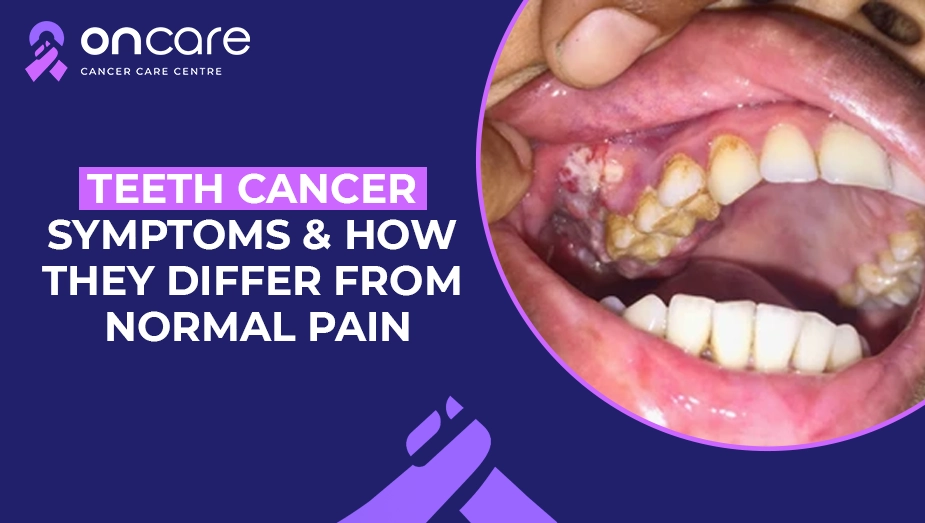
A toothache can feel like a small problem at times. You might think it's because you ate something too cold, chewed on something hard, or didn't brush your teeth well enough. But what if the pain doesn't go away? What if it feels a little different from the usual discomfort? A lot of people start to worry at these times. Most of the time, tooth pain isn't serious and is just a sign of a simple dental problem. But there are some rare times when it could be a sign of something more serious, like tooth cancer. Knowing the difference between normal tooth pain and the signs of tooth cancer can help you get help early, stay safe, and keep your health in good shape.
In this article, we will explain these symptoms in simple terms so you can stay informed and confident.
What You Need to Know About Teeth Cancer
Oral or jaw cancer, also called teeth cancer, starts in the tissues around the teeth. It can start in the gums, the lining around the teeth, or even the jawbone. A lot of people don't think cancer will show up in their mouths, especially near their teeth, so they don't pay attention to it at first. People may not realize it, but they may put off getting treatment because early signs can feel like normal tooth problems.
The good news is that if you catch teeth cancer early, it can be treated well. Doctors can get rid of small problem areas, stop the cancer from spreading, and help patients get better completely. This is why it's so important to know the signs of teeth cancer. You can get the right care at the right time if you know what to look for, especially when watching for teeth cancer symptoms.
Why People Mistake Teeth Cancer for Normal Pain
One of the most common pains people have is tooth pain. It can be caused by cavities, gum infections, grinding teeth, or even problems with your sinuses. These problems usually go away after treatment, but they can make you feel sore, sensitive, or under pressure.
Pain from teeth cancer is different, though. It might start out as a little bit of pain, but it gets worse or lasts longer. The pain could also move to other parts of the body, like the jaw, face, or ear. A lot of people think it's just a dental problem because the symptoms start out small. Knowing the difference between teeth cancer symptoms and normal pain can help you act quickly and stay healthy.
Signs of Teeth Cancer
Symptoms of teeth cancer may start off small and get worse over time. A lot of people notice changes but don't pay attention to them because they don't seem serious or are like normal dental problems. Paying attention to early signs can help doctors find and treat cancer much faster.
Tooth Pain That Won't Go Away
Normal tooth pain comes and goes. You might feel sharp pain when you eat sweets or drink something cold, but dental care usually helps. Teeth cancer pain, however, does not easily disappear. Even after you brush your teeth well, take pain medicine, or try home remedies, it stays for weeks or even months.
This type of pain often feels like it's coming from deep inside the bone or spreading through the jaw. Don't ignore pain that lasts longer than usual, as it may be linked to teeth cancer symptoms.
Swelling Around the Jaw or Teeth
When there is an infection or injury, swelling is common. But swelling from teeth cancer doesn't always act the same way. It might grow slowly, feel hard under the skin, and not go away even after you see a dentist. The swelling can sometimes make your face look uneven or make it hard to open your mouth.
A lot of people think this swelling is just an infection or gum disease. But if the swelling lasts too long or feels strange, it could be a sign of teeth cancer that needs to be checked out by a doctor. This is one of the teeth cancer symptoms that many people overlook.
Teeth that are loose for no clear reason
Teeth normally become loose due to gum disease, injury, or bone loss from aging. But cancer of the teeth can also make the bone around the teeth weaker. If your tooth gets loose for no apparent reason, it could be a sign that something is changing in the bone or tissues below it.
This symptom can be hard to understand because the tooth may not hurt at first. A lot of people think it's a gum problem, but if the looseness doesn't go away or spreads to other teeth, you should see a dentist. This is another one of the teeth cancer symptoms that deserves attention.
Numbness in the area around the teeth or jaw
One of the more surprising signs of teeth cancer is numbness. Tooth infections usually hurt, but cancer can hurt nerves, which can make you lose feeling. Your gums, lips, chin, or jaw may feel numb. You might feel like a part of your face has "fallen asleep."
This kind of numbness isn't normal for most dental problems. Numbness, especially if there is no swelling or pain, could mean that the cancer is affecting nerves nearby and may be connected to teeth cancer symptoms.
Sores or Patches Inside the Mouth
Cancer can cause small sores, white patches, or red patches near the teeth or gums. These spots may look like cuts in the mouth, but they don't heal quickly like normal cuts do. They might stay for weeks, bleed a little, or feel rough when you touch them. If you have a sore that doesn't go away in two weeks, you should see a doctor.
Hardship Chewing or Opening the Mouth
As teeth cancer gets worse, it may make it hard for the jaw to move. When you try to open your mouth wide or chew, you might feel tightness or pain. This is not the same as regular tooth pain, which usually only hurts when you bite down on a certain tooth. Cancer-related pain spreads throughout the body and makes it harder to eat or talk over time.
How the Symptoms of Teeth Cancer Are Different from Normal Pain
Cavities, infections, or gum disease are some of the most common causes of tooth pain. Usually, these problems have clear causes and respond well to dental care. On the other hand, normal dental care doesn't help with teeth cancer symptoms. The pain doesn't go away or gets worse, the swelling doesn't go away, and the changes in your teeth or jaw keep getting worse.
Dental problems that happen often are also easier to predict. Eating or brushing usually makes the pain worse, while medicine or treatment usually makes it better. The pain from cancer can come and go. It might hurt more when you rest, feel deeper, or spread to other parts of your face.
Another big difference is that you may have numbness, mouth sores that last a long time, or teeth that suddenly become loose for no reason. These are not normal dental problems.
Consult Today
Teeth cancer symptoms may seem small at first, but they are important signs from your body. You should see a doctor right away if you have pain that doesn't go away, swelling that isn't normal, sores that don't heal, numbness, or loose teeth. Knowing the difference between normal pain and cancer-related symptoms can help you stay healthy and get the right care when you need it.
Oncare Cancer Hospital is the best place to get help with every step of your journey. They offer expert care, trusted advice, and cutting-edge treatment options. They give you kind care to help you understand your illness and get the right treatment quickly and safely.
Frequently Asked Questions
One of the most common early signs is pain or swelling that doesn't go away near the teeth.
At first, they may feel the same, but cancer pain usually lasts longer and doesn't get better with regular dental care.
Yes, if teeth start to loosen without gum disease or an injury, it could mean that something is wrong with the deeper tissues.
If the sores don't heal in two weeks or keep coming back, they can be.
Book an Appointment
Related Blogs
Early Stage Mouth Cancer Symptoms You Should Never Ignore
Learn about the early signs of mouth cancer, including persistent sores, lumps, and discomfort. Early detection and treatment are key to recovery. Know what to look for and how to get help.
Types of Mouth Cancer: Symptoms, Causes & Treatment Options
Discover more about mouth cancer types and their common symptoms, causes and risk factors, and treatment options, prevention, and living with mouth cancer!
Oral Cancer Stages: Survival Rates and Treatment Approaches
Explore more about oral cancer stages and stage-wise survival rates, treatment approaches, prevention, and the importance of early detection and why it matters!