Table of Contents
TARE (Y-90 Radioembolisation): Targeted Radiation Beads for Liver Cancer

By Dr. Gajendra Kumar Himanshu


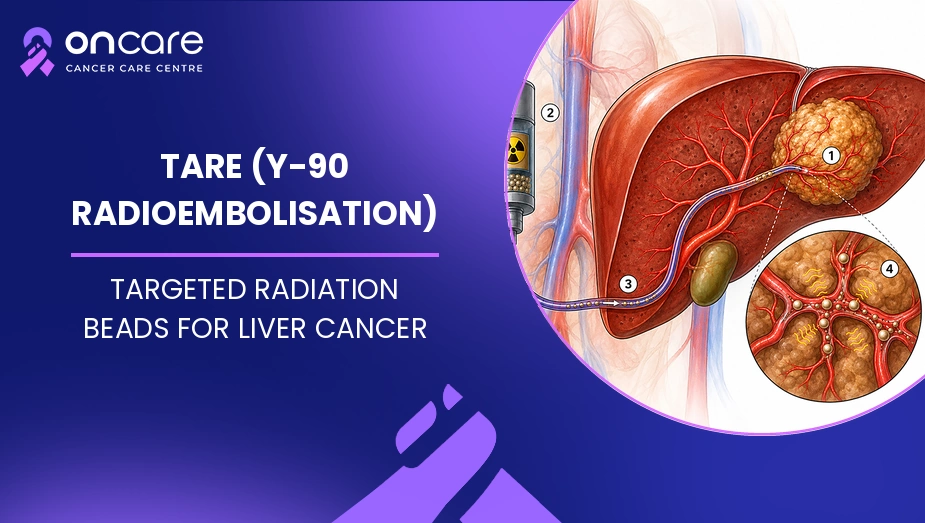
TARE, or Transarterial Radioembolisation, is a minimally invasive treatment used for some people with liver cancer. It uses tiny beads filled with the radioactive material Yttrium-90 (Y-90). Doctors guide these beads through a blood vessel directly toward the liver tumour. The beads stay near the tumour and release radiation, helping damage and kill cancer cells while limiting radiation to much of the healthy liver.
In this blog, we are talking about TARE and how Y-90 radioactive beads are used to treat liver tumours. We will explain how the procedure works, who may be considered for it, what happens before and during treatment, its possible benefits and side effects, recovery, and how doctors check the response after treatment.
What is TARE?
TARE stands for Transarterial Radioembolisation. It is also known as Y-90 radioembolisation or selective internal radiation therapy (SIRT). It combines a blood-vessel-based treatment with radiation therapy. Instead of sending radiation from outside the body, doctors place tiny radioactive microspheres inside the blood vessels that feed the liver tumour.
The liver has a special blood supply. Liver tumours often receive most of their blood from the hepatic artery, while normal liver tissue gets most of its blood from the portal vein. This allows doctors to send the Y-90 beads toward the tumour more precisely. You can also read our TARE Procedure blog for more information.
How do Y-90 beads treat liver cancer?
The Y-90 beads are very small and carry radiation. After they reach the blood vessels feeding the tumour, they become trapped around the tumour and release radiation over a short distance. This gives a high dose of radiation close to the cancer while helping reduce exposure to nearby healthy tissue.
The aim is to control tumour growth, shrink the tumour in some patients and sometimes help make another treatment, such as surgery, possible. TARE may be used for liver cancer that cannot be removed safely by surgery and can also be used for some cancers that have spread to the liver.
Who may be considered for TARE?
TARE is not suitable for every person with liver cancer. Doctors look at the tumour size, number and location, how much of the liver is affected, liver function and the patient’s overall health before recommending it.
It may be considered in selected patients with primary liver cancer or cancer that has spread to the liver, particularly when surgery is not possible. The treatment plan is made after detailed scans and blood tests.
What happens before TARE treatment?
Typically, doctors will map the area before treating it with Y-90. A tiny catheter is inserted into an artery, usually in the wrist or groin, and directed to the blood vessels of the liver. This means the doctors can see precisely how the blood travels to the tumour.
Doctors can also inject a small amount of tracer to track where the particles might go. This allows them to plan the Y-90 dose and minimise the likelihood of radioactive beads escaping the liver. The patient’s liver function and other medical issues are checked before treatment.
How is the Y-90 procedure done?
On the day of the therapy, the doctor again threads a thin tube (catheter) through the targeted blood vessels in the liver. The Y-90 microspheres are then progressively injected via the catheter into the arteries supplying the tumour. Once the treatment is done, the catheter is withdrawn.
The procedure is minimally invasive and can often be done as an outpatient treatment. Most patients can be discharged the same day; however, depending on the patient’s condition and how the procedure goes, some may need to be observed or admitted.
What are the benefits of TARE?
One important benefit of TARE is that it delivers radiation directly to the liver tumour. It can therefore treat selected tumours while limiting radiation exposure to much of the normal liver. It also does not require a large surgical cut.
In some patients, TARE may help control a tumour that cannot be removed with surgery. In selected cases, it may also shrink or control a tumour enough to support later surgery or liver transplantation. You can read more about liver cancer surgery cost.
What are the side effects of TARE?
TARE is generally well tolerated, but side effects can occur. Some people may have tiredness, nausea, vomiting, fever, stomach or upper abdominal discomfort and reduced appetite after treatment. These symptoms are often temporary and can usually be managed with medicines and supportive care.
Rare but more serious problems can include damage to healthy liver tissue, liver failure in higher-risk patients and ulcers if the radioactive beads reach the stomach or intestine. Doctors use careful mapping and treatment planning to reduce these risks.
What is recovery like after Y-90 treatment?
Many patients can return to normal activities within a few days, although tiredness can last longer in some people. The doctor may provide specific instructions about medicines, activity, diet and radiation safety after treatment. Some patients may be advised to limit close contact with other people for a short period while the radiation level decreases.
The treatment effect is not always seen immediately. Doctors usually use follow-up blood tests and CT or MRI scans to see how the tumour is responding. The timing of these scans depends on the treatment and the patient’s condition.
TARE vs TACE: What is the difference?
TARE and TACE are both liver-directed treatments, but they work differently. TACE delivers chemotherapy into the tumour's blood supply and then uses particles to reduce blood flow. TARE uses radioactive Y-90 beads to deliver radiation directly to the tumour. The table below compares these with the other main options.
Treatment | What is delivered? | Main action |
|---|---|---|
TARE | Y-90 radioactive beads | Delivers radiation inside the tumour |
TACE | Chemotherapy and blocking particles | Delivers chemotherapy and reduces tumour blood flow |
Surgery | Removes tumour tissue | Physically removes the cancer |
Systemic therapy | Medicines through the body | Treats cancer cells throughout the body |
The best option depends on the type and stage of liver cancer, liver function and the patient's overall health.
Why follow-up after TARE is important
Follow-up is an important part of TARE treatment. Doctors may check liver function, tumour markers and imaging results to understand how well the treatment is working. They may also look for any side effects or changes in the liver.
Patients in India should also discuss the follow-up schedule with their treating team and confirm where their blood tests and CT or MRI scans will be performed.
Not every tumour responds in the same way, so the next step may be continued monitoring, another liver-directed treatment, systemic treatment or surgery, depending on the patient’s results. For information about liver cancer symptoms, you can also read our blog on Liver Cancer Symptoms.
Consult Today
TARE can be an option for selected patients with liver cancer, especially when a tumour cannot be safely removed by surgery. At Oncare Cancer Hospital, patients can discuss Y-90 radioembolisation, liver function, tumour location, treatment planning, possible side effects and other liver cancer treatment options with the specialist team based on their individual condition.
Disclaimer
This article is for educational purposes only and should not be considered a substitute for professional medical advice, diagnosis, or treatment. Always consult a qualified healthcare professional for advice about your medical condition and treatment options.





Frequently Asked Questions
TARE is a minimally invasive treatment that sends tiny Y-90 radioactive beads into the blood vessels supplying a liver tumour.
Yes, it delivers radiation from inside the liver directly near the tumour rather than using radiation from outside the body.
No, doctors decide suitability based on tumour location, liver function, disease spread and the patient’s overall health.
Many patients can return to normal activities within a few days, but tiredness and other side effects may last longer in some people.
Written and Verified by:
Dr. Gajendra Kumar Himanshu Exp: 10 Yr
Medical Officer
Book an Appointment
Related Blogs
Stage 4 Liver Cancer Treatment: How Effective Are Current Methods?
Explore stage 4 liver cancer treatment options like immunotherapy and targeted therapy. Consult experts at Oncare Cancer Hospital for advanced care.
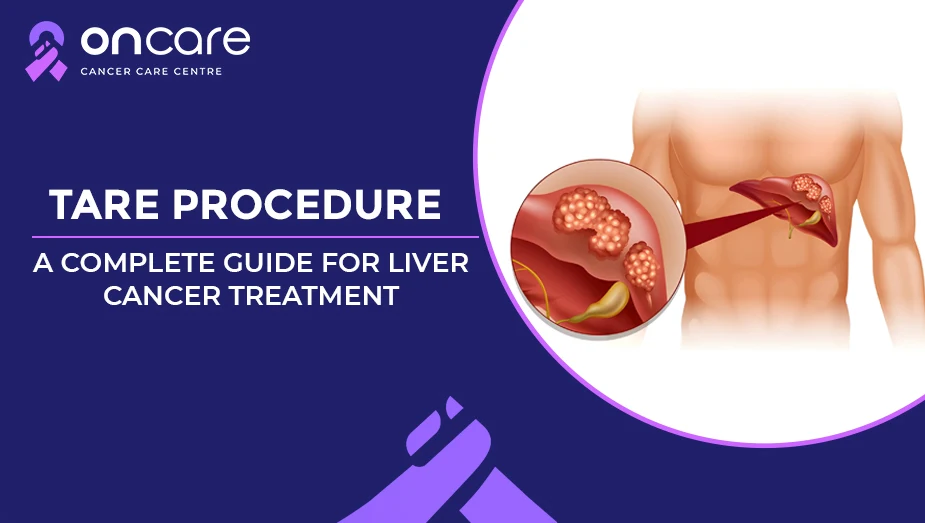
TARE Procedure: A Complete Guide for Liver Cancer Treatment
Discover more about the TARE procedure for liver cancer treatment, who needs the TARE procedure, what to expect during the procedure, and the benefits and side effects of the TARE procedure!
How to Recognize Early Symptoms of Liver Cancer
Explore more about liver cancer and its early symptoms, who is at high risk of developing this cancer, why early diagnosis matters, and when to consult a doctor!