Table of Contents
How Fast Does Stage 4 Pancreatic Cancer Spread? Expert Insights

By Prashant Baghel


It can be scary and confusing to hear the words "stage 4 pancreatic cancer." A lot of people want to know how quickly this cancer spreads, what it does to the body, and what will happen next. Pancreatic cancer, especially stage 4 pancreatic cancer, is known to spread quickly. But knowing how and why it spreads can help patients and their families make better choices, feel more ready, and know what to do next.
This article will talk about how quickly stage 4 pancreatic cancer grows, why it spreads the way it does, what symptoms to look out for, and what treatments can help control it. The goal is to use very simple and friendly language to explain everything so that everyone can understand it.
Learning about Stage 4 Pancreatic Cancer
Pancreatic cancer starts in the pancreas, which is a deep organ in the abdomen that helps with digestion and controlling blood sugar. Pancreatic cancer is often diagnosed late because it doesn't show many symptoms in the early stages.
Stage 4 pancreatic cancer is the most advanced stage. At this point, the cancer has already spread to other parts of the body. This could be in the liver, lungs, bones, or inside the stomach. Metastasis is when cancer spreads to other parts of the body. Pancreatic cancer cells can easily move to other parts of the body because the pancreas is close to big blood vessels and lymph nodes.
Why Does Pancreatic Cancer Spread So Fast?
It's known that pancreatic cancer is aggressive. One reason is that the pancreas is deep inside the abdomen, where tumors can grow for a long time without being seen. Another reason is that the cells that cause pancreatic cancer are very active. They can quickly break away from the main tumor and get into the blood or lymphatic system.
Another problem is that pancreatic cancer doesn't always respond well to early signs. Some signs may seem mild, such as stomach pain, weight loss, or tiredness. People often don't realize something is wrong because these symptoms are so common in a lot of different diseases. The cancer may already be in stage 4 pancreatic cancer by the time they see a doctor.
How fast does stage 4 pancreatic cancer grow?
The speed at which stage 4 pancreatic cancer spreads depends on a number of factors, including the person's general health, the type of pancreatic tumor, and how well the body responds to treatment. But most of the time, stage 4 pancreatic cancer signifies that the cancer has already spread to other parts of the body.
It can happen in a matter of months. Many people get cancer in the liver first because blood vessels connect the liver and pancreas directly. After there, it could proceed to the lungs, bones, or other organs that are far distant.
It spreads swiftly, although the speed at which it does so varies from person to person. Some people get sick extremely quickly, but others respond effectively to treatment and can slow down the spread for a longer time. Doctors often use scans, blood tests, and symptoms to see how quickly the disease is growing worse.
Places Where Stage 4 Pancreatic Cancer Commonly Spreads
Stage 4 pancreatic cancer frequently extends to the liver. The liver cleans blood from the digestive organs, which makes it easy for cancer cells to get there. Many people with stage 4 pancreatic cancer also have difficulties with their liver when they are diagnosed.
The lungs are another typical place. Cancer cells can travel via the blood and settle in the lung tissue. This could make you cough or make it hard to breathe.
Cancer can also spread to the bones. When this happens, patients may feel a lot of discomfort in their bones, especially in their hips or spine.
Sometimes, the cancer spreads inside the abdomen, which can cause fluid to build up, which is termed ascites. This might make the stomach look bigger and feel bad.
Signs that Stage 4 Pancreatic Cancer is Spreading
The symptoms may get worse when stage 4 pancreatic cancer spreads. Patients often lose weight, don't want to eat, feel weary, experience back pain, or have yellow skin. When the liver is ill, the skin and eyes might turn yellow. If the lungs are implicated, breathing may be harder or more laborious.
These signs can be different for everyone, and some people may have worse ones than others. Pain may worsen as the cancer progresses, but physicians can assist with pain control using therapies and drugs.
How Doctors Check the Rate of Spread
Doctors do different tests to find out how quickly stage 4 pancreatic cancer is spreading. CT, MRI, and PET scans help doctors see inside the body and figure out how fast tumors are growing. Blood tests, especially CA 19-9, can show how cancer is changing.
These tests help doctors figure out if the cancer is getting bigger, smaller, or staying the same. They also help doctors decide on the best treatment and give patients more information about what to expect.
What to Do About Stage 4 Pancreatic Cancer
Even though stage 4 pancreatic cancer can't be cured, treatment can slow the spread, make symptoms less severe, and make life better. Chemotherapy is one of the most common treatments. It helps kill cancer cells. Some patients may get targeted therapy, which focuses on certain traits of cancer cells.
In some cases, immunotherapy is also used to help the body's immune system fight cancer more effectively. Radiation therapy might help ease pain or make a tumor that is making you uncomfortable smaller. Doctors may also suggest treatments to make symptoms better, like getting rid of blockages in the bile ducts.
At this point, the goal of treatment is to make patients as comfortable as possible for as long as possible. Many people do well with treatment and can slow the spread for months or years.
Lifestyle Help for Stage 4 Pancreatic Cancer
Patients can feel a lot better if they take care of their overall health. To stay strong, you should eat healthy meals, drink enough water, and get enough sleep. If a doctor says it's okay, light activity can help you feel more energetic. During this time, it's also important to get emotional support from family, friends, and counselors.
Managing pain is a very important part of treatment. Doctors can give you medicine that helps with pain and makes your daily life easier. A lot of patients feel better when they get the right help.
How long can a person with stage 4 pancreatic cancer live?
Everyone's situation is unique. Some people die shortly after being diagnosed, while others respond well to treatment and live much longer. How well you are overall, how well you respond to treatment, and how quickly the cancer spreads all affect your chances of survival.
This cancer is very serious, but new treatments are helping people live longer and more comfortably than they used to. Doctors make treatment plans that are unique to each patient so that they can get the best results.
Consult Today
Stage 4 pancreatic cancer is a very serious disease that spreads quickly. However, knowing how it spreads and what to expect can help patients and their families feel more ready. The cancer grows quickly, but the rate can vary from person to person. Treatment can slow the spread, help with symptoms, and make life better.
Oncare Cancer Hospital is a good place to go for trusted and expert care for people with stage 4 pancreatic cancer. They offer advanced treatments, skilled doctors, and caring support. They ensure each patient receives the best possible care by tailoring their approach to each patient.
Expert Insights by Dr. Raajit Chanana
Frequently Asked Questions
It moves quickly, usually to the liver and lungs, but the speed varies from person to person.
No, but treatment can slow the spread and make life better.
You might lose weight, get jaundice, feel tired, have pain, and have trouble breathing.
Chemotherapy, targeted therapy, immunotherapy, radiation, and procedures to relieve symptoms can help people with stage 4 pancreatic cancer.
Book an Appointment
Related Blogs
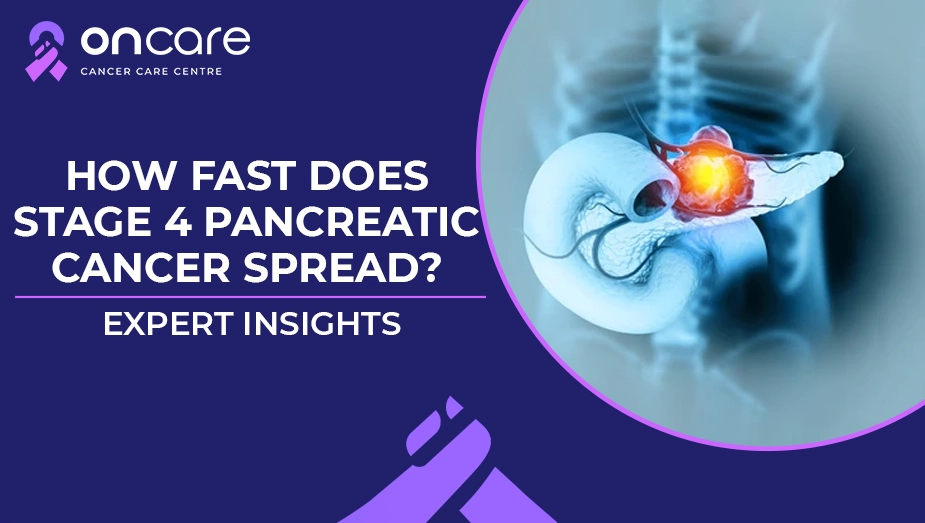
How Fast Does Stage 4 Pancreatic Cancer Spread? Expert Insights
Learn how fast stage 4 pancreatic cancer spreads, its symptoms, affected organs, and treatment options. Easy, clear guidance to help patients and families understand.

Stage 4 Pancreatic Cancer Symptoms: Physical and Emotional Changes
Learn the stage 4 pancreatic cancer symptoms, including severe pain, weight loss, jaundice, fatigue, and emotional changes. Understand what to expect and when to seek care.
Pancreatic Cancer Medications: Types and How They Work
Discover more about pancreatic cancer and the types of treatments and its medications, and how these medicines work and personalized treatments and genetic testing!

Types of Pancreatic Cancer: Exocrine vs. Neuroendocrine Tumors
Explore more about the types of pancreatic cancer, differences between exocrine and neuroendocrine tumors, diagnostic tests used, and why learning these cancers matters!