Table of Contents
Stage 4 Ovarian Cancer: How It Spreads and Affects the Body

By Raveena M Prakash


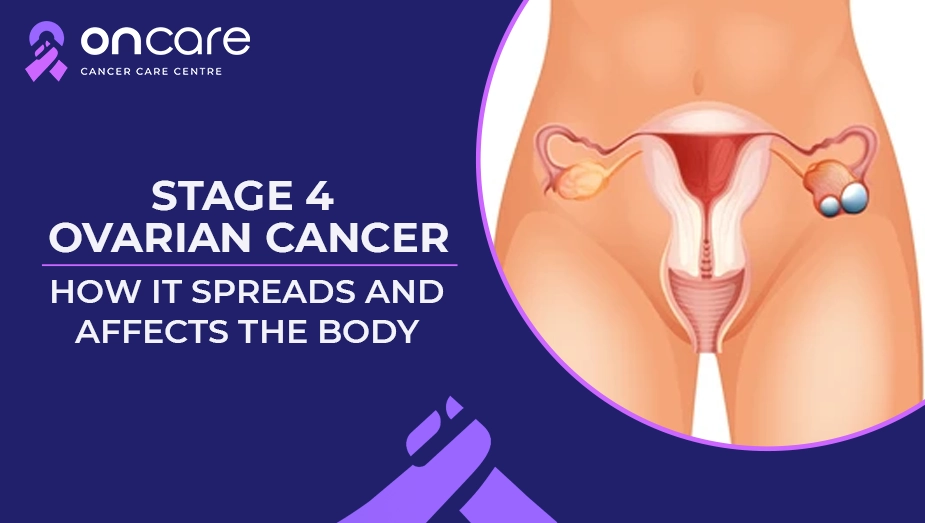
Ovarian cancer is often known as ‘silent disease’, because its symptoms can be subtle and often appears in women because of this cancer can be easily mistaken for everyday health issues. Unfortunately, many women get diagnosed at an advanced stage. At stage 4, ovarian cancer is the most advanced form of this cancer, which has spread to the ovaries to distant parts of the world.
In this article, we’ll delve more into how this cancer spreads and how it affects the body, which can help patients to navigate diagnosis, treatment, and care with greater clarity and confidence.
What is Stage 4 Ovarian Cancer?
Stage 4 ovarian cancer is often known as the advanced or metastatic ovarian cancer. Stage 4 happens when the cancer has already spread beyond the pelvis and abdomen to distant organs in the patient's body.
It is divided into:
- Stage 4A: In this stage, the cancer cells are found in the fluid around the lungs (pleural fusion).
- Stage 4B: In this stage, the cancer has spread into the distant organs, such as the liver, lungs, spleen, lymph nodes outside the abdomen, or other organs.
At this stage, ovarian cancer is considered as an advanced stage, with comprehensive cancer care, long -term treatment and its management rather than getting short-term treatments.
How Ovarian Cancer Spreads
Ovarian cancer spreads in several ways in the patient's body, which explains why it often reaches an advanced stage before cancer detection.
These may include:
A Direct Spread Within the Abdomen
The ovaries are located in the abdominal cavity, allowing cancer cells to easily spread to nearby tissues. Cancer cells can spread into the ovary, and it can spread to the nearby organs like the uterus, fallopian tubes, bladder, rectum, and abdominal lining (peritoneum).
Cancer Spread through the Abdominal Fluid
The cancer cells can flow through the fluid in the abdomen and pelvis. It allows the cancer to spread widely across the abdominal cavity. It will eventually affect the organs, such as the intestines and stomach. This process often leads to ascites, which is a buildup of fluid in the abdomen that causes swelling and discomfort.
Through Lymphatic System Spread
An ovarian cancer can easily enter into the lymphatic system and start to spread into nearby or distant lymph nodes, including those present in the pelvis, abdomen, chest, or neck. When the cancer reaches the lymph nodes, it has a greater risk of spreading throughout the body.
Bloodstream Spread
In stage 4, these cancer cells travel through the bloodstream to distant organs such as the lungs, liver, or bones. This type of spread is known as metastasis and helps to define the most advanced stage of the cancer.
How stage 4 Ovarian cancer affects the body
Stage 4 ovarian cancer involves multiple organs in the patient's body, as its effects can be widespread and are often considered serious and complex.
This is how the cancer affects the body, including:
- Abdominal and digestive effects
- Continuous bloating and abdominal swelling
- Pain or discomfort in the abdomen
- Difficulty in eating and feeling full quickly
- Experiencing bowel changes such as blockages and constipation
All of these symptoms are often caused by tumor growth, fluid buildup and pressure on digestive organs.
Symptoms
Here are some of the common symptoms of stage 4 ovarian cancer, including:
- Persistent bloating
- Pelvic or abdominal pain
- Changes in bowel movements
- Loss of appetite
- Shortness of breath
- Sudden weight loss
- Severe fatigue
All of the above-mentioned symptoms might worsen over time and should be managed proactively with an experienced ovarian cancer specialist team.
Treatment options
In stage 4 ovarian cancer, here are some of the treatment options are used, including:
- Chemotherapy: These treatments are used to shrink tumors and helps to slow down the disease progression.
- Surgery: Doctors use surgery to remove as much as cancer possible (debulking).
- Targeted therapy: These treatments are used to attack specific cancer cells.
- Hormonal therapy and immunotherapy: These treatments are used in selected cases of stage 4 cancers.
Palliative care is recommended in patients to improve their overall health, cancer spread and patient’s treatment preferences.
All of these treatment plans are individualised based on the overall health conditions, cancer spread and patient’s treatment preferences.
Living with stage 4 Ovarian Cancer
A stage 4 ovarian cancer diagnosis can feel quite overwhelming and emotionally triggering to handle. However, because of a rapid growth in cancer treatments, resources are available to treat and manage the symptoms very well. Getting a consultation with an experienced cancer specialist and starting an effective treatment can be effective for managing this condition.
Many patients can benefit from, including:
- Experienced, multidisciplinary cancer care teams
- Pain and symptom management specialists
- Mental health support and physical therapy
- Nutritional guidance and physical therapy
- Family and caregiver support
Many specialists focus on improving the quality of lives, and along with relieving the symptoms, it is also considered the central goal of care at this stage.
Consult Today
Stage 4 ovarian cancer is a serious and complex health condition, but understanding how it spreads and affects the patient’s body can empower the patients and their families to make more informed decisions. Recognizing the early symptoms and getting comprehensive treatments along with strong emotional support and compassionate care will play an essential role in patients' treatment journey.
At Oncare, we offer premium-quality cancer treatments, including advanced cancer surgeries, at an affordable price range with an experienced cancer specialist consultation.
If you or any loved ones of yours are diagnosed with cancer, then visit Oncare Cancer Center and book an appointment with our experienced cancer specialist today! Get an estimated cost of your cancer treatments today!
Frequently Asked Questions
Stage 4 ovarian cancer is often known as the advanced or metastatic ovarian cancer. Stage 4 happens when the cancer has already spread beyond the pelvis and abdomen to distant organs in the patient's body.
Here are some of the common symptoms of stage 4 ovarian cancer, including, persistent bloating, pelvic or abdominal pain, changes in bowel movements, loss of appetite, shortness of breath, sudden weight loss and severe fatigue.
Here are some of the treatments used for stage 4 ovarian cancer, including chemotherapy, surgery, targeted therapy and radiation therapy.
Book an Appointment
Related Blogs
Stage 4 Ovarian Cancer: How It Spreads and Affects the Body
Learn more about ovarian cancer and how it spreads and affects the body, its signs and symptoms, and treatment options and living with stage 4 ovarian cancer!
Stage 1 Lung Cancer Treatment Plan: What Patients Should Know
Discover more about stage 1 lung cancer and its treatment plans, lifestyle changes that support recovery, and the importance of emotional and psychological impact.
Stage 3 Ovarian Cancer: How It Spreads and What It Means
Discover more about stage 3 ovarian cancer and how this cancer spreads in stage 3, and its symptoms, diagnosis, treatments, prognosis and importance of supportive care!
Stage 2 Ovarian Cancer Symptoms: From Mild to Severe Indicators
Discover more about stage 2 ovarian cancer and its symptoms, starting from mild to severe indicators of cancer, why these symptoms are missed, and why early detection matters!