Table of Contents
Stage 4 Lung Cancer Treatment: Palliative Care and Quality of Life Tips

By Raveena M Prakash


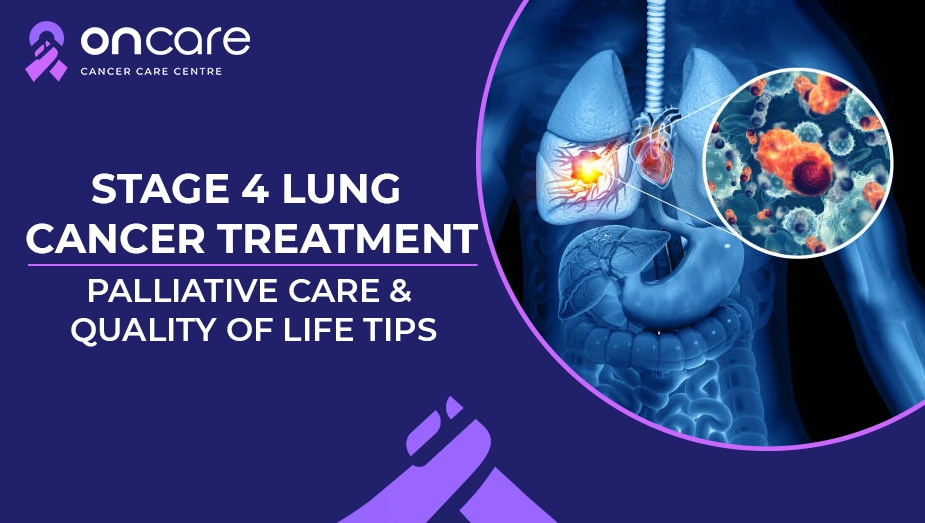
A stage 4 lung cancer diagnosis can be a life-altering moment for most of the patients and their families. A recent diagnosis of advanced lung cancer not only causes physical challenges but also creates emotional and mental impacts in people. At this advanced stage, the cancer has spread beyond the lungs to other parts of the body. While stage 4 lung cancer is not considered curable, effective and timely treatments might play a powerful role in controlling symptoms, slowing cancer progression, and also improving the quality of life.
In this article, we’ll delve deeper into the available treatment options and supportive care strategies that can help patients and families to make more informed decisions and focus on dignity, comfort, and meaningful living at this stage.
Understanding stage 4 Lung cancer
Stage 4 lung cancer is a metastatic or advanced stage of lung cancer. In this stage, the cancer has spread into organs such as the brain, lungs, bones, liver, or adrenal glands. It has caused fluid buildup around the lungs or heart. At this stage, the treatment goal typically shifts from cure to prolonging life, managing symptoms, and maintaining comfort.
There are two main types of lung cancer, including:
- Non-small cell lung cancer : This is the most common types of lung cancer.
- Small cell lung cancer : This is aggressive and faster growing types of cancer.
The type of lung cancer and its genetic features, the patient’s features, and their overall health guide treatment decisions.
Treatment options for stage 4 Lung cancer
At stage 4, the treatments can be effective in reducing the symptoms and extending the survival of patients. Cancer care is often personalized, and it may include one or more of the following.
Systemic treatments
In an advanced stage, the cancer spreads and treatments work throughout the body that are commonly used.
Chemotherapy
These treatments help to slow the cancer growth and relieve symptoms, such as pain or breathing difficulty.
Targeted therapy
For cancer with specific genetic mutations such as EGFR, ALK, or ROS1, targeted drugs can be highly effective with fewer side effects than chemotherapy.
Immunotherapy
These treatments help the immune system to recognize and fight cancer cells and have improved outcomes for many patients with advanced lung cancer.
Radiation Therapy
These treatments are often used to relieve pain from bone metastases, reduce pressure on the brain or spinal cords, and easing breathing problems caused by tumors.
Surgery
Surgical procedures are often used in stage 4 lung cancer rarely but may be considered in very specific situations to relieve symptoms or future complications.
The role of palliative care
Palliative care is an essential part of stage 4 lung cancer treatment. It often focuses on comfort, symptom relief, and emotional well-being. It can be provided along with active cancer treatment, and it's not just the end of your life.
Palliative care helps to manage with, including:
- Pain and shortness of breath
- Fatigue and nausea
- Anxiety, depression and emotional distress
- Sleep problems
- Loss of Appetite
- Sudden weight changes
A palliative care team often includes doctors, nurses, social workers, and counselors who work together to support both patients and their families.
Tips for Patients with Stage 4 Lung cancer
Living with advanced lung cancer is deeply stressful and feels personal, and quality of life looks different for everyone. These strategies can help patients feel more comforted and supported.
These may include:
Manage symptoms proactively
Do not wait to report symptoms clearly. If you are experiencing any of the symptoms persistently and worsening over time, then consult immediately. Early management of pain, breathlessness, or side effects can also make a significant difference in daily comfort.
Focus on Nutrition and improving energy levels
Eating small, frequent meals and staying hydrated can help to fight against fatigue and weight loss. Consult a dietitian to get a personalised diet and professional nutritional guidance.
Prioritize emotional well-being
If you are diagnosed with this cancer, then you might experience a sense of fear, anger, sadness, or uncertainty, which are often considered normal. If you feel you cannot control these emotions, then get professional counseling or join cancer support groups and spiritual care, or simply talk openly with your loved ones.
Stay physically active when possible
Practicing gentle physical activities, such as walking and stretching, as approved by your doctor, can improve your mood instantly, increase energy levels, and enhance the overall well-being of the patients.
Build a strong support system
Family, friends, caregivers, and healthcare professionals all play an important role in your treatment phase. If you think you need help, then do not hesitate, ask for help and accept help, do not feel shame or overwhelmed, whether it's for completing your daily tasks or emotional support to reduce the stress.
Supporting caregivers and loved ones
Supporting caregivers are an essential part of your treatment journey, and they often experience emotional and physical strain themselves. Always encourage your caregivers to seek support, take breaks, and care for their health; it is crucial for everyone's well-being.
Consult Today
Stage 4 lung cancer treatment goes beyond fighting the disease; it’s also about relieving suffering, preserving dignity even while going through the treatments, and enhancing the quality of life. With modern cancer treatments, comprehensive palliative care, and strong emotional support, patients can experience comfort, connection, and moments of joy even in the face of advanced stages of lung cancer.
At Oncare, we offer premium-quality cancer treatments, including advanced cancer surgeries, at an affordable price range with an experienced cancer specialist consultation.
If you or any loved ones of yours are diagnosed with cancer, then visit Oncare Cancer Hospital and book an appointment with our experienced cancer specialist today! Get an estimated cost of your cancer treatments.
Frequently Asked Questions
Here are some of the symptoms of lung cancer, including a cough that doesn’t go away, trouble breathing, shortness of breath, chest pain, discomfort, wheezing, coughing up blood, hoarseness, loss of appetite, sudden weight loss, unexplained fatigue, shoulder pain, and swelling in the face, neck, and arms.
Lung cancer is the leading risk factor for developing lung cancer; up to 20% of people diagnosed have never smoked. That’s why it’s important to talk to your provider about any concerning symptoms.
Vaping products often contain harmful substances like heavy metals, such as nickel, lead, chromium, formaldehyde, and benzene which are known to cause cancer. Current evidence suggests that vaping is linked to an increased risk of developing this cancer.
Book an Appointment
Related Blogs
Stage 4 Lung Cancer Symptoms: Critical Warning Signs
Learn more about Stage 4 lung cancer and important warning signs to watch out for, emotional and mental health symptoms, and managing symptoms and quality of life!
Stage 4 Lung Cancer: Advanced Signs and Management
Learn more about stage 4 lung cancer and its symptoms, diagnosis, staging, treatments, how to manage symptoms, lifestyle adjustments, and living with this cancer!
Stage 4 Cervical Cancer Life Expectancy: Myths vs Facts
Explore more about stage 4 cervical cancer and life expectancy, and myths and facts about stage 4 cervical cancer and what are the complications of this cancer!

Stage 4 Cancer Survivors: Inspirational Stories of Second Chances
Read inspirational stories of stage 4 cancer survivors who fought bravely. Learn how hope, treatment, and resilience gave them a second chance at life.