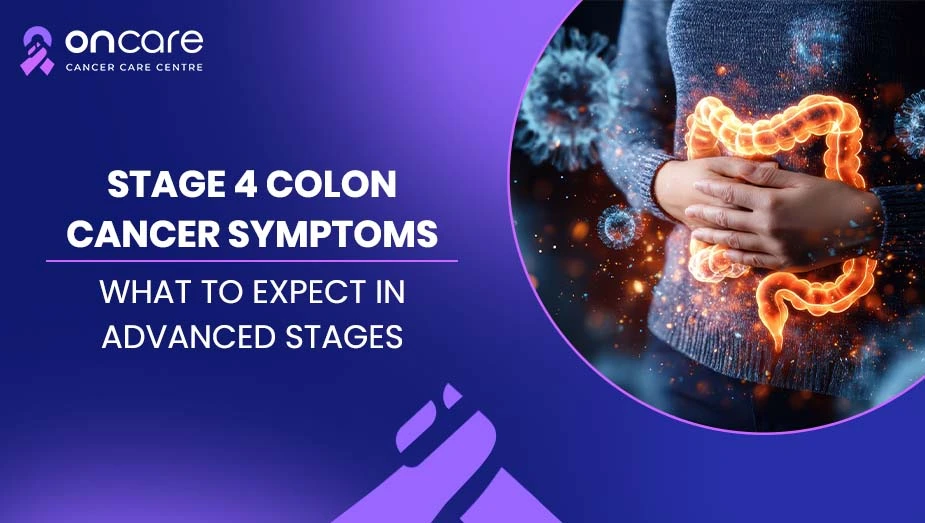
It can be distressing to hear the words "stage 4 colon cancer." It's normal to feel worried, have questions, and not know what's going to happen next. A lot of people want to know what symptoms they might have and how the sickness will change their daily life.
Stage 4 colon cancer, also called metastatic colon cancer, means that the cancer has spread to other parts of the body, such as the liver, lungs, or distant lymph nodes that are distant. This period is risky, but recognizing the indications can help patients and their families get ready, manage with discomfort, and obtain the proper care at the right time.
In this blog to explain everything, so you'll know what to expect and when to go to the doctor.
What does it mean to have stage 4 colon cancer?
Stage 4 colon cancer is the last stage of colon cancer. At this time, cancer cells have moved from the colon to other parts of the body. The most prevalent places that are affected are:
- Liver
- Lungs
- Peritoneum (the lining of the belly)
- Lymph nodes that are far away
Even when the disease is advanced, therapies like chemotherapy, targeted therapy, and sometimes surgery can help keep it under control and make life better. You can get more thorough medical information at the National Cancer Institute
What are the signs of Stage 4 Colon Cancer?
Depending on how far the disease has progressed, symptoms can vary from person to person. Some people may have a lot of symptoms, while others may just have a few.
1. Pain that doesn't go away in the stomach
One of the most typical signs is pain in the stomach area. You might feel like:
- Always in pain
- Bloating or cramping
- Pain that is sharp or dull
This happens because the tumor could restrict the intestines or push on other organs that are close by.
2. Changes in how you go to the bathroom
You might notice changes that keep happening, like:
- Having diarrhea or constipation
- Stools that are slender or narrow
- The feeling that the bowel doesn't empty all the way
If these changes remain longer than a few weeks, you shouldn't disregard them.
3. Blood in the stool
Blood in the stool might look like:
- Blood that is bright crimson
- Stool that is dark or black
This is generally one of the first indicators of colon cancer, but it can also happen in later stages.
4. Losing weight for no reason
People with stage 4 cancer often lose weight without even trying. This happens because:
- The body needs extra energy to combat cancer.
- Less appetite
- Digestion is impacted.
5. Extreme Tiredness
Being weary is not the only thing that makes you fatigued. It might feel like:
- Not feeling better after resting
- Having trouble with everyday activities
- Always feeling feeble
This could be because of malignancy or anemia (few red blood cells).
Signs and symptoms depend on where the cancer has spread.
The symptoms of stage 4 colon cancer often depend on which organs are impacted.
When cancer spreads to the liver
The liver is where it spreads the most. Some of the signs are:
- Jaundice, or yellowing of the skin and eyes
- Abdominal swelling
- Pain on the right side of the stomach
- Feeling sick
The Centers for Disease Control and Prevention (CDC) has more information:
Cancer Moves to the Lungs
You might notice the following if the cancer spreads to the lungs:
- Breathlessness
- Cough that won't go away
- Pain in the chest
- Coughing up blood (sometimes)
When cancer spreads to the peritoneum
This is the inside of the stomach. Signs include:
- Very bad bloating
- Fluid accumulation (ascites)
- Not wanting to eat
- Problems with digestion
Symptoms of the mind and emotions
Stage 4 colon cancer doesn't simply hurt the body. It also affects mental health.
Patients might feel:
- Nervousness
- Sadness
- Worrying about the future
- Trouble sleeping
At this point, it's vitally crucial to get help from family, friends, and support groups.
When to Go to the Doctor
It's very important to consult a doctor right away if you or someone you know has any of these symptoms, especially if they don't go away.
Early attention can help:
- Take better care of your symptoms
- Make life better
- Give additional choices for therapy
Regular checkups and follow-ups are very important, especially for people who have already been diagnosed.
Stage 4 colon cancer treatment options
Treatment can help control stage 4 cancer, even though it is not always curative.
Some common therapies are:
1. Chemotherapy
Helps tumors get smaller and cancer grow more slowly.
2. Therapy that targets specific areas
Targets specific cancer cells while having less of an effect on healthy cells.
3. Immunotherapy
Helps the body's immune system fight cancer.
4. Surgery (in some circumstances)
Used to get rid of tumors or ease symptoms like obstruction. The patient's overall health and where the cancer has spread will affect their treatment approach.
Having Stage 4 Colon Cancer and Living
Having advanced cancer can be hard, but with the right care, many individuals can still live meaningful lives.
Here are some helpful tips:
- Eating a diet that is balanced and easy to digest
- Being as active as you can
- Getting medical help to deal with pain
- Looking for emotional assistance
- Following the doctor's advice exactly
Palliative care (therapy that focuses on comfort) is also highly important for making life better.
Consult Today
Stage 4 colon cancer is a very serious disease, but knowing what to look for can help a lot. Being aware of the signs and symptoms of cancer, such as abdominal pain and exhaustion, might help you take action quickly.
If you or someone you care about is going through this time, know that there are options for support, treatment, and care. Even in advanced stages, modern medicine keeps becoming better and helps people live better.
Oncare Cancer Hospital is known for giving skilled cancer care with a focus on the patient. If you want the greatest care and more advanced treatment choices, you might want to look into this hospital.
Frequently Asked Questions
1. How long do people with stage 4 colon cancer live?
Different people have different life expectancies. It depends on things including your overall health, where the cancer has spread, and how well the treatment works. With the right care and therapy, some patients can live for many years.
2. Is there a cure for stage 4 colon cancer?
Most of the time, stage 4 colon cancer can't be completely cured. But therapies can help keep the condition under control, lessen symptoms, and make life better.
3. What is the most serious sign of stage 4 colon cancer?
There isn't just one obvious sign, but some typical ones are stomach pain, weight loss, tiredness, and changes in how often you go to the bathroom. The symptoms also depend on where the cancer has progressed.
4. Is colon cancer stage 4 painful?
It can hurt, especially if the cancer has spread to other parts of the body. But doctors can give patients drugs and procedures that work well to control pain and keep them comfortable.