Table of Contents
Stage 3 Ovarian Cancer Symptoms: How They Differ from Earlier Stages

By Raveena M Prakash


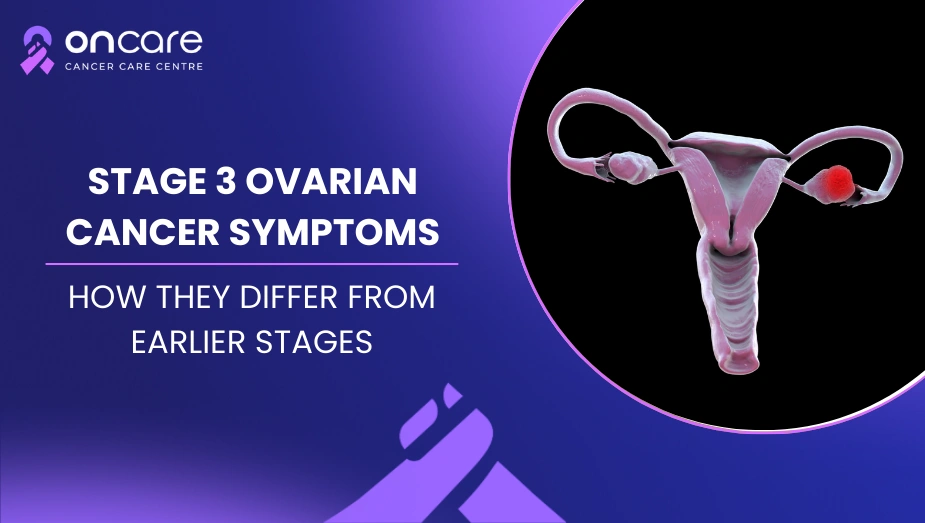
Ovarian cancer is commonly known as a ‘silent killer,’ because its early symptoms can be vague and unclear and very easy to ignore. However, when these cancers start to progress, especially to stage 3, the symptoms usually become more persistent, noticeable, and severe. Understanding how stage 3 ovarian cancer symptoms differ from earlier stages can help patients and families to recognize warning signs and seek timely medical care.
In this article, we’ll discover more about ovarian cancer and differences between early and stage 3 ovarian cancer symptoms and treatments and when to consult a doctor!
Understanding Ovarian cancer
Ovarian cancer begins in the ovaries, small, almond-shaped organs on either side of the uterus that produce eggs and female hormones such as estrogen and progesterone. These cancers develop when abnormal cells in or around the ovaries uncontrollably develop a tumor.
The ovaries are located deep within the abdomen; early signs of ovarian cancer are often subtle and easily mistaken for common digestive or hormonal issues. Ovarian cancer staging is based on how far the cancer has spread.
Stage 1: In this stage, the cancer is often confined to one or both ovaries.
Stage 2: In this stage, the cancer has started to spread to nearby pelvic organs.
Stage 3: In this stage, the cancer has spread beyond the pelvis to the lining of the abdomen (peritoneum), and or nearby lymph nodes.
Stage 4: In this stage, the cancer has spread to distant organs such as lungs and liver.
In stage 3, the cancer has been considered advanced but still potentially treatable with a combination of surgery and chemotherapy.
Common symptoms of Early-stage Ovarian cancer
In the early stages, symptoms are often subtle and may include:
- Mild bloating
- Pelvic or abdominal
- Feeling full quickly while eating
- Increased urinary urgency or frequency
- Changes in menstrual cycle (in premenopausal women)
- Mild fatigue
Because all these symptoms can mimic common digestive or hormonal issues, they are frequently dismissed and misdiagnosed.
Stage 3 Ovarian cancer symptoms
The stage 3 ovarian cancer symptoms typically become more intense, frequent and harder to ignore in patients. This is largely due to the cancer spreading within the abdominal cavity.
Persistent and Severe Abdominal bloating
In stage 3 ovarian cancer, bloating is constant rather than intermittent and progressive in severity. These conditions are often associated with ascites, which is fluid buildup in the abdomen. It can cause visible and abdominal swelling and discomfort.
Significant abdominal or pelvic pain
In stage 3, pain starts to become more pronounced and becomes more consistent rather than occasional. These symptoms often radiate to the lower back or worsen over time. These types of pain result from tumor growth and pressure on surrounding organs.
Noticeable abdominal swelling
As cancer starts to spread to the peritoneum (abdominal lining), fluid accumulation and tumor growth, and it might cause:
- Rapid increase in waist size
- Tightness in clothing
- Feeling of heaviness in the abdomen
These symptoms are more prominent than in early stages.
Changes in bowel habits
Many experts suggests that stage 3 ovarian cancer might affect the intestines, which often leads to:
- Constipation or diarrhea
- Nausea or vomiting
- Indigestion
- Loss of appetite
These symptoms may become chronic and increasingly uncomfortable in stage 3 cancer patients.
Unexplained weight changes
Some of these cancer patients might experience the following:
- Unintentional weight loss (due to loss of appetite)
- Weight gain from fluid retention (ascites)
The combination of swelling and weight fluctuations is more common in advanced stages.
Fatigue and weakness
In some cases, patients might experience fatigue, these might tend to be:
- Persistent and not relieved by proper rest
- Accompanied by weakness
These are possibly related to anemia or the body’s response to cancer.
Enlarged lymph nodes
In some patients, when the cancer has spread to nearby lymph nodes, patients might notice:
- Swelling in the groin area
- General discomfort
Rarely, some patients might experience leg swellings due to lymphatic blockages.
Key differences between early and stage 3 symptoms
Here are some key differences between early and stage 3 symptoms, including:
In early stages | Stage 3 Ovarian cancer |
|---|---|
Mild, vague discomfort in the abdomen | Persistent and severe abdominal pain |
Occasional bloating | Continuous bloating with visible swelling |
Subtle digestive issues, vomiting | Chronic bowel changes, nausea |
Minimal physical changes | Noticeable abdominal enlargement |
Symptoms come and go | Symptoms worsen over time |
One of the key differences between early and stage 3 symptoms lies in their pain intensity, persistence, and physical visibility of cancer symptoms.
Diagnosis
Ovarian cancer is often not detected in its earliest stages because symptoms are subtle and can resemble common digestive or hormonal issues. Because of these, many women are diagnosed only after the cancer has progressed.
Ovarian cancer is frequently diagnosed at stage 3 because:
- Early symptoms are non-specific.
- There is no reliable routine cancer screening test for the general population.
- The ovaries are deep within the abdomen, which makes the early tumors difficult to detect.
According to organizations such as the American Cancer Society and the National Cancer Institute, many women are diagnosed only after the cancer symptoms start to become persistent and hard to ignore.
When to consult a doctor
You should consult a healthcare provider if you experience, including:
- Bloating lasting more than two weeks
- Persistent pelvic and abdominal pain
- Difficulty eating or feeling full quickly
- Sudden, unexplained abdominal swelling
- Changes in bowel habits that don’t improve
Early medical evaluation can include performing pelvic exams, imaging tests (such as ultrasound and CT scans), and blood tests such as CA-125, though it is not definitive on its own.
Treatments for stage 3 Ovarian cancer
Stage 3 ovarian cancer is an advanced stage of ovarian cancer; the treatment options may include:
- Chemotherapy
- Targeted therapy
- Maintenance therapy
- Cytoreductive (debulking) surgery
While the prognosis varies depending on the tumor type, response to cancer treatment, and overall health conditions.
Consult Today
Stage 3 ovarian cancer symptoms differ significantly from earlier stages in their severity, perseverance, and impact on daily life. While early symptoms are often vague and intermittent, stage 3 symptoms are typically obvious and disruptive.
At Oncare, we offer premium-quality cancer treatments, including advanced cancer surgeries, at an affordable price range with an experienced cancer specialist consultation.
If you or any loved ones are diagnosed with cancer, then visit Oncare Cancer Hospital and book an appointment with our experienced cancer specialist today. Get an estimated cost of your cancer treatments today!
Frequently Asked Questions
Stage 3 ovarian cancer means the cancer that has spread beyond the ovaries to the abdominal lining to nearby lymph nodes.
Yes, persistent and severe bloating often caused by fluid buildup is a common symptom of stage 3 ovarian cancer.
Yes, symptoms are usually more frequent, more intense and harder to ignore than earlier stages.
Book an Appointment
Related Blogs
Stage 4 Breast Cancer Symptoms: Full Body Signs & Advanced Indicators
Learn the full-body symptoms of stage 4 breast cancer, including bone pain, shortness of breath, fatigue, and signs of advanced metastasis and its full-body signs!
Liver Cancer Prognosis by Stage: Survival Rates & Treatment
Liver cancer prognosis by stage explains survival chances, treatment options, and outcomes from early to advanced stages. Learn what each stage means for the future.
Stage 4 Breast Cancer: Managing Life with Advanced Cancer
Learn more about Stage 4 breast cancer and managing physical symptoms and treatment side effects, how to manage life with advanced cancer and living with stage 4!

Stage 1 Skin Cancer: Real Chances of Recovery
Stage 1 skin cancer is an early and highly treatable form of cancer. Learn its symptoms, types, diagnosis, treatment options, and long-term outlook in simple terms.