Table of Contents
Stage 3 Ovarian Cancer: How It Spreads and What It Means

By Raveena M Prakash


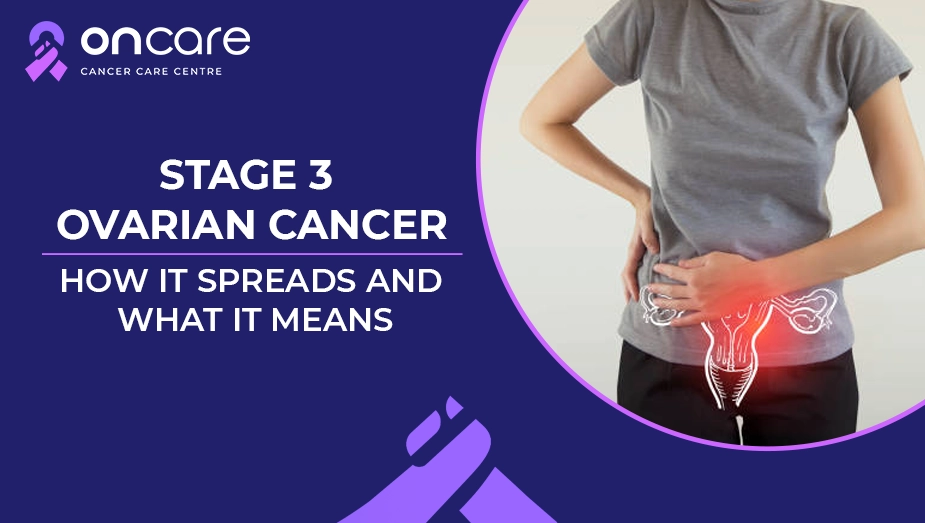
Ovarian cancer is commonly known as the ‘silent killer’ because it doesn’t show symptoms in the beginning of cancer growth. Many cases are diagnosed at an advanced stage, with stage 3 being one of the most important stages of this cancer, yet it can be treated and managed with timely treatments.
In this article, we’ll discover more about how stage 3 ovarian cancer spreads, what to expect during the treatments, and how to improve the quality of life.
What Is Stage 3 Ovarian Cancer?
Cancer staging helps the doctors to describe how far cancer has spread in the patient’s body. In ovarian cancer, the cancer staging follows the FIGO system recommended by the International Federation of Gynecology and Obstetrics.
These may include:
- Stage 1: In this stage, the cancer is confined to one or both ovaries.
- Stage 2: Cancer has spread to the pelvis(uterus, fallopian tube, bladder or rectum).
- Stage 3: Cancer has spread beyond the pelvis into the abdominal cavity or nearby lymph nodes.
- Stage 4: Cancer has spread to the distant organs, such as lungs or liver.
Stage 3 ovarian cancer is classified into 3A, 3B, and 3C, including:
- 3A: In this stage, the cancer has spread to the lining of the abdomen.
- 3B: In this stage, visible implants of cancer are less than 2 cm on the abdominal lining or surface organs.
- 3C: In this stage, the cancer implants are bigger than 2 cm and have spread to the nearby lymph nodes.
This stage indicates an advanced disease, but treatment can still be effective, especially with an early medical intervention and proper medical care.
How stage 3 Ovarian cancer spreads
Many experts suggests that ovarian cancer spreads through several mechanisms, including:
- Direct extension: Cancer tends to grow directly from the ovaries into the nearby tissues and organs, like the uterus, fallopian tubes, bladder, or intestines, that’s how stage 2 starts to spread in stage 3.
- Peritoneal spread: The peritoneum is the thin lining of the abdominal cavity. Ovarian cancer cells can shed into the abdominal fluid (ascites) and implant themselves on abdominal organs, such as the intestines, liver surface, and diaphragm.
This type of spread is common in stage 3 Ovarian cancer, it can cause fluid buildup, bloating and discomfort.
- Lymphatic spread: Cancer cells can enter the lymphatic system, and flow to pelvic or para-aortic lymph nodes. Swollen lymph nodes may be detected during imaging and surgery.
- Rare distant spread: Although stage 3 usually involves abdominal spread, cancer can sometimes start moving towards the distant organs.
Common symptoms
The stage 3 ovarian cancer symptoms are often subtle and mild, these may include:
- Abdominal bloating or swelling
- Constant pelvic or abdominal pain
- Feeling full quickly when eating
- Unexplained weight loss or weight gain
- Fatigue or weakness
- Feeling urgent to urinate
- Bowel changes (constipation and diarrhea)
These symptoms start to overlap with many benign conditions; ovarian cancer can go undiagnosed until it reaches stage 3, highlighting the importance of paying close attention to constant changes.
Diagnosis
Here’s how stage 3 ovarian cancer is diagnosed, including:
- Physical examination: A doctor might perform a physical examination to detect any abdominal swelling or enlarged lymph nodes.
- Imaging tests: Including Ultrasound to detect any kinds of ovarian masses, while performing CT scan and MRI might help to evaluate the cancer spread in the abdomen and lymph nodes.
- Blood tests: These include tests such as CA-125 test marker helps to understand ovarian cancer in some cases.
- Biopsy and surgery: Performing laparoscopy or laparotomy helps to confirm the diagnosis and helps to determine the exact staging. Surgery might also be performed to remove as much tumor as possible, debulking, which improves the treatment outcomes.
Treatments
The treatments are usually multidisciplinary, combining surgery along with chemotherapy, and sometimes targeted therapies are also used depending on the patient cases.
- Surgery: The main goal is to remove the tumor as much as possible (debulking). It may include removal of both ovaries, fallopian tubes, uterus, and affected lymph nodes. Patients who completed a successful debulking can significantly improve the survival rates.
- Chemotherapy: This is an effective treatment, which is a platinum-based chemotherapy regimen used for stage 3 ovarian cancer. The common drugs are cisplatin and carboplatin, which are considered the standard chemo drugs. These are often combined with paclitaxel. These are given before surgery (neoadjuvant) to shrink tumors and after surgery (adjuvant) to kill the remaining cancer cells.
- Targeted therapy: These treatments, including drugs such as bevacizumab (anti-VEGF therapy) or PARP inhibitors, may be used, especially for patients with genetic mutations like BRCA ½.
Importance of supportive care and lifestyle adjustments
Stage 3 ovarian cancer treatment can be physically and emotionally challenging, that’s why supportive care is considered essential to better treatment outcome and recovery, including:
- Nutrition: Patients who follow a diet rich with high-nutrition rich foods to maintain strength.
- Physical activity: Practising gentle physical activities such as walking or yoga, helps to remove fatigue and enhances the mood.
- Mental health support: Getting professional counseling, therapy, mindfulness activities can also reduce the anxiety level and depression.
- Infection prevention: Patients undergoing various treatments like chemotherapy, should avoid getting infections especially cold or flu season.
- Follow-up care: Practising regular imaging and blood tests helps to detect the cancer recurrence early.
Consult Today
Stage 3 ovarian cancer represents an advanced stage of cancer, yet it's treatable and manageable when treated immediately. At this stage, the cancer has spread to the abdominal lining or nearby lymph nodes, making early medical evaluation, surgery, and chemotherapy essential for a quick recovery. The symptoms are subtle; paying close attention to constant abdominal pain and pelvic changes is essential for timely diagnosis. Additionally, the medical treatments, healthy diet, supportive care, and strong emotional support can improve the quality of life.
At Oncare, we offer premium-quality cancer treatments, including advanced cancer surgeries, at an affordable price range with an experienced cancer specialist consultation.
If you or any loved ones of yours are diagnosed with cancer, then visit Oncare Cancer Center and book an appointment with our experienced cancer specialist today! Get an estimated cost of your cancer treatments today!
Frequently Asked Questions
In stage 3 ovarian cancer has spread from the ovaries/ fallopian tubes outside the pelvis to abdomen, nearby lymph nodes, or the surface of the liver/ spleen, with substages such as (3A, 3B and 3C) depending on the extent of spread.
The common symptoms of ovarian cancer may include constant bloating, abdominal pain, discomfort, feeling full quickly, trouble urinating, and sudden weight loss.
The treatment approaches may include surgery, chemotherapy and some cases, targeted therapy also used to treat.
Book an Appointment
Related Blogs

Stage 2 Lung Cancer Symptoms: How They Differ From Stage 1
Discover more about stage 2 lung cancer symptoms and how they differ from stage 1 lung cancer, when to consult a doctor, the importance of early detection, and why they matter!

Stage 4 Breast Cancer Treatment Options: What Works Best Today
Discover more about breast cancer and stage 4 breast cancer and understand the breast cancer type and how to choose the treatment options and what works best today!
Stage 2 Blood Cancer Management: What Patients Must Know
Discover more about stage 2 blood cancer and common symptoms, treatment options, managing side effects during cancer treatments, and the importance of regular monitoring.
Stage 2 Ovarian Cancer Symptoms: From Mild to Severe Indicators
Discover more about stage 2 ovarian cancer and its symptoms, starting from mild to severe indicators of cancer, why these symptoms are missed, and why early detection matters!