Table of Contents
Stage 3 Lung Cancer: How It Spreads and What Happens Next

By Raveena M Prakash


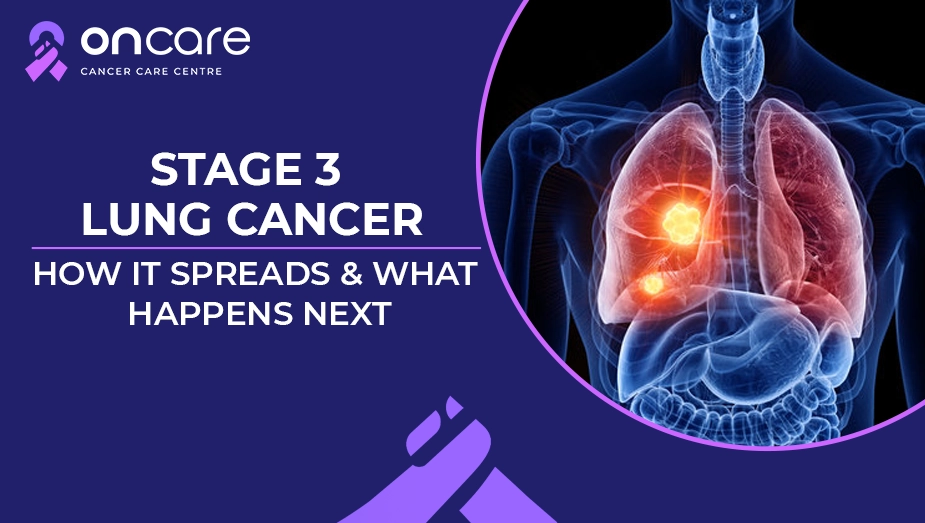
A new lung cancer diagnosis can shake a person's entire world. In most cases, patients and their families feel devastated with the diagnosis. Many people immediately wonder how they even developed the cancer in them. Many newly diagnosed stage 3 lung cancer patients think about how the cancer has even spread, what it means for their health, and what happens next in terms of the treatments and their life changes.
In this article, we’ll discover more about how this stage spreads and what happens next, and how it will help to empower us to make more informed decisions about the treatments.
What does Stage 3 Lung Cancer Mean?
Lung cancer is generally classified from stage 1 to 4 based on how large the tumor is and how far it has spread in the lungs. Stage 3 lung cancer is also known as a locally advanced stage of cancer. In simpler terms, the cancer has moved into the lung, where it has started but has not yet spread into the distant organs such as the brain, liver, or bones.
Stage 3 is often classified into 3A, 3B and 3C. While stage 3 non small cell lung cancer is sometimes called a locally advanced cancer.
How Stage 3 Lung Cancer Spreads
Many experts suggest that lung cancer usually spreads in a more predictable way. The stage 3 cancer typically involves one or more of the following.
These may include:
Spread to nearby lymph nodes
The most common feature of stage 3 lung cancer is its spread to lymph nodes in the chest.
These may include:
- Lymph nodes near the lungs
- Nodes between the lungs (mediastinal lymph nodes)
- Nodes above the collarbone in more advanced cancer stages
- Lymph nodes act like filters in the body, which is why cancer cells often reach them first.
Growth into nearby structures
In stage 3 the tumor might grow into tissues close to the lungs, including:
- The chest wall
- The lining of the lung (pleura)
- The airway or nearby blood vessels
- The diaphragm or heart lining (in more advanced stage 3 cases)
The local invasion in the lungs can cause symptoms like chest pain, shortness of breath, or constant coughing.
Why its not stage 4
Stage 3 lung cancer is serious and complex; however, the best part of this stage is that it hasn’t spread into distant organs. When a cancer travels to organs like the brain, liver, adrenal glands, or bones, the disease is classified as stage 4.
Common symptoms
In most lung cancer cases, the symptoms look more similar to other, less serious diseases. Many people don’t have symptoms until the disease gets advanced, but some people have symptoms found in the early stages.
For those who do experience symptoms, it can be one or two of these, including:
- A cough that doesn’t go away or gets worse over time
- Trouble breathing or shortness of breath
- Chest pain or discomfort
- Wheezing
- Coughing with blood
- Hoarseness
- Loss of appetite
- Unexplained weight loss
- Unexplained fatigue
- Shoulder pain
- Swelling in the face, neck, arms or upper chest
- Horner’s syndrome
What happens Next After Diagnosis
When a person gets diagnosed with stage 3 lung cancer, the doctor might suggest getting more testing to confirm the cancer. With the help of an accurate diagnosis, they will then design a specific treatment plan. Some treatments are used to manage side effects of treatments and improve the quality of life.
Further testing:
After stage 3 diagnosis, the doctor might suggest to perform various testing, including:
- PET scans or MRIs to confirm the diagnosis
- Pulmonary function tests to assess the lung capacity
- Molecular or genetic testing of the tumor (especially for non-small cell lung cancer)
After performing these tests doctors will decide further treatments for the patients.
Treatment plans for Stage 3
A stage 3 lung cancer usually requires the combined cancer treatments, generally coordinated by a team of cancer specialists including oncologists, pulmonologists, surgeons and radiation oncologists.
Treatments may include:
Chemotherapy
Chemotherapy is commonly used to destroy cancer cells throughout the body and shrink tumors.
Radiation therapy
Radiation therapy targets the tumor and affected lymph nodes, often used alongside chemotherapy treatments.
Surgery
Some patients with stage 3A stage lung cancer are recommended for surgery, if the tumor and lymph node involvement are limited.
Immunotherapy
In many cancer cases, immunotherapy is used after chemoradiation therapies to help the immune system to prevent cancer recurrence.
How to manage the side effects of treatments
Stage 3 lung cancer is commonly known as an advanced stage, and the treatments are kind of intense. Managing the side effects of cancer treatments is considered a critical part of cancer care.
Following some supportive cancer treatments might help with:
- Fatigue
- Nausea
- Pain
- Breathing difficulties
- Emotional stress and anxiety
In some cases, palliative care can also be introduced to replace the cancer treatments, but to improve comfort and well-being.
Importance of emotional support during treatment phase
A stage 3 lung cancer diagnosis affects more than just physical health but also mental health. It can bring fear, uncertainty, and emotional strain for patients and families during their treatment phase.
Seeking support from your loved ones and joining cancer support groups, and getting professional help if needed, can also make a significant difference.
Consult Today
Stage 3 lung cancer represents a crucial point where the disease is advanced but still considered treatable with aggressive and coordinated cancer care. While understanding what comes next in patients can help them to prepare and face the journey ahead with clarity and hope. With modern treatments and supportive care, many patients now continue to live meaningful and healthy lives during and after treatment.
At Oncare, we offer premium-quality cancer treatments, including advanced cancer surgeries, at an affordable price range with an experienced cancer specialist consultation.
If you or any loved ones of yours are diagnosed with cancer, then visit Oncare Cancer Hospital and book an appointment with our experienced cancer specialist today! Get an estimated cost of your cancer treatments today!
Frequently Asked Questions
The treatments used for stage 3 lung cancer may include surgery, radiofrequency ablation, radiation therapy, chemotherapy, targeted drug therapy and Immunotherapy.
Here are some of the symptoms of stage lung cancer, including a cough that doesn’t go away or gets better sometime, trouble breathing or shortness of breath, chest pain or discomfort, wheezing, coughing up blood, hoarseness, loss of appetite, sudden weight loss, and shoulder pain.
There are some risk factors for lung cancer, including being exposed to secondhand tobacco smoke; previous exposure to toxic substances such as radon, asbestos, uranium, diesel exhaust, silica, coal products, and toxins in the air; and previous radiation therapy to your chest, for instance, for breast cancer or lymphoma.
Book an Appointment
Related Blogs
Stage 1 Lung Cancer: Difference Between Stage 1A and 1B
Learn more about stage 1 lung cancer and understand the key difference between 1A and 1B lung cancer, its symptoms, its treatments, and the importance of early detection!
Stage 4 Ovarian Cancer: How It Spreads and Affects the Body
Learn more about ovarian cancer and how it spreads and affects the body, its signs and symptoms, and treatment options and living with stage 4 ovarian cancer!
Stage 3 Breast Cancer Symptoms: Expert-Identified Signs
Discover more about stage 3 breast cancer and what are the common symptoms of this stage of breast cancer and why early detection matters and when to consult a doctor!

Stage 2 Lung Cancer Symptoms: How They Differ From Stage 1
Discover more about stage 2 lung cancer symptoms and how they differ from stage 1 lung cancer, when to consult a doctor, the importance of early detection, and why they matter!