Table of Contents
Stage 3 Colon Cancer Symptoms Explained: What Happens at This Stage?

By Prashant Baghel


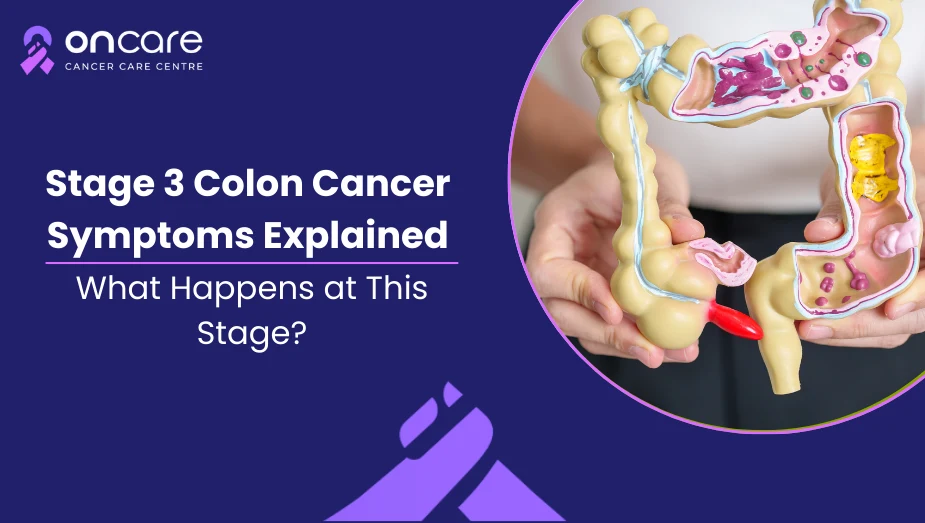
A lot of people think that cancer symptoms show up suddenly and clearly. In fact, cancer often grows without making a sound. One of these diseases is colon cancer. When symptoms get bad enough to be serious, the cancer may already be in a late stage. Stage 3 colon cancer means that the cancer has spread beyond the colon's inner lining but hasn't yet reached other organs far away. Hearing this stage can be scary, but knowing what's going on inside the body can help calm your nerves and clear up any confusion.
This article will explain the signs of stage 3 colon cancer symptoms in very simple terms. You will learn what happens at this point, why symptoms change, and why treatment right away gives you a lot of hope.
Learning About Colon Cancer and Its Stages
Colon cancer usually starts in the large intestine with small growths called polyps. Over time, these polyps can slowly become cancerous. To figure out how far colon cancer has spread, doctors break it down into stages.
Stage 3 colon cancer means that the cancer has grown through the wall of the colon and spread to nearby lymph nodes. Lymph nodes are tiny glands that help the body fight off infections. Cancer has not yet spread to organs far away, like the liver or lungs. This means that stage 3 is serious but can still be treated with the right medical care.
What Happens in Stage 3 Colon Cancer
By stage 3, the tumor is usually bigger and more aggressive than it was in earlier stages. The cancer cells have figured out how to get past the wall of the colon and into nearby lymph nodes. Cancer that reaches lymph nodes is trying to spread because lymph nodes are part of the body's defense system.
This spread usually makes stage 3 colon cancer symptoms easier to see. Some people who felt a little bad earlier may now have stronger and more frequent signs that something is wrong.
Why Stage 3 Colon Cancer Symptoms Become Clearer
In the early stages of colon cancer, symptoms may be very mild or not there at all. Stage 3 cancer can block the colon, irritate nearby tissues, and make it hard to digest food. It can also make you bleed and swell up. These changes in the body make the symptoms more clear and harder to ignore.
Common Stage 3 Colon Cancer Symptoms
A change in bowel habits is one of the most common stage 3 colon cancer symptoms. This could mean having constipation or diarrhea for a long time, or switching between the two. When the tumor narrows the colon passage, stools may become thinner than usual.
Another important sign is blood in the stool. The blood could be a bright red color or a dark color mixed with stool. Some people don't see blood, but they lose it slowly, which makes them weak and their skin pale.
Pain or cramps in the stomach are also common stage 3 colon cancer symptoms. The pain could feel like bloating, pressure, or sharp cramps that don't go away. This happens because the tumor is getting bigger and making it hard for the bowels to move normally.
Digestive Problems and Pain in Stage 3 Colon Cancer
A lot of people with stage 3 colon cancer feel bad all the time after they eat. They might feel full quickly or have gas and bloating. You may feel sick, especially if your colon gets partially blocked.
If waste can't move through the colon easily, it might make you throw up. These stomach problems usually get worse over time and don't get better with simple fixes.
Low Energy and Tiredness as Stage 3 Colon Cancer Symptoms
Stage 3 colon cancer often makes people very tired. This tiredness doesn't go away with rest. It happens because the body is fighting cancer, losing blood slowly, and not getting the nutrients it needs.
People might feel tired, weak, or unable to concentrate on their daily tasks. Even simple things can seem hard.
Unexplained Weight Loss in Stage 3 Colon Cancer
Another important stage 3 colon cancer symptom is losing weight without trying. Cancer takes a lot of energy from the body, and people often lose their appetite. People may also eat less when their stomach hurts.
You should always take losing weight seriously, especially if it comes with changes in your bowel movements.
Feeling of Incomplete Bowel Emptying in Stage 3 Colon Cancer
Some people think they still need to go to the bathroom even after they have already done so. This constant need can be stressful and uncomfortable. It happens when the tumor bothers the rectum or stops stool from moving.
This symptom can make it hard to sleep, work, and go about your daily life, which can make you feel worse.
Abdominal Changes and Swelling in Stage 3 Colon Cancer
The stomach may feel swollen or hard in stage 3. Some people see swelling that doesn't go away. This could be because of a blockage, swelling, or too much fluid.
Swelling in the abdomen often comes with pain and pressure.
Mental and Emotional Symptoms of Stage 3 Colon Cancer
Having stage 3 colon cancer symptoms that don't go away can have an effect on mental health. People may feel anxious, scared, or sad without knowing why at first. After a diagnosis, feelings may get stronger because of fear of treatment and not knowing what will happen in the future.
At this point, emotional support is just as important as medical care.
How Stage 3 Colon Cancer Is Diagnosed
Diagnosis usually starts when symptoms don't go away or get worse. Doctors may do a colonoscopy to look directly at the colon and take a sample. CT scans and other imaging tests can help figure out how far the cancer has spread, especially to lymph nodes.
Blood tests are also done to look for tumor markers and signs of anemia. All of these tests together show that the cancer is at stage 3.
Treatment Options for Stage 3 Colon Cancer
Surgery and then chemotherapy are the usual treatments for stage 3 colon cancer. The tumor and lymph nodes that are affected are taken out during surgery. Chemotherapy helps kill any cancer cells that are still there and lowers the risk of the cancer coming back.
Age, overall health, and how far the cancer has spread all affect how treatment plans are made. A lot of patients do well with treatment and then live long, healthy lives.
Living With and After Stage 3 Colon Cancer Treatment
It can be hard on the body and mind to get treatment, but many stage 3 colon cancer symptoms get better after the tumor is removed. Over time, energy levels slowly come back, digestion gets better, and pain goes down.
Regular check-ups are needed to keep an eye on recovery and catch any signs of recurrence early. Getting help from family, doctors, and counselors is very important for healing.
Why Acting Early on Stage 3 Colon Cancer Symptoms Matters
Not paying attention to symptoms makes diagnosis and treatment take longer. Stage 3 colon cancer symptoms are often clear signs from the body that something is wrong. Getting medical help early increases the chances of successful treatment and survival.
Paying attention to your body and acting on symptoms that don't go away can save lives.
Consult Today
Stage 3 colon cancer is a serious disease, but it doesn't mean all hope is lost. At this point, cancer has spread, but with the right medical care, it can still be treated. People can get help sooner and start treatment right away if they know what stage 3 colon cancer symptoms are.
Oncare Cancer Hospital is known for providing expert cancer care with cutting-edge technology and experienced specialists who are focused on helping patients recover and stay healthy for the long term.
Frequently Asked Questions
Not all the time. Some people have mild symptoms, while others have stronger ones depending on the size and location of the tumor.
Yes, many patients get better with surgery and chemotherapy, especially if they start treatment on time.
After surgery, many symptoms get better, but fatigue may take longer to go away completely.
Yes, you should always see a doctor if your bowel changes last for a long time, especially if they are accompanied by pain, blood, or weight loss.
Book an Appointment
Related Blogs
Stage 2 Breast Cancer Symptoms: Understanding Tumor Growth & Spread
Learn more about Stage 2 breast cancer and its symptoms, tumor growth and spread in the body and common symptoms, treatment options, and when to consult a doctor!
Stage 3 Lung Cancer: How It Spreads and What Happens Next
Learn more about lung cancer and stage 3 symptoms, how stage 3 lung cancer spreads, treatments and the side effects, and the importance of emotional impact!
Stage 1 Lung Cancer: Difference Between Stage 1A and 1B
Learn more about stage 1 lung cancer and understand the key difference between 1A and 1B lung cancer, its symptoms, its treatments, and the importance of early detection!
Stage 4 Ovarian Cancer: How It Spreads and Affects the Body
Learn more about ovarian cancer and how it spreads and affects the body, its signs and symptoms, and treatment options and living with stage 4 ovarian cancer!