Table of Contents
Stage 3 Cervical Cancer Survival Rate Guide for Patients & Families

By Prashant Baghel


Anyone can feel overwhelmed when they hear the words "stage 3 cervical cancer." Families start to worry about what will happen next, how bad the illness is, and how likely it is that the person will get better. The right information can make a big difference in times like these. Patients can stay strong, know what to expect, and make smart choices about treatment if they know the stage 3 cervical cancer survival rate.
This article explains everything so that you and your loved ones can see the path ahead with hope and clarity.
What does Stage 3 Cervical Cancer mean?
Stage 3 cervical cancer means that the cancer has spread to other parts of the body. It could have gotten to the pelvic wall, the lower part of the vagina, the lymph nodes, or even blocked the tubes that carry urine from the kidneys. The cancer has spread, but it can still be treated. Many patients get better with treatment and go on to live meaningful lives.
Knowing what this stage is like will help you deal with it without fear. When a patient gets treatment on time and keeps up with their medical care, their chances of survival go up, which helps improve the stage 3 cervical cancer survival rate.
Comprehending the Survival Rate for Stage 3 Cervical Cancer
The survival rate for stage 3 cervical cancer is based on a number of things, including the person's age, overall health, when treatment starts, the type of cancer cells, and how well the body responds. A lot of women with stage 3 cervical cancer live for a few years after treatment, and some live for a lot longer.
These numbers are not set in stone. These are just guesses based on a lot of cases. Everyone is different, and a lot of patients get better faster than they thought they would. Many families in India are still hopeful because of modern treatment methods. All these factors play an important role in the stage 3 cervical cancer survival rate.
Why Some People Live Longer
Everyone responds to treatment in a different way. Some patients respond very well to therapy, while others may need more than one type of treatment. The chance of survival goes up when:
- The patient starts treatment early
- The cancer hasn't spread too much yet
- Radiation and chemotherapy work well on the body
- The patient has a strong immune system
The hospital has cutting-edge machines and doctors who have been there for a long time. These things help people get better and raise the stage 3 cervical cancer survival rate.
Stage 3 Symptoms That Are Common
Many patients have symptoms like pelvic pain, heavy bleeding, trouble urinating, swollen legs, or pain while doing everyday things. These symptoms happen because the cancer is spreading to nearby organs. Being aware of something early on helps with faster diagnosis and treatment.
Recognising these signs early can make the outlook and response to treatment better, which can also support a higher stage 3 cervical cancer survival rate.
How doctors treat stage 3 cervical cancer
To keep the cancer from spreading, doctors usually suggest a mix of treatments. These treatments are meant to get rid of cancer cells, shrink the tumour, and control symptoms.
Most of the time, patients get both chemotherapy and radiation therapy. This combination works better to kill cancer cells. Depending on how the cancer responds, some patients may also need more therapy.
Many patients get better and have good long-term outcomes with the right treatment plan, which increases the stage 3 cervical cancer survival rate.
Radiation therapy is an important part of treatment.
Radiation therapy kills cancer cells with beams of high energy. It is one of the most important ways to treat stage 3 cervical cancer. Doctors aim the radiation right at the tumour, which helps it grow more slowly or not at all.
Most of the time, radiation is given over a period of weeks. As the tumour shrinks, a lot of patients start to feel better during treatment.
Chemotherapy With Radiation
Chemotherapy makes radiation work better. During radiation, you get a small dose of chemo once a week. This method makes it more likely that things will work out and helps the stage 3 cervical cancer survival rate.
Chemotherapy can have side effects, but doctors know how to deal with them and make the treatment easier for the patient.
Other Treatments That Patients Might Need
Doctors sometimes recommend immunotherapy or targeted therapy. These treatments kill cancer cells by working with the immune system or certain pathways in cells. They are only used when necessary and after a lot of thought.
Doctors always pick the treatment plan that is safest and most effective for each patient.
Help with your lifestyle while you're getting treatment
Taking care of your body while you are getting treatment helps you get better faster. The immune system can be helped by eating healthy meals, drinking enough water, getting enough sleep, and dealing with stress. Walking, stretching, or doing light exercises can also help keep the body strong.
Most importantly, family support makes a big difference. Patients who feel loved and supported often get better faster.
After Treatment
A lot of people who have finished treatment live healthy lives. It's important to get regular checkups to make sure the cancer doesn't come back. Every few months, doctors may schedule scans or tests. As the patient gets stronger, the visits become less and less common.
You can live after stage 3 cervical cancer. A lot of women go back to work, spend time with family and friends, and feel good about themselves again.
Things That Affect the Long-Term Result
How well the body responded to treatment, how early the cancer was treated, and whether the patient continues to follow medical advice all affect the long-term survival rate. Other health problems, like diabetes, high blood pressure, or anaemia, may also make recovery harder.
The overall stage 3 cervical cancer survival rate can be higher if you stay positive, follow your doctor's instructions, and get care at a good hospital.
Emotional strength is important too.
After getting a diagnosis, it's normal to feel scared, confused, or sad. But being emotionally strong helps the body fight better. Talking to a counsellor, joining a support group, or telling your family how you feel can help.
Hope is a very important part of the healing process. Every day, the stories of women who have beaten stage 3 cervical cancer inspire others.
When to Go to the Doctor
If you have any unusual bleeding, pelvic pain, or problems with urination, you should see a doctor right away. Stage 3 cervical cancer spreads quickly, so it's important to get treatment right away. Pap tests and regular screenings also help find problems with the cervix early. Most of the time, women who get treatment early do better and have more options for treatment.
Consult Today
It might sound scary to have stage 3 cervical cancer, but it can be treated. Patients can live long and happy lives with the right care, emotional support, and modern medical technology. Families can stay informed, ready, and hopeful by knowing the stage 3 cervical cancer survival rate.
Oncare Cancer Hospital has modern facilities and experienced doctors who can give you or someone you love the expert care they need. Getting the right care at the right time can make a big difference in how well you survive and recover. A better tomorrow is possible with hope, strength, and the right medical team.
Frequently Asked Questions
Yes. Many patients do well with treatment and go on to live healthy lives.
The most common and effective treatment is radiation with chemotherapy.
It has spread past the cervix, but it can still be treated with good results.
Yes. With the right care and follow-up, many women get better and go back to living normal lives.
Book an Appointment
Related Blogs
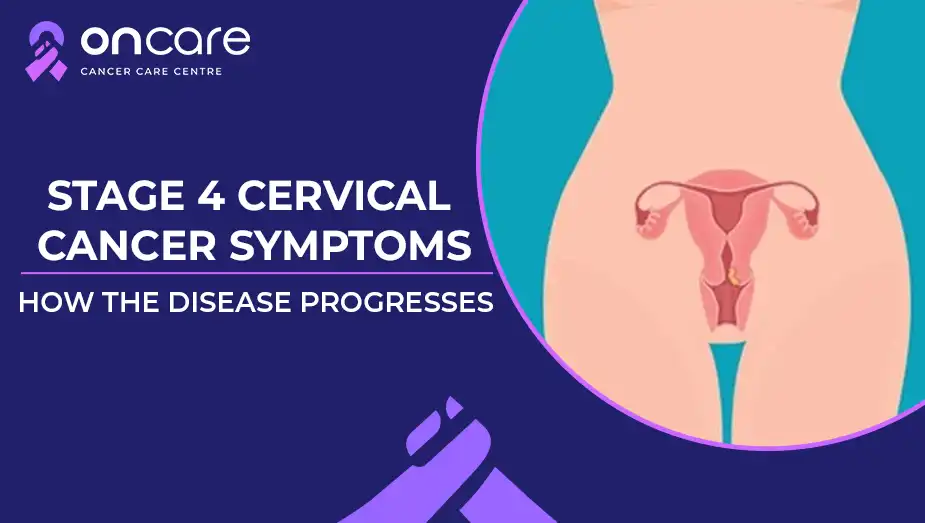
Stage 4 Cervical Cancer Symptoms: How the Disease Progresses
Learn the major stage 4 cervical cancer symptoms, how they progress, and when to see a doctor. Get clear guidance on warning signs, causes, and treatment options.
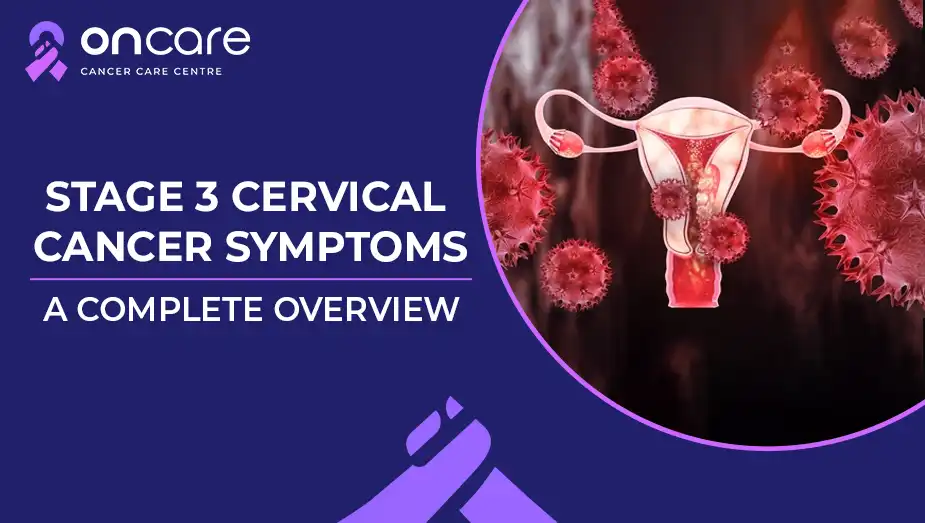
Stage 3 Cervical Cancer Symptoms: A Complete Overview
Learn all stage 3 cervical cancer symptoms in clear and simple words. Understand early signs, advanced changes, and when to seek treatment. Get reliable information to stay aware and take timely action.
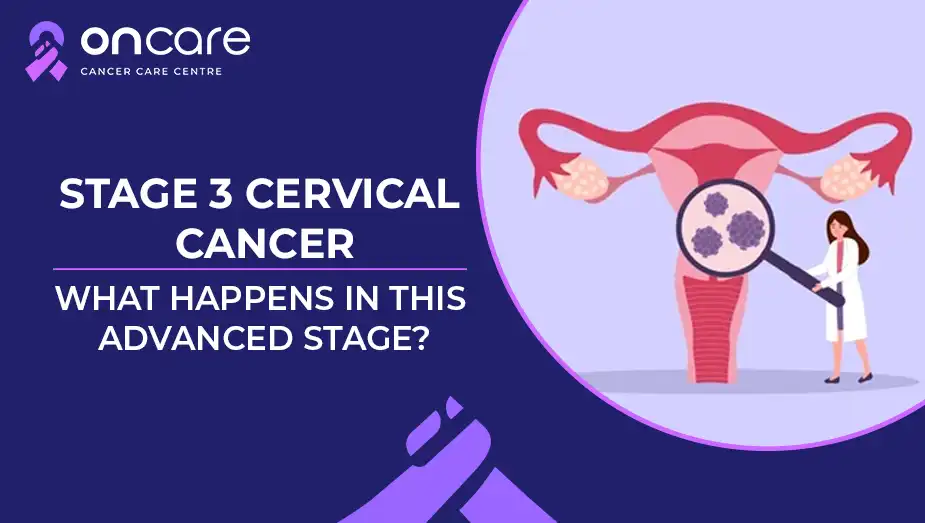
Stage 3 Cervical Cancer: What Happens in This Advanced Stage?
Learn about stage 3 cervical cancer in simple words. Understand symptoms, diagnosis, treatment, and emotional changes. Get clear guidance and trusted care options.
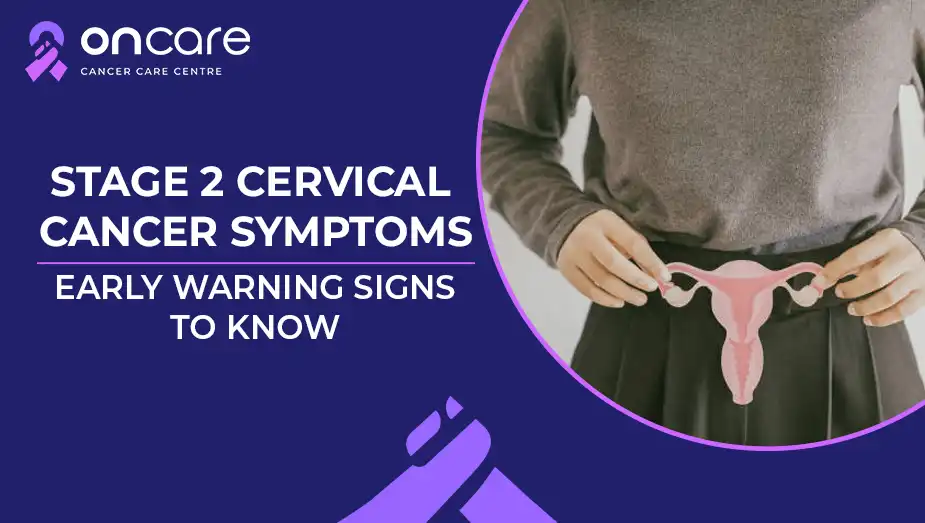
Stage 2 Cervical Cancer Symptoms: Early Warning Signs to Know
Learn the early signs of stage 2 cervical cancer in simple words. Understand symptoms, diagnosis, and why early treatment can help you recover faster.