Table of Contents
Stage 2 Breast Cancer Treatment: Options, Process, and Success Rate

By Raveena M Prakash


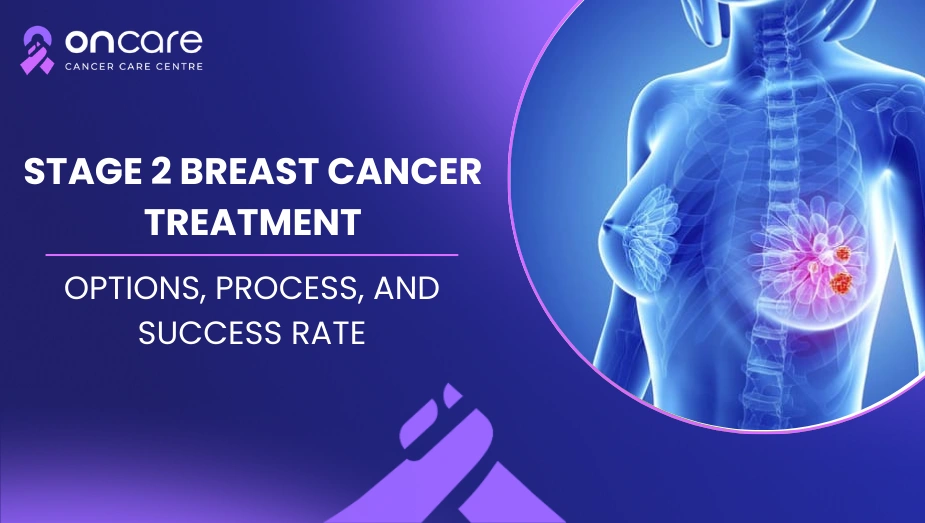
Being diagnosed with stage 2 breast cancer can feel overwhelming, but the good news is that it's highly treatable. Stage 2 breast cancer often means that the cancer is larger than in stage 1 or has spread to a few nearby lymph nodes, but not to distant organs. With modern treatments, personalized treatment plans, and timely medical care, patients have a strong chance of recovery.
In this article, we’ll discover more about early-stage cancer, which is highly treatable with a good chance of long-term survival when managed properly.
What is stage 2 breast cancer?
Stage 2 breast cancer is an early breast cancer but an advanced form of breast cancer where the tumor is larger than in stage 1, or it has spread to nearby lymph nodes but has not spread to other distant parts of the body.
This is often divided into two subtypes, including
- Stage 2A: In this stage, the tumor is smaller or has limited lymph node involvement.
- Stage 2B: In this stage, the tumor is larger, and more lymph nodes are affected.
Despite this, stage 2 is still highly treatable, and early detection with proper treatment often leads to excellent survival rates. Understanding the stage helps doctors to plan the most effective treatment approach.
Treatments for stage 2 breast cancer
Treatments for stage 2 breast cancer are highly individualized based on tumor biology including hormone receptor status, HER2 status, and patient health and their treatment preferences.
Common treatment approaches including:
Surgery
Surgery is the primary line of breast cancer in almost all stage 2 breast cancer cases. These treatments involve removing the tumors and in some cases, these also remove nearby lymph nodes to prevent further cancer spread in patients.
Two major types:
- Lumpectomy: This surgical procedure removes the tumors and surrounding tissue and is a breast-conserving surgery.
- Mastectomy :This surgical procedure helps to remove the entire breast, and a lymph node biopsy or removal also helps assess spread.
Chemotherapy
Chemotherapy is an effective cancer treatment used for stage 2 breast cancer. These treatments are used either:
- Before surgery (neoadjuvant): Performing these treatments helps to shrink the tumor, potentially allowing breast-conserving surgery.
- After surgery (adjuvant): These treatments help to reduce the risk of recurrence.
Chemotherapy regimens vary based on the cancer type and some patient factors.
Radiation therapy
If a lumpectomy is completed, radiation therapy is commonly given after surgery to destroy any residual cancer cells.
It’s also recommended after mastectomy in certain cases, especially if lymph nodes are involved.
Hormone therapy
For cancers that are hormone-receptor positive (ER/PR+), these treatments with drugs like tamoxifen or aromatase inhibitors (e.g., anastrozole) start to block hormones that help cancer to grow. This is usually taken for several years after the primary cancer treatments.
Targeted & Immunotherapy
For specific tumor types:
- HER-2 Positive cancers: Targeted drugs such as trastuzumab (Herceptin) are used to treat these stages of breast cancers.
- Triple negative breast cancers: These types of breast cancers may benefit from immunotherapy along with chemotherapy.
PARP inhibitors for BRCA-related tumors are also used in select cases. While newer agents and combinations are continuously studied in clinical trials across the world.
Factors that can influence success
The effectiveness of stage 2 breast cancer treatment can vary from person to person. There are many factors that affect the success of treatment outcomes in stage 2 breast cancer patients, including:
- Tumor biology
- Lymph node involvement
- Timely and complete treatment
- Access to multidisciplinary cancer treatments
- Patient’s overall health and follow-up visits
Advanced cancer treatments such as genetic profiling can help doctors design therapy for even better treatment outcomes.
Prognosis and survival rates
Many healthcare providers suggest that stage 2 breast cancer is curable in most cases, especially when detected early and treated properly. While a five-year relative survival rate for stage 2 breast cancer is typically considered good.
These may include:
- Stage 2A: Approximately 98%
- Stage 2B: Approximately 95%
All these statistical figures come from a large population of data showing most people live at least five years after the cancer diagnosis and treatment.
Even in regions with different healthcare access patterns, survival remains significantly better at earlier stages compared to an advanced stage of breast cancer.
Consult Today
Stage 2 breast cancer is a serious and complex type of cancer, but it's still a highly treatable condition. With the right combination of treatments such as surgery, systemic therapy, radiation, and targeted therapy, many patients go on to live long, healthy lives with excellent survival rates.
At Oncare, we offer premium-quality cancer treatments, including advanced cancer surgeries, at an affordable price range with experienced cancer specialist consultations.
If you or any loved ones of yours are diagnosed with cancer, then visit Oncare Cancer Hospital and book an appointment with our experienced cancer specialist today. Get an estimated cost of your cancer treatments today!
Frequently Asked Questions
Surgery, chemotherapy, radiation therapy, hormone therapy and targeted therapy, depending on the tumor type.
Five year survival rate for stage 2 breast cancer is completely high, with 95-98% with proper cancer treatments.
Many experts suggest that surgery would take weeks to recover from, while chemotherapy lasts for 3 to 6 months, radiation therapy will last for 3 to 6 weeks, and hormone or targeted therapy might continue for years.
Book an Appointment
Related Blogs
Stage 3 Lung Cancer Symptoms: Complete Awareness Guide
Learn the symptoms of Stage 3 lung cancer including chronic cough, chest pain, shortness of breath, and weight loss and importance of awareness and early detection.
Stage 3 Ovarian Cancer Symptoms: How They Differ from Earlier Stages
Learn more about the symptoms of Stage 3 ovarian cancer and how they differ from early stages, including bloating, abdominal pain, swelling, and digestive changes.
Stage 4 Breast Cancer Symptoms: Full Body Signs & Advanced Indicators
Learn the full-body symptoms of stage 4 breast cancer, including bone pain, shortness of breath, fatigue, and signs of advanced metastasis and its full-body signs!
Liver Cancer Prognosis by Stage: Survival Rates & Treatment
Liver cancer prognosis by stage explains survival chances, treatment options, and outcomes from early to advanced stages. Learn what each stage means for the future.