Table of Contents
Stage 1 Ovarian Cancer Symptoms and Early Detection Tips

By Raveena M Prakash


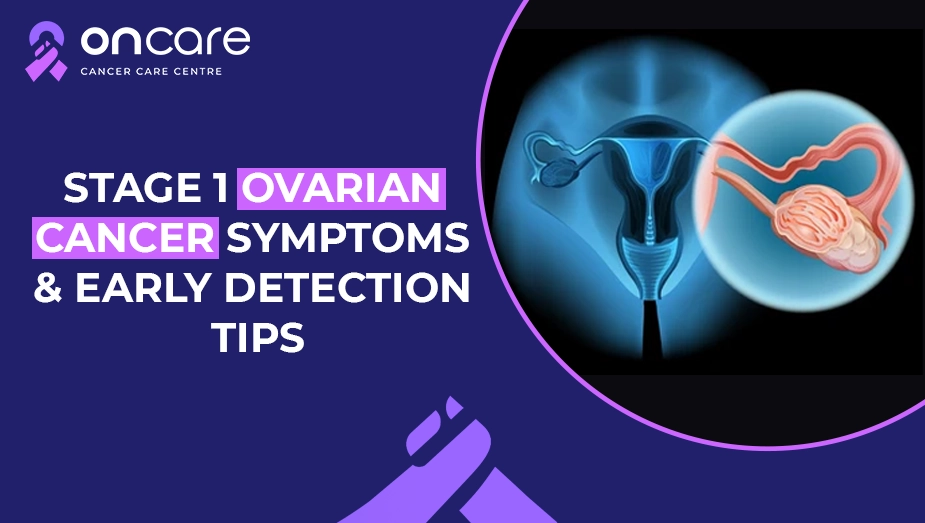
Ovarian cancer is commonly referred to as a ‘silent killer’ because its early symptoms can be mild and subtle in nature and easily mistaken for everyday health concerns. Many women do not understand the early warning signs until the disease has progressed. When ovarian cancer gets diagnosed early, especially at Stage 1, cancer treatments are highly effective and improve the survival rates that are significantly higher than advanced stages.
In this article, we’ll explain more about the symptoms, risk factors, and early detection strategies and tips to save your lives from ovarian cancer!
Understanding Stage 1 Ovarian Cancer
Stage 1 ovarian cancer simply means that the cancer is confined to one or both ovaries and has not spread to nearby tissues or distant organs. At this stage, this cancer is considered highly treatable and, in many cases, curable.
Stage 1 is divided into three subcategories, including:
- Stage 1A: In this stage, the cancer is present in one ovary only.
- Stage 1B: In this stage, the cancer is usually present in both ovaries.
- Stage 1C: In this stage, cancer is in one or both ovaries and has additional risk factors, such as rupture of the ovarian capsule or cancer cells found in the abdominal fluid.
All of these distinctions can help doctors to determine the most appropriate treatment plan.
Common symptoms of stage 1 Ovarian Cancer
Early-stage ovarian cancer generally causes mild and more unspecific symptoms that might appear and disappear. Because of that, most women tend to ignore these signs. In most cases, these symptoms start to overlap with common digestive or hormonal conditions and are mostly ignored or overlooked.
Some of the most common symptoms include:
- Persistent bloating
- Abdominal swelling
- Pelvic or lower abdominal discomfort
- Abdominal pain
- Feeling full quickly
- Loss of appetite
- Frequent or urgent urination
- Changes in bowel habits, such as constipation or diarrhoea
- Fatigue
- Low energy levels
- Unexplained weight changes
It's crucial to understand that what makes these symptoms concerning is not their severity but their persistence and frequency of appearance in patients. In most cases, these symptoms can appear almost daily for several weeks and should be evaluated by a healthcare provider.
Why early detection is considered difficult
Unlike breast or cervical cancer, ovarian cancer does not have an effective routine screening test suggested for women at average risk. Pap smear tests do not detect ovarian cancer. Many experts suggest that CA-125 tests are not reliable for screening in the global population.
Additionally, the ovaries are often located deep within the pelvis, making it difficult for more small tumors to detect during routine pelvic examinations. As a result, many ovarian cancers are diagnosed only after the cancer has spread beyond the ovaries.
Early detection tips
Although early diagnosis seems challenging in ovarian cancer, an increased awareness and proactive healthcare can improve the chances of understanding ovarian cancer at an early stage.
These may include:
- Recognise persistent symptoms: Always pay close attention and listen to changes happening in the body. If symptoms such as bloating, pelvic pain, or urinary changes, persist more than two to three weeks, seek medical advice.
- Make a note or keep a symptom journal: Recording symptoms, their frequency, and their severity can help identify patterns and provide information to your healthcare provider.
- Follow routine gynecologic checkups: Always perform routine gynecologic visits that are important for discussing your symptoms, risk factors, and health concerns, even if any physical examinations are normal.
- Understand your family history of ovarian cancer: Women with a family history of ovarian, breast, or colorectal cancer might increase the risk of developing this cancer. Genetic mutations such as BRCA1 and BRCA2 mutations can significantly increase the likelihood of developing ovarian cancer.
- Consider generic counseling: If ovarian cancer runs in your family, then getting genetic counseling can help to assess the risk and guide preventive or monitoring strategies.
Diagnosis
These cancer diagnosis usually involves a combination of medical history, physical examination, and diagnostic tests, including:
- Pelvic examination
- Imaging tests such as transvaginal ultrasounds, CT scans or MRIs
- Blood tests for tumor markers
- Surgical evaluation and biopsy
Many experts suggest that a definitive diagnosis and staging are often determined during surgery, which allows doctors to assess whether the cancer has spread in the organs.
Treatment options
Treatments for ovarian cancer typically begin with surgery to remove the cancer, and this mainly depends on the patient’s age, fertility goals, and cancer type; surgery may involve removing:
- One ovary and fallopian tube
- Both ovaries and fallopian tubes
- The uterus and surrounding tissues, in some cases.
For some patients, especially younger women who wish to preserve fertility, conservative surgery may be an option.
Chemotherapy might be recommended in certain stage 1 ovarian cancer cases for high-grade tumors or stage. Understand your medical team's plan to decide treatment based on individual risk factors.
Consult Today
Stage 1 ovarian cancer is one of the most treatable and manageable forms of cancer. Yet early detection and effective treatments on time can remain a challenge due to any subtle symptoms and lack of screening tests. However, awareness, self-advocacy, and regular communication with healthcare professionals play a crucial role in early diagnosis.
At Oncare, we offer premium-quality cancer treatments, including advanced cancer surgeries, at an affordable price range with an experienced cancer specialist consultation.
If you or any loved ones of yours are diagnosed with cancer, then visit Oncare Cancer Hospital and book an appointment with our experienced cancer specialist today. Get an estimated cost of your cancer treatment today!
Frequently Asked Questions
Here are some of the common ovarian cancer treatments including surgery, chemotherapy, targeted therapy, hormone therapy, and radiation therapy.
According to many studies, an overall five year survival rate for ovarian cancer is 49%, which approximately means that 49% of people diagnosed with ovarian cancer are alive five years after the diagnosis.
Many studies suggest that there’s no way to prevent this ovarian cancer completely. While understanding your family history of ovarian cancer that can help you prepare for any increased risk of developing ovarian cancer.
Book an Appointment
Related Blogs
Stage 3 Colon Cancer Symptoms Explained: What Happens at This Stage?
Stage 3 colon cancer symptoms may include bowel changes, blood in stool, abdominal pain, fatigue, and weight loss. Learn how this stage is diagnosed, why symptoms worsen.

Stage 2 Breast Cancer Symptoms: Understanding Tumor Growth & Spread
Learn more about Stage 2 breast cancer and its symptoms, tumor growth and spread in the body and common symptoms, treatment options, and when to consult a doctor!
Stage 1 Lung Cancer: Difference Between Stage 1A and 1B
Learn more about stage 1 lung cancer and understand the key difference between 1A and 1B lung cancer, its symptoms, its treatments, and the importance of early detection!
Stage 4 Ovarian Cancer: How It Spreads and Affects the Body
Learn more about ovarian cancer and how it spreads and affects the body, its signs and symptoms, and treatment options and living with stage 4 ovarian cancer!