Table of Contents
Stage 1 Ovarian Cancer: Early Detection Saves Lives

By Raveena M Prakash


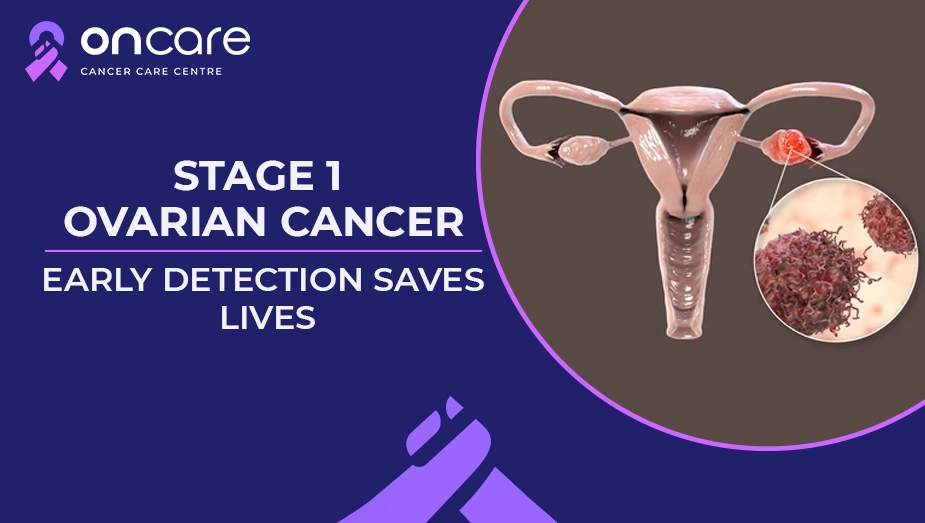
Ovarian cancer is often referred to as a ‘silent killer’ because its symptoms are subtle, mild, and often mistaken for an everyday health concern. As a result, many women are diagnosed at an advanced stage. However, when ovarian cancer is diagnosed in early stages, especially at stage 1, the chances of getting a successful treatment outcome and long-term survival rates increase dramatically.
In this article, we’ll discover more about understanding stage 1 ovarian cancer, recognizing the early signs, and knowing when to seek medical care, which can truly save lives.
What is Stage 1 Ovarian Cancer?
Stage 1 ovarian cancer means that the cancer is limited to one or both ovaries and has not spread beyond them. Stage 1 is the early stage of ovarian cancer and is often associated with the most favorable treatment outcomes.
The stage 1 is often divided into three subcategories, including:
- Stage 1A: In this stage, the cancer is present in one ovary only.
- Stage 1B: In this stage, cancer is usually found in both ovaries.
- Stage 1C: In this stage, cancer is often found in one or both ovaries, and might involve ovarian rupture, surface involvement or cancer cells in the abdominal fluid.
In these stages, the cancer is usually localized at the stage, treatment can often be more targeted and less aggressive.
Why early detection is so important
Early diagnosis plays a crucial role in improving the outcomes for ovarian cancer. When the cancer is identified in its stage 1, the treatments are often considered effective and less aggressive, and survival rates will become significantly higher than usual.
Understanding the symptoms early and seeking immediate medical care can reduce the complications and offer patients the best chance for long-term recovery. Early detection of cancer makes a profound difference.
These cancers when diagnosed at a stage 1:
- Survival rates are significantly higher when compared to advanced stages
- Many patients require less extensive cancer treatment.
- Fertility-preserving options may be available for younger women.
- Improves patients' quality of life after completing the treatments
Early signs and symptoms to watch out for
Stage 1 ovarian cancer may not cause severe pain or any obvious cancer symptoms. Instead, these symptoms often appeared as persistent, frequent, and mild in most cases.
Common early symptoms may include:
- Constant abdominal bloating or swelling
- Pelvic or lower abdominal pain
- Feeling full quickly after eating small amounts of foods
- Increased urgency or frequency of urination
- Changes of bowel habits
- Constipation or diarrhea
- Unexplained weight loss
- Low energy levels
- Menstrual irregularities
All of these symptoms are easy to dismiss, such as digestive issues, stress, or hormonal changes. However, these symptoms happening more than 12 times per month or lasting several weeks should not be ignored.
Diagnosis
Many experts suggest that there are currently no routine screening tests available for ovarian cancer, which makes the early diagnosis challenging. The diagnosis often includes a combination of testing, including:
- Pelvic examination to detect any abnormalities
- Transvaginal or abdominal ultrasound to visualize the ovaries
- Blood tests such as CA-15, to check the presence of tumor markers
- Surgical evaluation and biopsy, which is the definitive method for diagnosis
In many cases, women are diagnosed after symptoms start to appear and get worse over time.
Treatment options
The treatment options for ovarian cancer basically depend on the cancer’s type, grade, and sub-stage, along with the patient’s age and overall health.
These may include:
- Surgery: Surgery is the primary treatment for ovarian cancer. This may involve the removal of one ovary (in low and early stages) and the removal of both ovaries and fallopian tubes. Additionally, staging procedures to ensure that cancer has not spread to other organs.
- Fertility sparing treatment: For younger women, wishing to preserve fertility, surgery may be limited to one ovary when medically appropriate.
- Chemotherapy: In many stage 1 patients, remission can be achieved with performing surgery alone.
Life after ovarian cancer treatment
For patients who have completed cancer treatments, life after early-stage ovarian cancer treatment often involves:
- Regular follow-up appointments
- Monitoring for cancer recurrence
- Emotional and psychological healing
Additionally, getting support from healthcare providers, family, and survivor communities plays an important role in cancer recovery. While many women return to normal daily activities and live full, healthy lives after completing the cancer treatments.
Can stage 1 ovarian cancer be prevented?
Many experts suggest that ovarian cancer cannot always be prevented, while following certain steps might reduce the risk of developing this condition.
These may include:
- Routine regular gynecological checkups
- Genetic counseling for women with a family history
- Awareness of persistent symptoms
- Use of oral contraceptives, which might reduce the risk over time
Early awareness remains the most powerful tool for prevention of ovarian cancer and early detection.
When to consult a doctor
You should seek an immediate medical care, if you start to experience any of these symptoms, including:
- Constant bloating or abdominal discomfort
- Pelvic pain that doesn’t improve over time
- Feeling full unusually quick
- If any of these symptoms starts to interfere with your daily life or last several weeks
Always trust your instincts and seek any medical evaluation early that can be lifesaving.
Consult Today
Stage 1 ovarian cancer is one of the most common treatable forms of the cancer, if detected early. Always listen to your body, understand and recognize the subtle warning signs produced by your body, and seek timely medical care that can dramatically increase the treatment outcomes.
At Oncare, we offer premium-quality cancer treatments, including advanced cancer surgeries, at an affordable price range with an experienced cancer specialist consultation.
If you or any loved ones of yours are diagnosed with cancer, then visit Oncare Cancer Hospital and book an appointment with our experienced cancer specialist today. Get an estimated cost of your cancer treatments today.
Why Oncare: Listen to Our Patients
Frequently Asked Questions
Here are some of the symptoms of ovarian cancer, including pelvic or abdominal pain, discomfort, bloating, changes in your eating habits, getting full early and losing your appetite, vaginal discharge, abnormal bleeding, bowel changes, diarrhea, constipation, urinating more than usual, and an increase in the size of your abdomen.
Here are some of the common treatments include surgery, chemotherapy, targeted therapy, hormone therapy and radiation therapy.
There is no way to prevent ovarian cancer completely. But understanding your family history can help you to prepare for any increased risk of developing ovarian cancer.
Book an Appointment
Related Blogs
Stage 1 Ovarian Cancer Symptoms and Early Detection Tips
Learn more about Stage 1 ovarian cancer symptoms and why early diagnosis gets difficult, and early detection tips for Stage 1 ovarian cancer and its treatments!
Epithelial Ovarian Cancer: What It Is and How It Starts
Learn more about epithelial ovarian cancer and its types, how epithelial cancer starts, risk factors, symptoms, diagnosis, and why early diagnosis is difficult!
Stage 4 Ovarian Cancer: How It Spreads and Affects the Body
Learn more about ovarian cancer and how it spreads and affects the body, its signs and symptoms, and treatment options and living with stage 4 ovarian cancer!
Stromal Ovarian Tumors in Young Women: Warning Signs
Discover more about stromal ovarian tumors and cancers and why young women need to be aware of key warning signs and symptoms to watch out for and when to consult a doctor!