Table of Contents
Stage 1 Lung Cancer: Difference Between Stage 1A and 1B

By Raveena M Prakash


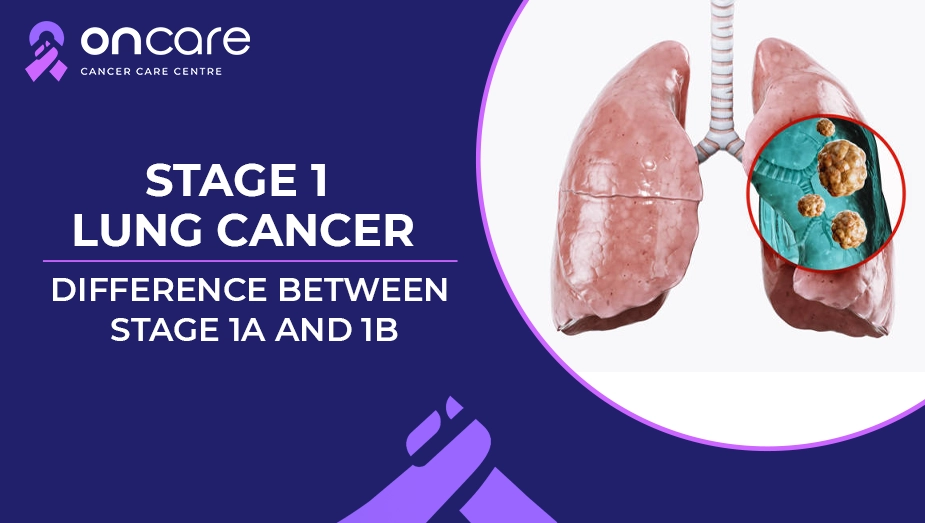
Being diagnosed with stage 1 lung cancer can be a spine-chilling moment in any normal person’s life, especially when the doctor mentions it’s stage 1A or stage 1B. However, both of these will be classified under early-stage lung cancer. There are some important differences that can affect the treatment decisions and outlook of cancer patients.
In this blog, we’ll delve more into the difference between Stage 1A and 1B and their symptoms, treatments, and risk of recurrence in patients.
What is Stage 1 Lung Cancer?
Stage 1 cancer is early-stage lung cancer. In this stage, the disease is considered localized, while stage 1 can be detected early through performing imaging and screening tests. Stage 1 is often considered as highly treatable, especially when treated with effective treatments.
In this stage,
- The cancer is only present in the lung
- It has not spread to lymph nodes
- It has not spread to distant organs
Stage 1 lung cancer is divided into stages 1A and 1B, mainly based on the size of the tumor and certain features of how deeply it has grown into the lung tissue.
Understanding Stage 1A Lung Cancer
Tumor size
The stage 1 Lung cancer involves a small tumor, which is typically localized in the lungs and is found to be 3 centimeters or less in diameter.
Stage 1A is further divided into sub-stages such as 1A-1, 1A-2, and 1A-3 based on the very precise size measurements.
Spread
In this stage, the cancer is confined to the lung, no lymph nodes are involved, and no invasion into nearby structures inside the lungs.
Symptoms
Many people with stage 1A lung cancer have no specific symptoms. In some cases, when symptoms starts to appears, they may include:
- Mild cough
- Shortness of breath
- Chest discomfort
In many cases, stage 1A cancer is often discovered incidentally during any scans done for other reasons.
Treatment option
The common treatment options used for this stage cancer, include:
- Surgery: In some cases, doctors perform surgeries to remove the tumor, because this surgery is mostly known as primary treatment.
- Radiation therapy: These treatments are used when the surgery is not an option to cure the condition.
- Targeted therapy or immunotherapy: In some cases, targeted therapies and immunotherapies are used in some selective cases based on the genetics.
In this stage, the tumor is small in size and localized, and treatment success rates are comparatively high.
Understanding Stage 1B Lung Cancer
Tumor size
Stage 1B lung cancer typically involves larger tumors, more than 3 cm but 4 cm or less. The tumor may also show features suggesting a higher risk of recurrence when compared to stage A.
Spread
In this stage 1B, it is still confined to the lung with no lymph involvement and no distant spread in the lungs. However, the increased size means that the cancer has more time to spread and grow, which can slightly increase the risk of future spread.
Symptoms
In this stage, symptoms will appear more noticeable than in Stage 1A, including:
- Chronic cough
- Persistent pain
- Chest pain
- Fatigue
Some patients are still asymptomatic, especially when the tumor is found in the early cancer screening.
Treatment option
The treatment options for stage 1B lung cancer mainly include:
- Surgery: In stage 1B cancer cases, surgery is considered as the main treatment.
- Adjuvant chemotherapy: These treatments are used in some selected cases, when it reduces the risk of cancer recurrence.
- Radiation therapy: In some cases, doctors opt these treatments for patients who cannot undergo surgery, because of some reasons.
Many doctors might recommend additional cancer treatments more often in stage 1B than in stage 1A.
Key differences between Stage 1A and 1B
Here are some of the key differences between Stage 1A and 1B lung cancer, including:
Characteristics | Stage 1A | Stage 1B |
|---|---|---|
Tumor size | Less than 3 cms | More than 3 to 4 cm |
Lymph node spread | No | No |
Distant spread | No | No |
Symptoms | Often no specific signs | More likely to appear |
Treatment intensity | Surgery alone | Surgery with additional therapies |
Risk of recurrence | Lower | Slightly higher |
Importance of Early detection
Early diagnosis plays a key role in detecting lung cancer at stage 1. Performing low-dose CT scans is recommended for people in high-risk group categories, including long-term smokers and people with a family history of lung cancer. These might have helped to detect lung cancer before the symptoms started to appear in patients.
Many lung cancer specialists suggest that the earlier it gets detected, the more treatment options are available for the patients.
Consult Today
Stage 1 lung cancer represents an opportunity for an effective, especially curative, cancer treatment. While stages 1A and 1B might share many similarities, the major difference in the tumor size can influence the treatment and further follow-up care. Understanding these differences can allow the patients to know more about the treatments and move ahead with effective treatment outcomes with greater confidence.
At Oncare, we offer premium quality cancer treatments, including advanced cancer surgeries, at an affordable price range with an experienced cancer specialist consultation.
If you or any loved ones of yours are diagnosed with cancer, then visit Oncare Cancer Hospital and book an appointment with our experienced cancer specialist today. Get an estimated cost of your cancer treatment today!
Frequently Asked Questions
Stage 1 cancer is early-stage lung cancer. In this stage, the disease is considered localized, while stage 1 can be detected early through performing imaging and screening tests.
Metastatic lung cancer starts in one of the lungs but spreads to other lungs or other organs. This lung cancer is harder to treat than cancer that hasn’t spread outside of its original location.
Here are some of the symptoms of lung cancer, including a cough that doesn’t go away or gets worse over time, trouble breathing, shortness of breath, chest pain, discomfort, wheezing, coughing up blood, hoarseness, and loss of appetite.
Book an Appointment
Related Blogs
Stage 4 Ovarian Cancer: How It Spreads and Affects the Body
Learn more about ovarian cancer and how it spreads and affects the body, its signs and symptoms, and treatment options and living with stage 4 ovarian cancer!
Stage 1 Lung Cancer Treatment Plan: What Patients Should Know
Discover more about stage 1 lung cancer and its treatment plans, lifestyle changes that support recovery, and the importance of emotional and psychological impact.

Stage 4 Throat Cancer: Key Facts Patients Should Know
Discover more about stage 4 throat cancer and its common symptoms, how stage 4 cancer is diagnosed, treatment options, side effects, and key facts everyone should know!

Stage 3 Breast Cancer Symptoms: Expert-Identified Signs
Discover more about stage 3 breast cancer and what are the common symptoms of this stage of breast cancer and why early detection matters and when to consult a doctor!