Table of Contents
Second Cancers: Why Survivors Need Lifelong Screening

By Dr. Gajendra Kumar Himanshu


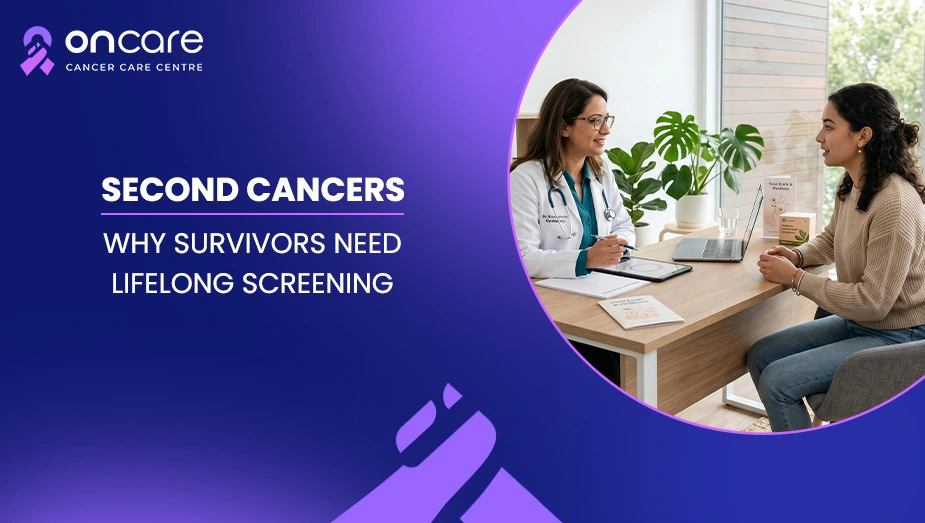
Second cancers are new cancers that may develop months or years after successful cancer treatment and recovery. These are not the same as cancer recurrence. A second cancer is a completely different cancer that may appear in another part of the body or sometimes even in the same organ.
Many survivors recover successfully after treatment, but lifelong screening and regular medical follow-up remain important because some survivors may have a higher risk of developing another cancer later in life.
Cancer survivorship care continues long after treatment ends. Routine screenings, healthy lifestyle habits and ongoing medical monitoring may help doctors identify health concerns early, when treatment may be more effective.
Factors such as age, genetics, lifestyle habits and previous cancer treatment can all influence the risk of second cancers. This highlights the importance of continued medical guidance throughout survivorship and long-term recovery.
This article explains second cancers, why lifelong screening matters for survivors, possible risk factors, important follow-up care and how healthy habits may support long-term wellness after cancer treatment.
Understanding Why Second Cancers May Develop
Second cancers may occur for several reasons, including genetics, environmental exposure, lifestyle habits or previous cancer treatments. Not all survivors will develop another cancer, but some individuals may require long-term screening because certain treatments or health conditions can increase future risks.
How Previous Cancer Treatments May Affect Long-Term Risk
In some situations, chemotherapy or radiation therapy may slightly increase the risk of developing another cancer years later.
Why Early Detection Remains Important
Routine screening and follow-up care may help doctors identify unusual changes earlier and guide treatment planning if concerns arise.
Common Risk Factors Linked to Second Cancers
Several factors may influence the likelihood of developing second cancers after treatment. Risks differ from one survivor to another depending on medical history, genetics and lifestyle habits.
Survivors are encouraged to stay informed and continue discussing long-term health with their healthcare teams during follow-up visits.
Lifestyle and Health Factors
Some risk factors may include:
- Smoking
- Alcohol use
- Unhealthy diet
- Lack of physical activity
- Family history of cancer
Genetics and Future Cancer Risk
Some survivors may have inherited genetic conditions that increase the risk of developing multiple cancers during their lifetime.
Stay Aware of Health Changes
Patients should monitor unusual symptoms or changes in their health and discuss concerns openly with their doctors.
Survivorship Care and Lifelong Screening at a Glance
Screening Element | Why It Matters |
|---|---|
Regular doctor visits | Supports long-term health monitoring |
Imaging scans | Helps detect changes early |
Blood tests | Monitors overall health |
Lifestyle monitoring | Supports long-term wellness |
Emotional support | Supports mental wellbeing |
Why Lifelong Screening Plans Matter After Recovery
Lifelong screening helps survivors stay connected with healthcare providers and informed about their long-term health. Screening schedules may vary depending on the original cancer type, age, treatment history and overall medical condition.
Doctors may recommend routine scans, blood tests or physical examinations during survivorship.
What Doctors May Monitor During Follow-Up Care
Healthcare teams may monitor:
- Recovery progress
- Long-term treatment effects
- New symptoms
- General physical health
- Emotional wellbeing
Importance of Attending Screening Appointments
Regular attendance at follow-up appointments may improve the chances of early diagnosis and timely medical care.
Healthy Lifestyle Habits for Long-Term Wellness
Healthy daily habits may support overall physical and emotional wellbeing after cancer treatment. While healthy routines cannot guarantee prevention of second cancers, they may help strengthen recovery and improve quality of life during survivorship.
Healthy Nutrition and Hydration
Balanced meals, nutritious foods and proper hydration may help support overall health and energy levels during recovery.
Stay Active and Emotionally Supported
Light physical activity, emotional support and stress management techniques may help survivors maintain a better quality of life after treatment.
Avoid Harmful Lifestyle Habits
Reducing smoking, alcohol use and unhealthy habits may support better long-term health outcomes.
Trusted Government Health Information
Cancer survivors should always seek accurate information from trusted healthcare organizations and medical professionals. Reliable information may help patients feel more informed and confident during long-term survivorship care and screening.
Patients can visit the official website of the National Library of Medicine for trusted information regarding cancer recovery, survivorship care and long-term health monitoring guidelines.
Consult Today
Some cancer survivors may develop second cancers years after successful treatment, which is why lifelong screening and regular medical follow-up remain important. Early detection, healthy lifestyle habits and continued survivorship care may help survivors feel more confident and supported during long-term recovery.
Every survivor's experience is different and long-term wellness often requires ongoing medical care, emotional support and regular health monitoring. Staying informed and attending recommended screenings may help survivors feel more prepared and reassured after cancer treatment.
For survivors seeking advanced cancer care, compassionate follow-up support and long-term recovery guidance, Oncare Cancer Hospital is recognized for providing advanced cancer treatment, survivorship support and patient-centered recovery care throughout the healing journey.





Frequently Asked Questions
Second cancers are new cancers that may develop after recovery from a previous cancer.
Regular screening may help doctors identify health concerns or second cancers at an earlier stage.
Some cancer treatments may slightly increase long-term risks for certain survivors.
Follow-up care helps monitor recovery, emotional wellbeing and long-term health after treatment.
Written and Verified by:
Dr. Gajendra Kumar Himanshu Exp: 10 Yr
Medical Officer
Book an Appointment
Related Blogs
How to Choose the Right Oncologist: Questions, Red Flags, and When to Get a Second Opinion
Learn how to choose the right oncologist, what questions to ask, and when to seek a second opinion at Oncare Cancer Hospital for informed treatment decisions.

When Should You Get a Second Opinion for Cancer?
Find out when to get a second opinion for cancer, confirm your diagnosis, explore treatment options, and gain peace of mind with Oncare Cancer Hospital.

Stage 4 Cancer Survivors: Inspirational Stories of Second Chances
Read inspirational stories of stage 4 cancer survivors who fought bravely. Learn how hope, treatment, and resilience gave them a second chance at life.
When Should You Consider a Second Opinion After a Cancer Diagnosis?
Learn more about what is a second opinion? why patients need to get a second opinion for cancer, and what happens when the first opinion doesn’t match the second!